Our Destination Expert offers the five spots you need to see
By JONATHAN BEAUMONT
RELATED☘️ staff
So, you’re all set for the trip of your lifetime, here to our western Atlantic island, the ancient land of Ireland. But where to start? What’s different? What are the do’s and don’ts? And, above all, what would you like to see?
Well, in looking at any new country you haven’t been to, it’s good to have a wish list, and try to cover what you can, at a pace and within a budget that suits you—within the time you have available. For most people, this is 10 days to two weeks.
Ireland is roughly the size of the American states of Maine or Illinois, or about 85,000 square kilometres. In Canada, New Brunswick is in that league. From the perspective of somebody in the United Kingdom, Ireland is slightly larger than Scotland, or about four times the size of Wales. The island has a population of just more than seven million, of whom between a quarter and a third are concentrated in the two largest cities, Dublin and Belfast, and their immediate surrounds.
So first, an overview of our green island—yes, it rains a lot, so it’s not called the “Emerald Isle” for nothing.
Ireland consists of four provinces, each divided into counties—there are 32 counties in total. The island is divided into two political jurisdictions due to a complex history, best described in a 5,000-page supplement to this. Suffice to say, 26 counties form the Republic of Ireland (officially “Ireland”) and the other six comprise Northern Ireland, which remains a part of the United Kingdom, with a separate government in Belfast. There is no internal border, again due to certain political guarantees, and therefore tends to function as a single country on a day-to-day basis, with lifestyles, laws, and cultural habits much the same across the island. So, Ireland is there for you to travel freely about.
But where to go?
It’s always best to choose several central places to base yourself.
Imagine a starfish. You’re going to see more if you stay in the middle and spend consecutive days going out to explore each leg. Go online, and you’ll be met with a barrage of advice to the effect that the tip of each and every one of its legs are wonderful places to stay—and they are, indeed! But for a first-timer, they are not central, therefore every single day you’re going to waste time going back and forth to the centre to explore somewhere else. So, what follows is based on this idea: Take several places to base yourself.
And yes, this is just a “top five,” so, what about Athlone, Fermanagh’s lakelands, West Cork, Belfast, I hear you say? Yes, amazing places all, and with loads to see in each of them. The much-ignored midlands? Absolutely. But you’ve two weeks here, not two months. These can form the basis of your next visit. When you come back; not if …
We’ll go north to south. (No reason not to go the other way, of course!) Based on popularity and experience, including many people and groups I have taken round the island over the years, you will not go wrong with these:
1. CO. DONEGAL
Our most northwesterly county is Donegal. Being in the Republic rather than Northern Ireland, we love to tell tourists that our “most northerly county is in the south.” Base yourself in our northernmost city of Derry, nearby Letterkenny, or Donegal town itself, and you’re in a good central location to see the Glenveagh National Park, the wild and spectacular mountains, lakes and unspoiled beaches of North Donegal, the Grianán of Aileach, a stone fort dating from around 1100 AD on top of a mountain guarding the Inishowen Peninsula, the Walls of Derry (a must-see), and in the southwest of the county, the highest sea cliffs in Ireland and amongst the highest in Europe, at Slieve League. (These are over twice the height of the better-known Cliffs of Moher in Co. Clare.)
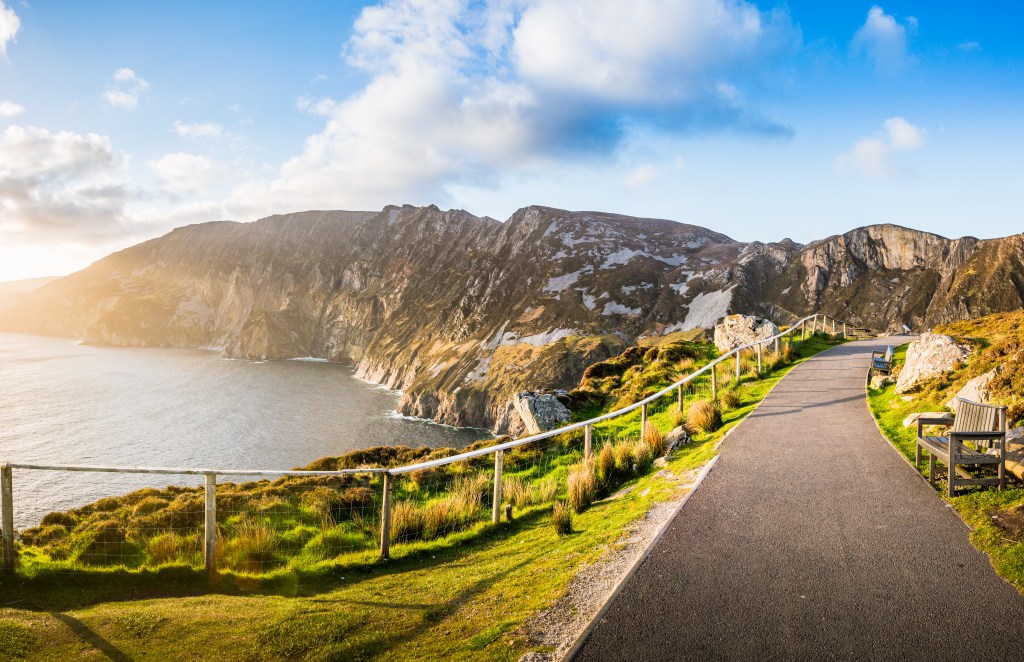
Recommended stay in this area to cover all the above—2-3 nights
NOTE: If you are staying in Derry or Letterkenny, a day trip to the Giant’s Causeway and Carrick-a-Rede Rope Bridge are very doable. Outside Derry is Benone Beach, one of the North’s finest. Also, if you are an American with “Ulster Scots” roots, the absolute No. 1 priority on your whole trip must be the Ulster-American Folk Park, outside Omagh, Co. Tyrone.
2. CO. MAYO
Co. Mayo is in the west of Ireland. Wild, sparsely inhabited, and source of a great number of the 11.2 percent of the American population who have Irish ancestry (Ohio, Massachusetts, and New York state are full of Mayo people!), this is arguably our least discovered western area.
Base yourself in Westport, and go in the evenings to Matt Molloy’s Pub. Yes, he of the “Chieftains.” Very, very occasionally, you might see the great man play himself. By day, visit Achill Island. Again, visit Achill Island. My niece might put the kettle on for you, if she’s not busy with the baby.

On Achill, if you’ve nerves of steel, do the Atlantic Drive and see the locations where The Banshees of Inisherin was filmed a few years ago. Visit the deserted village on the slopes of the spectacular Slievemore Mountain.
If you’ve even greater nerves of steel—let’s say titanium? —go up the Minaun Heights, drive to the very top, then keep walking beyond the big TV mast away on up to the top. You’re on top of the world. You’re looking out over the Atlantic in all directions. (Personal note: Having travelled through the South American Andes and the Indian Himalayas, and the Swiss, Austrian, and Italian Alps, I’ve rarely if ever seen anything as spectacular. Have dinner in Alice’s Harbour Bar at the road bridge onto the island (mainland side); never tasted steaks—or salmon—like it! And, did I mention, visit Achill Island?
But there’s more in this area on the mainland side. Do the harbour boat tour in Westport and lose count of the seals. Drive round Clew Bay (southside) to Louisburgh and onwards to Roonagh, where you can get a boat trip out to either Inishturk or Clare Islands. Consider staying a night there, too? Bed and breakfasts on both, but book early—and—CASH.
To the north of Westport, don’t miss the wild and remote Ballycroy National Park.
Recommended stay in area—3 nights, plus one on Inishturk or Clare Island perhaps
3. CO. GALWAY
From here, we go south to Galway next. Leaving Mayo, we have two ways to get to Galway city. Drive direct down the main road, and you’re there in under two hours, but you have missed Connemara. Instead, head from Westport down by the lonely Doolough Valley (look up details of the “Walk of Tears” during the Irish Famine of 1845-51). Visit Leenane village at the Mayo / Galway county border, but first, at home, watch “The Field,” a movie set there in the 1930s. Starring Richard Harris as “The Bull” McCabe, it is in my opinion one of the greatest suspense dramas ever. It was filmed in Leenane (which means “where the tide flows” —you’ll see why!). From there onwards to Kylemore Abbey, built in the 1820s, and either by the long way round through Ballyconneely or along the main road from Clifden back to Galway city. Base yourself now in Galway for two nights. Stay near the Eyre Square or Harbour areas. In the intervening day, get the ferry to one of the Aran Islands. In summer only, the cruise, which comes back via the bottom of the Cliffs of Moher, leaves from the dock, behind the Harbour Hotel. Off-season, you need to drive or get the bus out to Rossaveal in Connemara, from where the public ferries leave. When on the largest island, Inishmore, get a local trip out to Kilmurvey and the ancient Dún Aengus Fort.
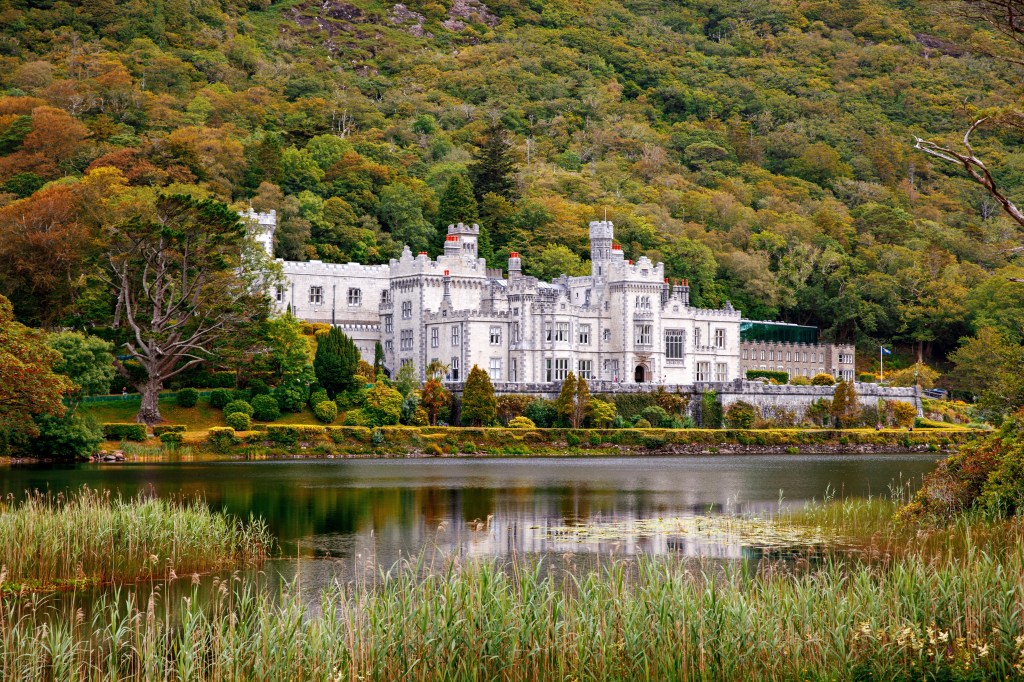
Recommended stay to cover all that—2-3 nights
4. CO. KERRY
Killarney is in the southwest. There is probably more variety in local day trips using this town as a base than just about anywhere else in Ireland, bar Dublin. Do not try to rush this area!
Ring of Kerry and Killarney National Park, including the Kerry Cliffs, Torc Waterfall, and Lakes of Killarney and Ladies View. There are numerous coach trips if you don’t want to drive—try Deros Tours in town, for example.

Take a day trip to the Dingle Peninsula. Hold a baby lamb? Look out for the signs. Inch Beach is huge and beautiful. Drive the Conor Pass, north of Dingle town, if you dare! But either way, head out west and do the Slea Head Drive, and stop at the fascinating Blasket Island Visitor Centre in the Irish-speaking western end of the Dingle Peninsula – in fact, the most western part of Europe. Look out to sea; next stop, America! Jump in, start swimming straight out, and you’ll be up the Hudson in no time…
Now, a disclaimer about the Dingle Peninsula—it’s very quiet in winter, with most bed & breakfasts, restaurants, and almost all visitor attractions closed. This actually applies to many rural areas in Ireland, which is worth bearing in mind.
Next up, a day trip to the Beara Peninsula. This is much less visited than the Iveragh Peninsula (Ring of Kerry) and the Dingle Peninsula, but every bit as beautiful. Go to Castletown Bere itself and check out the ornamental gardens (in season) on Garinish Island. Check out the Glengarriff National Park while you’re at it. Once finished in Killarney, perhaps a night in Kenmare at that is nearer this area.
IF you’ve a strong stomach, and if the place is again open to visitors, and if the weather is good—and you’ve a head for heights, too (no pressure!) —get a boat trip out to the Great Skellig rock and see the fifth-century beehive huts in which monks lived a spartan life in conditions that would have tested human endurance to the extreme.
Spend a day round the lakes, get a jaunting car (horse-drawn cart) round the lake, and visit Muckross House and the (unmissable) Ross Castle. In the evening, go to a Celtic Steps show (not Saturdays, April-October) and Paddy Sheehan’s pub (“The Killarney Grand”) on a different night for traditional music sessions.
Now there are five-day activities for Killarney; so, six nights there! If you’ve less time there, arrange these in order of preference and do the top one, two, or three.
And if you see Michael, Paudie, Sean, Darragh, David, Paddy or Patsy or Sinead, say hello from me …
Kilkenny is a good central base for the southeast. Apart from being a very quaint and walkable place as our smallest city, it is a great base in which, again, one could spend the best part of a week.
Visit craft shops in nearby Ballyragget, check out our national sport of hurling (Co. Kilkenny is the most successful county for this), and of course, visit Kilkenny Castle, one of the finest preserved Norman era (12th century) castles in the country.

Contact Cliff at the bridge over the river below the castle and take one of his highly informative boat trips on the river. Learn about the history of Kytelers Inn, which has been serving great dinners to travellers since 1342, and the legendary Alice, a Norman lady who acquired four husbands in her lifetime, all rich, and all who died and left their money to her … as our American friends might say, “Go figure!”
Outside the city, to the north, visit the Rock of Dunamase and the ruined castle there, a less known but very dramatic sight. To the south is Mount Leinster, the highest mountain in that area.
Recommended stay—up to 7 nights, no fewer than 3
5. CO. WEXFORD
Finally, in the southeast and easily reachable from a central Kilkenny is Co. Wexford, with Ireland’s major beaches, car ferry port for Wales (at Rosslare) and much Viking history, including the excellent Ferrycarrig Folk Park.
Exhausted? Well, that’ll prepare you! We may live on a fairly small island, but it is jam-pack-solid filled with history, deep culture, stunning scenery, proud identity—and sure, you’ll have a refill before ye go.
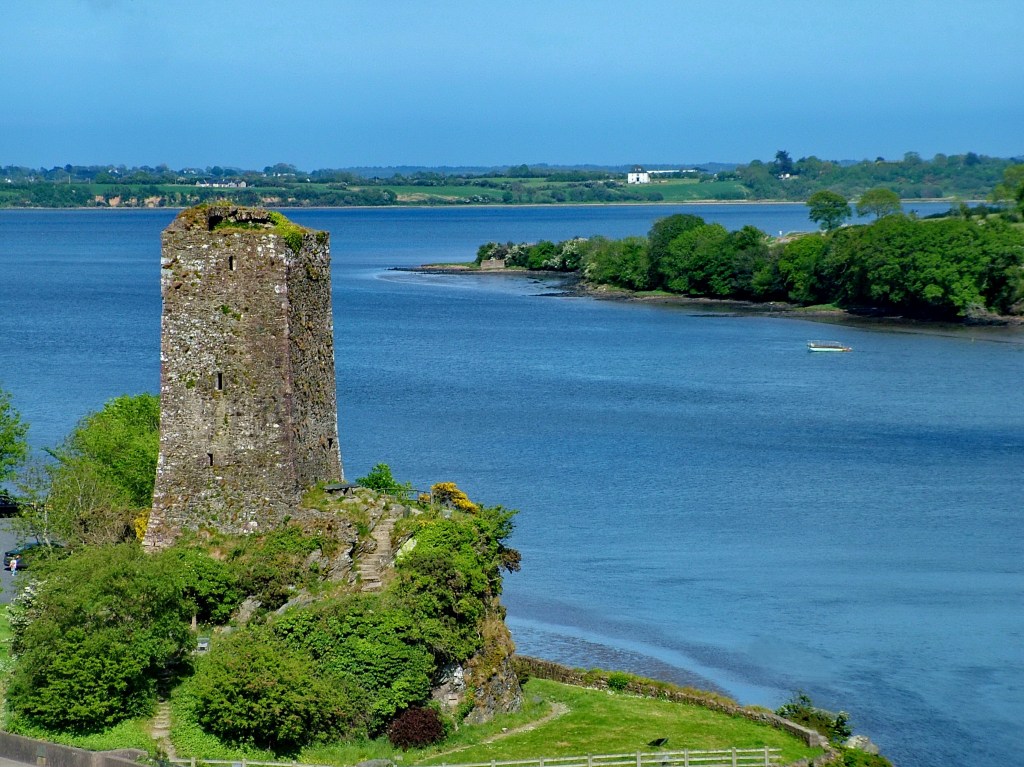
Recommended stay—2 nights minimum
BONUS COUNTY: CO. WATERFORD
West from Wexford and south from Kilkenny, hop on a train to go to Co. Waterford (not far away) and visit the Viking Quarter there and the famous Waterford Glass factory. Not far away is the town of New Ross, with the replica Irish emigrant ship, the Dunbrody. No visit, in truth, to this country, should omit learning about the Famine, which halved our population between 1845 and the end of the century; a full quarter of our entire people starved to death or died of disease, and another quarter emigrated.
Fifty percent of all U.S. presidents ever have at least a little Irish ancestry. And talking of which, not far from New Ross is the townland of Dunganstown, from where the ancestors of John F. Kennedy emigrated in 1847. The same year, the ancestors of Ronald Reagan left Ballyporeen, Co. Tipperary, on the same fateful journey, as did the ancestors of “Model T” car man Henry Ford – his people hailed from Ballinascarthy in West Cork.
Recommended stay—1 night, up to 3
WHAT TO KNOW WHEN YOU GO
BORDER REQUIREMENTS
Earlier, I mentioned the invisible border. It may well be nonexistent on the ground. There are no checkpoints, barriers, passport controls or anything at all. In fact, you will rarely know precisely where the exact border is (though the locals will). However, an Electronic Travel Authorisation (ETA) is required for all visitors to the United Kingdom, thus anyone entering Northern Ireland MUST have one; these are available from the British government’s official website. Do not get them from online agents; these will rip you off! It’s cheap and lasts two years, so once you have it, you can go back and forth as you wish. If you have an Irish passport, you do not need it, as Irish citizens are exempt due to the open border on our island, and a long-standing agreement about freedom of travel here.
If you come from a country (India being one good example that I am aware of) where separate visas are necessary for Ireland and the UK, make sure you have visas for both.
But, I hear you ask, if there’s no border, no border guards, no passport controls, nothing—what’s the point of all this? Nobody to check on you! Yes, that’s true, but suppose you’re stopped for speeding, persecuting leprechauns(!), or you end up needing to seek urgent medical help, for example. You will come into contact with “officialdom,” police, medical staff, or the like. If you are in Northern Ireland (we just call it “the north”), you could get into serious trouble, as you will have entered the area illegally, and you could be subject to arrest and deportation, detention or the like. Not a good ingredient in your holiday!
Road signs are a different pattern—usually the only way you’ll know which side of the border you’re on when you’re close to it.
CURRENCY
What else is different about “the north?”
Being part of the UK, they do not use the Euro, which otherwise is the standard currency across most of Europe (20 out of 27 countries). Northern Ireland uses the British (Sterling) Pound, as the rest of the UK.
On the subject of money, on both sides of the border we use cards pretty much everywhere. Visa Debit is by far the main form of payment, with MasterCard if you prefer a credit card. Do not bring American cards such as Discover, which is useless in Europe, or Diners and American Express. Though acceptable in some places, these cards are not usable in the vast majority of locations. If you bring pre-loaded cards or cards issued by American credit unions, some of these work and some don’t, so plan to have an alternative.
Bring some cash, too. While taxis are required by law to accept cards (subject to the above), many prefer cash if you have it. Tips, too—cash. Most card payment machines do not have an option to add a tip before paying, though this is changing. So have a few euros on hand for paying tips in cash. Don’t pay tips in dollars or other foreign currency. Staff lose most of the value of the tip having to exchange them.
RESTAURANTS
You’ll find a few local habits are different from where you live, probably, but that’s the joy of travelling. When you finish eating in a restaurant, we don’t routinely bring your bill to the table. You have to ask for it, or get up once you’re finished and pay at the till on your way out. (Tip 10-15 percent).
We generally eat early compared to some countries. Dinner is usually about 18:00-19:00, (6-7 p.m.) and most restaurants close their kitchens sometime after 20:00 (8 p.m.). In rural areas, expect fewer evening eateries, and you’d need to be sitting down by maybe 19:30 (7:30 p.m.). There are indeed exceptions, of course, all over the place, but don’t count on wandering into a restaurant at 9 in the evening.
So, you’ve eaten at 18:00. What to do this evening?
LIVE TRAD MUSIC
Irish music, of course! Now, a few things you need to know. Contrary to some impressions, live music is not as widespread as you might think—in most places you have to seek it out. The reason is this: In its pure form, an Irish music session is intimate. You are not attending a concert. You are not going to a show. You are sitting with a drink in your hand (doesn’t have to be alcohol, but have something), in amongst friends. These are the local people, who, having finished their day’s work, had dinner at home, washed the children and the dog, though not necessarily in that order, played with their mobile phones, read the newspaper and parked the car, collected the nephew from football, collected the aunt from Maggie’s up the road and left her home, and fixed that creaky gatepost (again), are now ready to relax themselves, amongst their friends and fellow music enthusiasts.
When will they start? When they feel like it. What tunes will they play, or what songs will they sing? Wait and see! Depends what mood they’re in, or whether Dan and Tina turn up tonight.
Will there be dancing? Probably not. Once in a blue moon, someone will wander into the pub, usually a girl. Irish men are often less easy to entice onto dancefloors. They’ll move a few chairs aside and do a few steps to a few tunes. But most of the time (s)he has come in to socialise with friends, so it is often over in an instant.
“Ah – but I want to SEE Irish dancing!” I hear you say. Well, now you’re looking at actual shows.
In Galway, “Trad on the Prom” is on most of the year. In Dublin, we have Celtic Nights and Taylor’s Pub, Rathfarnham providing shows. Just outside the city, two country pubs, the Merry Ploughboy and Johnny Fox’s do nightly dinner / dancing / music shows, with shuttle buses to the city. But it’s worth pointing out that the whole concept of “dinner shows” of any sort in Ireland is largely alien to us. Dinner early, show later; separate events in separate time zones. There are few exceptions, even in Dublin.
However, Killarney really is the place for traditional music and dance shows. Several different ones have come and gone over the years, but Celtic Steps endures; packed to the doors April to October, and when you go to see it, you’ll know why! (No, I’m not on commission). Celtic Steps has a sister show of the same in the summer season in nearby Tralee.
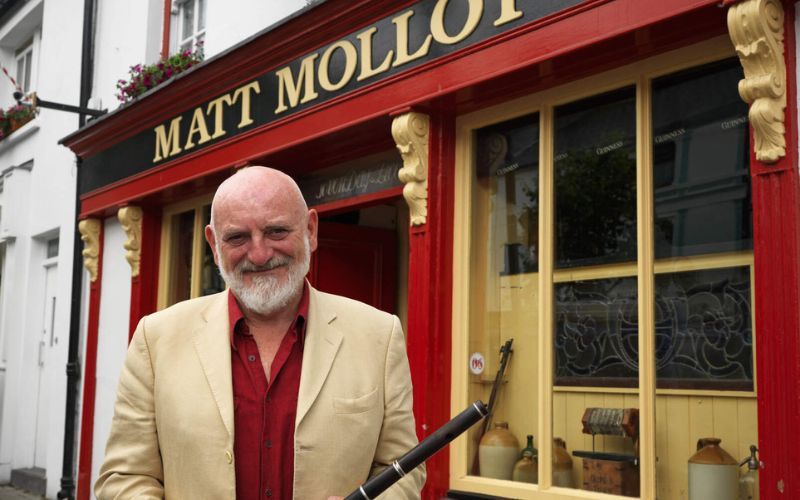
But yes, you get dancing in some pubs. Try Foleys in Eyre Square, Galway, but only certain nights of the week.
And this is another thing. Where there IS traditional music, it’s usually only on Thursday, Friday, Saturday, or Sunday nights. Some places have afternoon or early evening sessions, especially in Dublin, but these are not common elsewhere. You do fare much better this way if you’re a night owl. Earlier weeknights tend to be quieter, yes, even in most Irish pubs. That’s for conversation nights—who needs a TV?
Coffee shops are a comparatively new idea in Ireland, having been largely absent until we had an influx of folks working in the IT industry some 20-30 years ago. Therefore, they keep our hours. They tend to open up between 9 and 10 in the morning. We have several international chains such as Costa and Starbucks, but—support the local industry. The biggest (domestic) Irish chain is the appropriately named Insomnia. In Northern Ireland, they have a British chain called Greggs in many places. Better still, support the local independent ones.
ACCOMMODATIONS
We have many international-style hotels, plus the traditional Irish bed and breakfasts. These are family homes, and the family cook your breakfast in most cases. They tend to be cheaper than hotels, but rooms are smaller, and if a crowd of you all want to be in one room, that is rarely available. Bed and breakfasts are just that; in almost all cases, they do not do evening meals at all, nor do they have a residents’ bar.
Family rooms in hotels, even big ones, are few to nonexistent. Be prepared to have to book several rooms.
We have Airbnbs, but these are controversial in some places, due to shortages of affordable accommodation for local people.
SICK ON TRAVELS
You’ve got ill? Go to a local pharmacy first. If you need to see a doctor, there are plenty, but in more remote rural areas, may require a good long drive. If you bring medication with you, make sure you’ve a list of what it all is in case you lose it. On the subject of lost things, keep a photo of your passport and visas on your phone in case those also go walkabout!
Now, you’re all set. Get online and start booking, and I will have the kettle boiling for you when you arrive, and there’s some Guinness in the fridge, and a bottle of whiskey in the top cupboard!
(Note: the author has no connections with any of the specific attractions or businesses mentioned above, but mentions them based on years of feedback from tourist clients, and local knowledge of facilities provided).
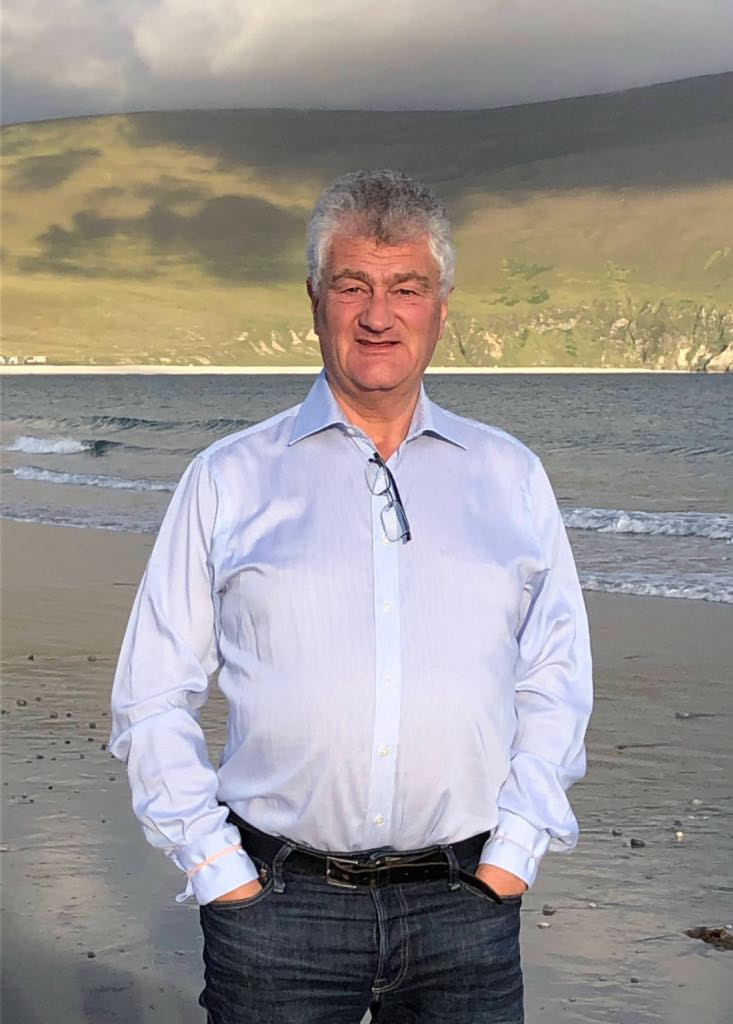
Jonathan is a historian, tour guide, and writer. He has published seven books on Irish social and economic history, and transport history, with three more in preparation. In the tourism industry, he has been leading tours for some twenty years. He collaborates with television producers where historical context is needed in preparation for TV programmes, and is heavily involved in several groups that assist tourists coming to Ireland, in particular those tracing their Irish roots. Naturally, he still finds time for the occasional pint of Guinness, and playtime with his grandson.
 RELATED ☘️