By SHELAGH BRALEY STARR
RELATED☘️ Staff
When I met Jean MacDougall-Tattan, I was at a book fair. I saw her name on the book she’d written, and I said, “Oh, you sound Celtic.” We laughed, and then she said in all seriousness, “Actually, I’m not a MacDougall after all. I’m a—”
What followed in our conversation highlighted what so many people experience when they take a DNA test, and also what they fear. As MacDougall-Tattan found out, a simple DNA sample can lead to more than a family tree—it can lead to unexpected revelations.
But for her, it also healed a lifelong misunderstanding.
Growing up in a home where her parents didn’t talk about their history made her naturally curious, she said, and though she was raised with two sisters, she carried a pervading sense all through her childhood that she had a brother, somehow, somewhere.
“I thought my father probably had an affair, and I assumed that was how that could be true,” MacDougall-Tattan said. “How wrong I was. But basically, I was on a quest for information, about who I was related to,” she said, “because I had no idea. I thought, maybe I would meet somebody, and I would like them.”
When she retired, her two grown children bought her a DNA kit. She was excited to have the time to pursue something she’d always wondered about. “No one knew what would come of it,” she said. She took the test in fall 2018.
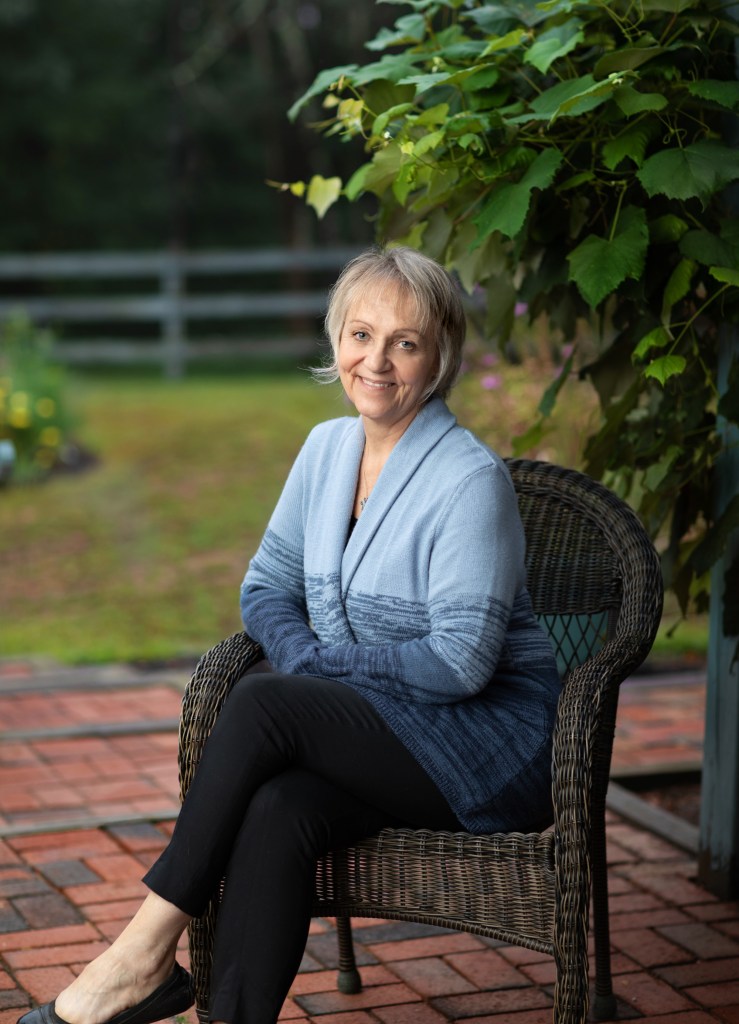
The results certainly changed her life. They provided names of people she was somehow related to, but she didn’t recognize any of them. Her closest relation, according to the DNA results, was a woman on the West Coast. The results showed she could be anyone from MacDougall-Tattan’s first cousin to half-sister.
“I could not figure out the name. But I wanted to try to understand, so I messaged her: ‘I see we’re related, but I don’t know how. Do you?’ ” she asked. The woman didn’t answer, to MacDougall-Tattan’s disappointment. The year 2019 arrived as she tried to work out the puzzle of these new family connections.
Then in spring 2019, she saw another relation pop up from the Midwest. “I messaged her right away, ‘I see we’re related. I don’t know how. Can you help me?’ This time, the woman got right back to me. She said, ‘Hi Jean, I’ve been building my family tree for years, and I just did my DNA. I don’t know how we’re related, but we’ll figure it out.’ ”
Now she had someone to work with. The woman offered MacDougall-Tattan access to her family tree, which included a list of surnames.
“I know that name, that’s my godfather’s name, that’s McElhinney,” she said to the woman, referring to a man she knew as a youngster. “I always called him my uncle, but I didn’t know we were really related. I wonder how?”
By summer, the woman asked MacDougall-Tattan if her mother were still alive. “She already knew (the answer), but she knew I had no idea and she was afraid to devastate me.”
MacDougall-Tattan describes herself as a realist. “If there’s something I need to know, I’d rather be hit in the face with it and work it around and through,” she said. The news she got was a lot to process, nonetheless.
Her godfather—longtime friend of her parents, Christmas Eve Santa Claus caller, and wedding guest—was her biological father.
“Your foundation is not only cracked, it’s like a volcanic fault. It’s the most devastating thing. You don’t know who you are any more,” she said.
At the time, she was 62 years old. “Between the adult that I was, the adult rational mind that I had was just saying, ‘you know mom was not happy in that marriage. It just makes sense that this could have happened. But the inner child is going, ‘what?!’ That wounded little girl was still inside, not knowing which way to turn. It was just a rollercoaster ride of hell for about a year,” she said.
Her children and husband were supportive of her through the revelation. “At first, my kids were kind of angry at mom, but there was no need for that, it was more protectiveness over me. And my husband, who doesn’t say much, didn’t seem shocked.” Her siblings, unfortunately, had a much harder time with the discovery, dealing with denial and anger.
She had been right about one thing, though: “I actually had two biological brothers. They passed away before I could meet them,” she said.
But around the same time, that “wonderful young woman” from the Midwest—the first connection MacDougall-Tattan made who helped—said her sister was going to be visiting during the summer. They made plans to connect in person.
“It was a lovely afternoon,” MacDougall-Tattan said. “The most profound thing about that meeting was that it was the first time I was around family where I actually felt like I belonged.” Her daughter accompanied her, and MacDougall-Tattan recalled her saying, “Why do I feel like I just met the first person in our family I click with?”
During that meeting, MacDougall-Tattan met her new niece and a new nephew. He approached her with a question.
“Was your mother’s name Ruthie?” he asked. He recounted a conversation he had with his grandfather, MacDougall-Tattan’s biological father, years before, when he was going through a hard breakup. “He said, ‘I was having a heart-to-heart with granddad, and he told me there was a woman he was very much in love with, and he had to walk away. He said she was one of the greatest loves of his life.’”
MacDougall-Tattan was surprised, but on another level, she was happy for her mother that at least she had been happy at some point. At this time, her mother was elderly, in assisted living, and experiencing some dementia.
“I wanted to know if it was okay to even bring this up with my mother at this point, and if it was okay, how should I go about it? A neuropsychologist, social worker, and nurse who were part of the team that originally diagnosed my mother’s dementia all said don’t do it in the afternoon when she might be sundowning, come alone so she didn’t feel ganged up on, and don’t have anyone with you who could fly off the handle and make disparaging remarks. I had one shot,” she said.
So she went alone. She shared that she’d done a DNA test. “She had good long-term memory. I told her the DNA indicated John MacDougall was not my father. She got a deer-in-headlights look.”
The conversation was not easy, and it took a few attempts. Finally, MacDougall-Tattan took out a photo her daughter had taken of her with her new niece and nephew. “I showed her the picture and told her who they were. She said, ‘They came to see you? Why?’ I said the DNA indicated we were related.”
Her mother sat quietly, not knowing what to say. MacDougall-Tattan finally said, “Do you want to know what my nephew told me, Mom? He asked me if my mother’s name was Ruthie, because his grandfather told him his great love was Ruthie, and he had to walk away.”
MacDougall-Tattan’s mother used a walker, but she stopped walking. She stood still and put her head down, then whispered, “He said that?” When MacDougall-Tattan said yes, she said, “Well, that makes me want to cry. Because that’s what he used to say to me all the time, but I thought that’s what he told all the girls, so I didn’t believe him.” She looked up at her daughter. “Maybe I should have.”
She then told MacDougall-Tattan the story of someone to whom she could tell anything. “He was over the house all the time, he was such a good friend to me. I guess I was just ashamed.”
MacDougall-Tattan put her hand on her chest and said, “Ashamed? Look what came out of it.” Her mother said, “Well, that was the only good thing.”
McElhinney was separated from his wife when MacDougall-Tattan was conceived. He and his wife got back together, then they separated for good, she said.
“I envision that it started out innocently. He probably consoled her because my father was drinking. Then it became more, and they kept it in check until they couldn’t, and then I was born,” she said. “I believe they loved each other.”
“I don’t know if he knew (about his daughter, MacDougall-Tattan), I’ll never know for sure,” she said.
The secret impacted their mother-and-daughter dynamics, understandably, and they hadn’t been able to build a good relationship, MacDougall-Tattan said. “It was always very strained, and I never understood, I couldn’t wrap my head around it. I was the most outspoken, the rebel, the realist.”
When it was time for MacDougall-Tattan to leave the assisted living home, she hugged her mother and said I love you. “She looked down at the floor, she couldn’t make eye contact, but she said, ‘I love you, too,’ then she side-glanced, ‘maybe a little more now.’ ”
“Knowing my mother as I did, I knew she was apologizing for the way she’d treated me. She was unburdened from a secret she’d kept for more than 60 years, with no judgment from me. I didn’t raise my voice or call her names. I just listened. I finally understood it wasn’t me my mother didn’t like, it was her sin—I could have been her undoing. Every time she looked at me, she saw the mistake she thought she made, because she had no idea he really loved her. She learned that from me, and I think it was the best thing I could’ve done for her or me. It helped heal our relationship,” MacDougall-Tattan said. “There was love there.”
Unfortunately, the Covid pandemic hit right after that, and MacDougall-Tattan was not able to see her mother again before she passed. “So thank goodness I did it when I did.”
She said she would do it again, the same way, if she had to, and that time was kind to her as it was.
“I am so glad that I didn’t find any of this out when I was younger. It’s better to find out something big like this when you are older and wiser and have the maturity to deal with it. The older you are, the more aware you are that everybody is imperfect, and the higher you put somebody on a pedestal, the farther they fall. It happened exactly as it was supposed to happen,” she said.
This Christmas will be the second time MacDougall-Tattan has gathered with her new McElhinney clan. “It’s a huge Irish family,” she said. “My nephew, who I see often, said he has 26 aunts.”
The first time was intimidating, she said, to walk into a totally foreign world and be accepted. “But it’s so fun,” she said with a laugh. “I was born a Mac, and I became a Mc.”
Do you have an interesting genealogy story that you would like to share? Send your idea to stories@byancestry.com and we’ll get in touch to discuss a possible feature.
 RELATED ☘️