By JONATHAN BEAUMONT
RELATED☘️ Staff
Virtually all of Ireland’s emigrants belonged to the Catholic Church (80 percent) or were Protestants (20 percent). Of the latter, just more than half would have been Anglican (Episcopalian), that is Church of Ireland (10%) or Presbyterian (almost 10%), but with a few Methodists as well. Few Irish people before modern times belonged to any other faiths. We did have a tiny Jewish community, almost entirely based in Belfast and Dublin, most of whose families had ties with relatives in Britain.
Therefore, let us look at Ireland in terms of where ancestral records might lie, according to the above religious denominations.
WHAT YOU WILL FIND
In Dublin, where we’re still based in our weekly travels, the Catholic Church has its main centre of worship at St. Mary’s Pro-Cathedral at 83 Marlborough Pl, North City, Dublin 1, D01 TX49. This is in the city centre close to O’Connell Street. Hotels like the Gresham are nearby, and it’s a short walk to the main city centre area just across the river over O’Connell Bridge. If you want to get there by Luas tram, it’s close to the Marlborough stop on the Green Line. This stop is also an interchange point for the Luas Red Line (“Luas” is the street tram system); this Red Line also serves Connolly and Heuston railway stations.
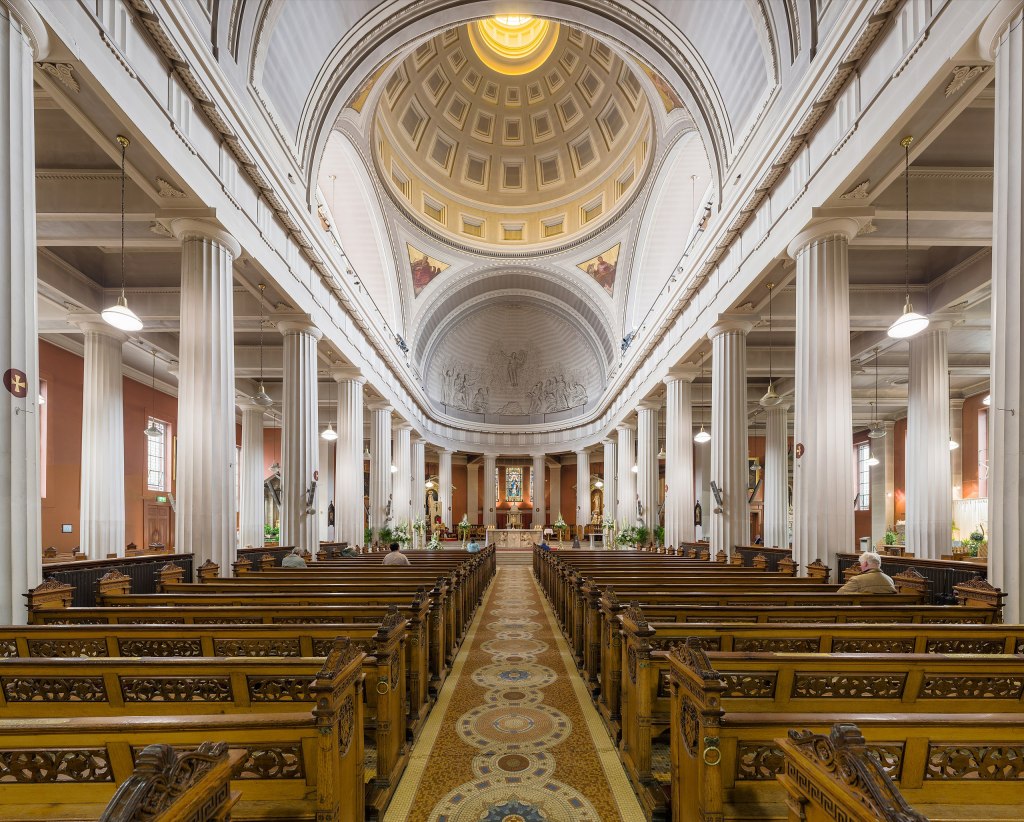
St. Mary’s maintains church registers going back to the late 18th century but you need to access these and most others via the website of the National Library of Ireland, where they are catalogued and listed. This is at https://registers.nli.ie/parishes/0520
The two major Protestant (Church of Ireland) Cathedrals of St Patrick and Christ Church are well worth visiting in their own right, being much older, and also in the old part of the city. They are actually not quite 10 minutes’ walk apart. (They are also near the George Frederik Handel Hotel, with its famous bar, Darkey Kelly’s, where there is live music almost every night!).
St Patricks was built in 1220 adjacent to an even older holy well. It contains highly historic artifacts and is a major tourist attraction, but a “working church,” too. They are currently cataloguing much of their ancestral material, so a direct enquiry via their website before you visit would be the best way to delve there – https://www.irishgenealogy.ie/ is free, and you need to select the church; also the Church of Ireland’s “head office” – https://www.churchofireland.org/about/genealogy
This contains material ranging from 1677-1800, mostly digitised parochial records. It is housed in the Representative Church Body (RCB) at Rathmines, a bus journey into the suburbs, but online sources as above may assist first. The National Archives (www.nli.ie) contains much material from the Church of Ireland too.
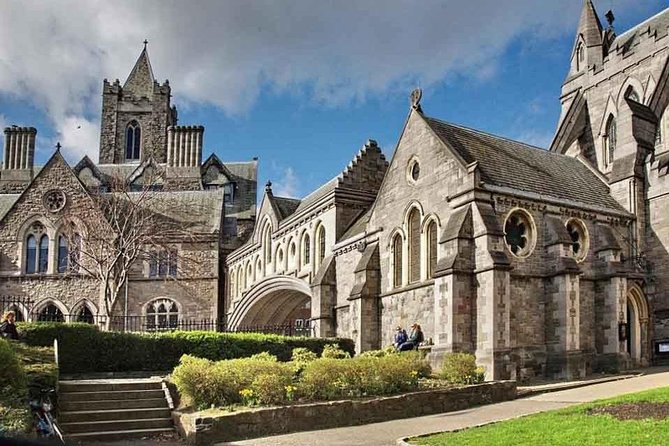
The other C of I cathedral is even older, founded by the Vikings in 1030 and rebuilt in 1172 after the Norman Invasion. This is Christ Church, also well worth seeing and with what I personally believe is one of Dublin’s most informative museums adjacent to it; this is “Dublinia” which tells you all about the early Viking-era Dublin. See https://christchurchcathedral.ie/about/history/archives-and-publications/ for all the details.
If your ancestors were Methodist they might be easier to find, as there only about 50,000 across the whole country, and the vast majority are in the north. But for completeness, the Historical Society will help; https://methodisthistoryireland.org/family-history-genealogy/ Check Church of Ireland records too, as early Methodists (including one distant relative of mine) tended to go to the local C of I! Methodists didn’t really exist here before 1816 or so, and marriages didn’t officially happen until just before Famine times, so if your people left here, say, in 1799, they were not Methodist, but they might have been C of I.
That leaves the Presbyterians. While the C of I members who represent the majority of Protestants are spread across Ireland, Presbyterians were largely descended from Scots settlers during the Plantation in the 1600s. Thus, they are overwhelmingly concentrated in the north-east, and their headquarters is in Belfast. But again for completeness, check https://presbyterianhistoryireland.com/
So we’ve dealt with the Christian churches in general. There are a few more, including an offshoot of the Presbyterians, which was only founded in the north in the 1970s, thus doesn’t come into ancestry and Dublin! Those are the “Free Presbyterians,” who number not quite 10,000 people.
So what’s left – well, I mentioned earlier that we did have a few Jewish folks in Ireland and still do. (A good friend of mine, another tour guide, is actually one of only two folks of that faith I’ve ever known here!). Small though their numbers are, only a few hundred in Belfast now and maybe 2500 in the greater Dublin area, there are two synagogues in Dublin and one in Belfast. You’ll find details at https://www.irishjewishroots.com/
WHY A VISIT MATTERS: Even if original registers are held elsewhere, visiting the church buildings adds emotional context—this is where your people were baptized, married, and buried from.
TIP: Take a copy of any register entries you already have and stand outside the church at roughly the same time of day the record was created. It’s a powerful way to imagine the scene.
If you manage to trace your ancestors to a particular church, be aware that with significantly falling attendances on recent decades, many rural churches, especially Protestant ones, have closed up or are only opened rarely. In all denominations, clerical shortages are now severe and as a result many rural parishes have been amalgamated. This applies to some parishes in urban centres too, which can mean that one clergyman is “overseeing” a number of locations, often quite a few kilometres apart, so he might be hard to get hold of!
It’s not as bad as that in Dublin, of course, and doesn’t apply at all in the bigger parishes.
 RELATED ☘️