By SHELAGH BRALEY STARR
RELATED☘️ Staff
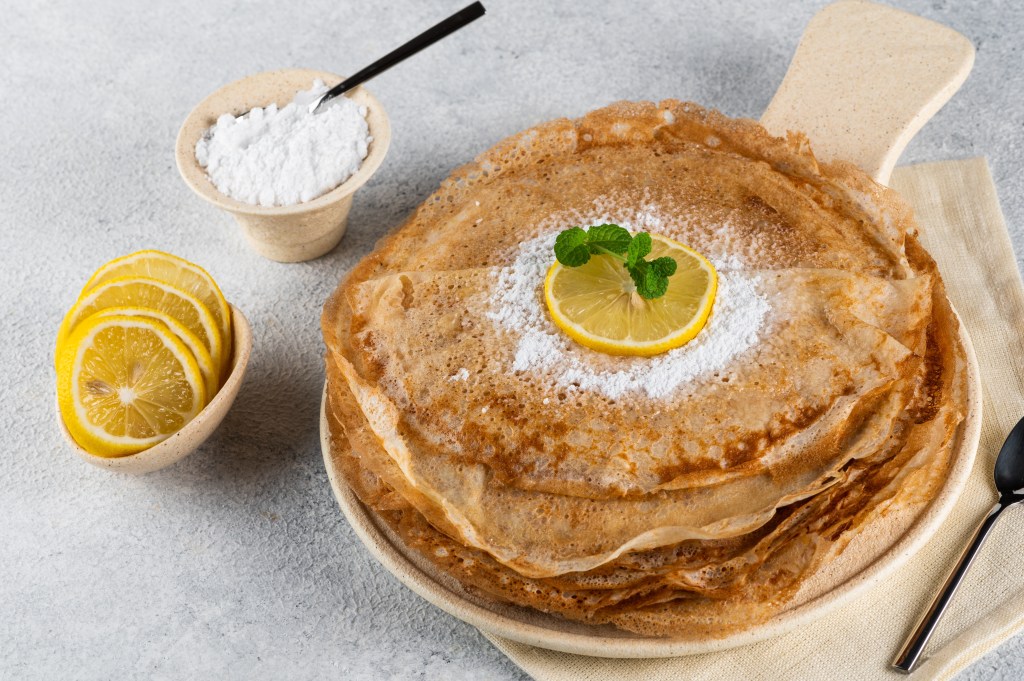
Walk into a diner in the United States and order pancakes, and you’ll likely be served a towering stack of thick, fluffy disks, glistening with maple syrup and a pat of melting butter. Step into an Irish kitchen on Shrove Tuesday, however, and “pancakes” look—and taste—very different: thin, almost crêpe‑like, rolled or folded, and sprinkled with sugar and lemon juice.
Both are called pancakes. Both are beloved. But they tell very different stories, especially when it comes to the centuries‑old ritual of Shrove Tuesday.
Why Pancakes on Shrove Tuesday?
Shrove Tuesday, also known as Pancake Tuesday, falls on Feb. 17 this year. It’s the day before Ash Wednesday, which marks the beginning of Lent in the Christian calendar. Traditionally, Lent was a serious period of fasting and abstinence. Rich foods like eggs, butter, and fat were off the table—literally.
The word “shrove” comes from “shrive,” meaning to confess and receive absolution. But the day before this solemn season also became a last chance to use up indulgent ingredients. Pancakes were the perfect answer: a simple batter of flour, eggs, and milk cooked in butter or fat, turning leftover cupboard staples into a festive meal.
In Ireland and the UK, that association stuck so strongly that Shrove Tuesday is simply “Pancake Tuesday” for many families. Schools hold pancake races, kids argue over toppings, and even people who rarely cook will whisk up batter for the occasion. The pancake itself, in this context, is a vessel for tradition: a farewell to richness before the leaner Lenten weeks.
American vs Irish Pancakes: Same Idea, Different Personality
Though both American and Irish pancakes share a basic formula—flour, eggs, liquid—the similarities largely end there. The differences tell you a lot about home cooking on each side of the Atlantic.
Thickness and Texture
American pancakes are all about fluff. They’re leavened with baking powder (and often baking soda), which creates that cloud‑like rise. The batter is relatively thick and spooned onto a hot griddle in generous rounds, puffing up as they cook. Cut into one and you’ll see a soft, cake‑like crumb, ideal for soaking up syrup and butter.
Irish pancakes for Shrove Tuesday, by contrast, are closer to French crêpes or British pancakes. The batter is much thinner, and there’s usually less emphasis on leavening; some recipes add a small amount of baking powder, but many rely solely on the eggs for structure. The result is a large, flat, tender pancake, just thick enough not to tear when rolled.
Size and Shape
American pancakes are smaller and stacked—think 3–5 to a serving, each around 4–5 inches across. They arrive at the table piled high, a visual shorthand for generosity.
Irish pancakes are typically pan‑sized, one big circle per batch of batter ladled into the pan. These are served individually, then rolled or folded with toppings inside. On Shrove Tuesday, the ritual often includes everyone taking turns flipping the pancakes in the pan, sometimes with coins or small tokens hidden for good luck.
Ingredients and Flavors
In North America, pancakes are a playground for creativity. Buttermilk is common, giving tang and extra tenderness. Sugar is usually added to the batter, and vanilla sometimes sneaks in. Mix‑ins like blueberries, chocolate chips, or bananas are popular. The default topping is maple syrup, sometimes with whipped cream or fruit.
Traditional Irish Shrove Tuesday pancakes are comparatively austere—and that’s the point. The batter is plain: flour, eggs, milk, maybe a hint of sugar or lemon zest. The classic topping is simple but iconic: a squeeze of fresh lemon and a generous sprinkle of caster sugar. The sharp citrus cuts through the rich butter, and the sugar melts into a sweet, glossy layer.
Other toppings have become common in modern Ireland—Nutella, jam, golden syrup—but lemon and sugar remain the nostalgic favorite, tied closely to childhood memories of Pancake Tuesday.
When They’re Eaten
Irish pancakes, especially in the Shrove Tuesday context, are more of an annual ritual. Yes, people make them at other times, but Pancake Tuesday is when they truly take center stage. For many families, it’s breakfast, dessert, or even dinner built entirely around pancakes—a once‑a‑year indulgence linked directly to the Lenten calendar.
A Traditional Irish Shrove Tuesday Pancake Recipe
This recipe captures the classic Irish Pancake Tuesday style: thin, soft pancakes ready to be rolled with lemon and sugar.
Makes: About 8 to 10 thin pancakes
Time: 30 minutes (including resting the batter)
Ingredients
1 cup (125 g) plain/all‑purpose flour
A pinch of salt
2 large eggs
1¼–1½ cups (300–350 ml) milk (start with 1¼, add more if needed)
2–3 tbsp melted butter (plus more for frying)
1–2 tbsp sugar (optional; many traditional recipes leave this out)
For serving:
Caster (superfine) sugar or confection (powdered) sugar
Fresh lemons, cut into wedges
Extra butter for the pan
How to make:
Make the batter
Sift the flour and salt into a mixing bowl.
Make a well in the center and crack in the eggs.
Pour in about half the milk and whisk, gradually drawing in the flour from the sides to avoid lumps.
Add the remaining milk and melted butter, whisking until you have a smooth, pourable batter. It should be thinner than American pancake batter—closer to single cream. If it feels too thick, whisk in a little extra milk.
Rest the batter
Let the batter sit for 15–20 minutes at room temperature. This allows the flour to hydrate and helps the pancakes cook more evenly and tenderly.
Heat the pan
Place a non‑stick or well‑seasoned frying pan over medium‑high heat.
Add a small knob of butter and swirl to coat, wiping away any excess with a folded piece of paper towel. The pan should be hot but not smoking.
Cook the pancakes
Pour a small ladleful of batter into the center of the pan, immediately tilting and rotating the pan so the batter spreads into a thin, even layer.
Cook for about 1–2 minutes, until the edges are slightly crisp and lifting from the pan and the underside is lightly golden.
Flip the pancake with a spatula—or with a confident toss of the wrist—then cook for another 30–60 seconds on the other side.
Serve in the traditional way
Slide the pancake onto a warm plate.
Sprinkle generously with caster sugar and squeeze over fresh lemon juice.
Roll it up or fold into quarters, then eat immediately.
Repeat with the remaining batter, adding a little more butter to the pan as needed.
More Than a Treat
In North American culture, pancakes are a comforting everyday luxury—soft, sweet, and endlessly customizable. In Ireland, the Shrove Tuesday pancake is less about decadence and more about marking time: a simple dish that bridges the gap between feasting and fasting, childhood and adulthood, the ordinary and the sacred.
Both versions, though, share the same quiet power. They bring people to the table, invite conversation, and turn a few humble ingredients into something worth celebrating—whether it’s a Sunday brunch or that last sweet bite before Lent begins.
 RELATED ☘️