FEBRUARY BOOK REVIEW
for Brigid’s Library Book Club, the book club exclusively for Irish by Ancestry Members and Friends
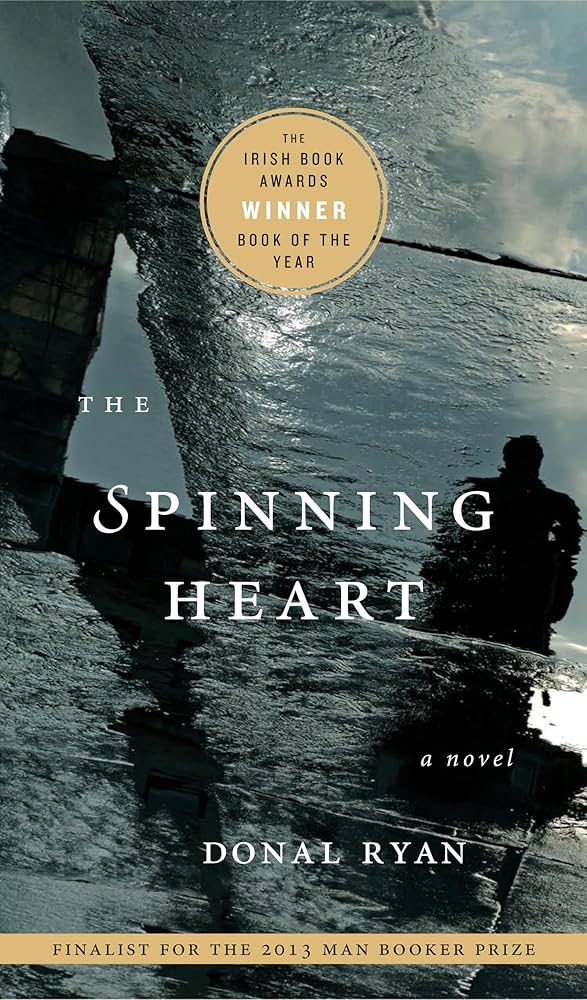
THE SPINNING HEART, by Donal Ryan (US, Steerforth Press/ Doubleday Ireland)
By SHELAGH BRALEY STARR
RELATED ☘️ Staff
Donal Ryan’s multi-award-winning novel, THE SPINNING HEART, is one of those rare books that feels both incredibly small and impossibly vast. At just more than 150 pages, it could be read in an afternoon; yet the Ireland it captures—post‑Celtic Tiger, bewildered, wounded, and stubbornly hopeful—will sit with you long after you close the cover. For our readership, interested in “the real Ireland,” this is as unvarnished and authentic as contemporary Irish fiction gets.
Set in a small rural town in the aftermath of the crash, the novel is built around the collapse of a construction firm whose owner has done a runner, leaving workers unpaid, pensions raided, and a whole community hollowed out. That might sound like the premise for an economic tract, but Ryan’s approach is the opposite of abstract. He takes us into the minds of 21 different characters, each speaking in their own first-person monologue, each shaped and scarred by the boom and its brutal end.
At the center—though he only gets one chapter like everyone else—is Bobby Mahon, the foreman everyone respects but no one truly understands. Bobby’s father is a tyrannical drunk, his marriage is loving but strained, and his sense of decency is being crushed by events beyond his control. His voice is the moral and emotional anchor of the book, all quiet heartbreak and unshowy courage. The spinning heart of the title is a literal metal heart that hangs on Bobby’s childhood gate, creaking in the wind, but it’s also a symbol for a country knocked sideways, desperately trying to find its balance again.
Ryan’s narrative structure is daring. Each chapter belongs to a different character, and we never stay with any of them for more than a few pages. On paper that sounds disjointed; in practice, it’s masterful. Voices echo and contradict each other. Rumors swirl. A kidnapping, a murder, and an affair emerge not as the central plot points of a crime story, but as lived experiences filtered through gossip, fear, and misunderstanding. You assemble the truth, or something like it, in the gaps between what people say and what they avoid saying.
For readers interested in Irish culture, one of the chief pleasures of The Spinning Heart is its language. Ryan writes in an English that is unmistakably Irish, specifically rural and Munster-flavored, full of cadences, idioms, and rhythms that feel spoken rather than written. Yet he avoids caricature or stage‑Irishness. These aren’t charming peasants in picturesque hardship; they’re builders, daycare workers, unemployed laborers, publicans, young mothers, children, and the elderly—people who might live in any small Irish town you could name and speak in ways that ground them in reality.
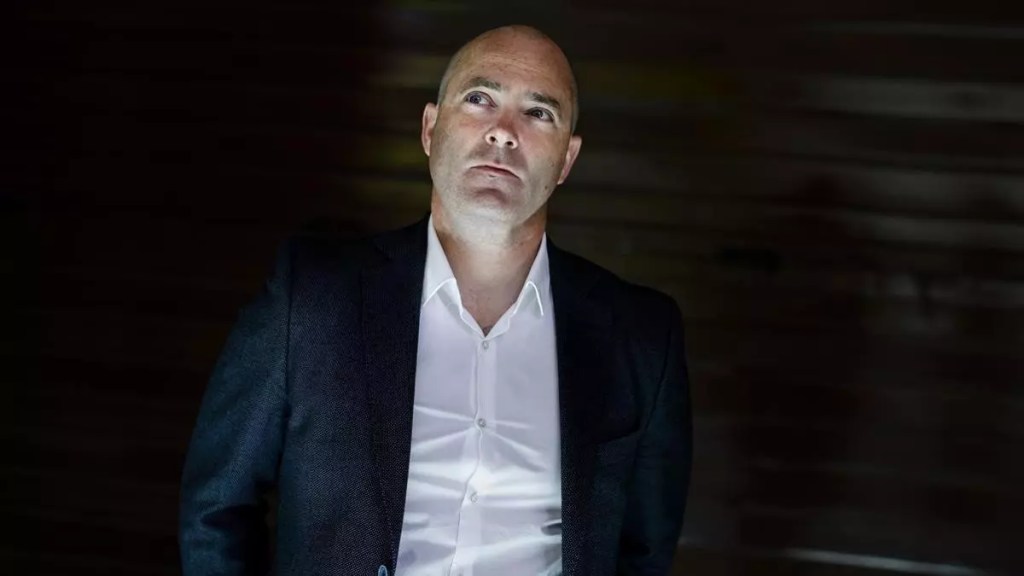
“For me the language is everyday, I hear it all the time,” Ryan said in an interview when the book was published. “All the characters are completely fictional, but it is the way people talk. It is to do with the physical rhythm of language in Ireland. A rural language, as Anne Enright has identified.”
“English was pretty much imposed on Ireland, but we kept the structure of the Irish language. I think the Irish people took a language that was forced upon them and made it beautiful,” he said. “There are few places on earth, for example, where the verb ‘to bring’ is used in more than one direction: ‘You can bring that away wit’ ya.’ ”
The novel is steeped in the social realities of post‑Tiger Ireland: unfinished housing estates standing like monuments to hubris, men forced to emigrate or sit idle, marriages strained by money worries, young people stuck between the promise they were sold and the future they actually face. Ryan writes with a calm fury about the casual betrayals of the boom years—the pension funds looted, the planning corruption, the blind faith in “the lads” who’d sort everything out. But he never lapses into lecture. The politics are always grounded in people: a father who can’t provide for his child, a woman who can’t leave a toxic situation, a community watching its young vanish to Australia and London. A big part of it is that, he said, the Irish culture did not change, even as its economy did.
“We didn’t take very well as a nation to prosperity. People were building huge houses and really flaunting the trappings of wealth, but we weren’t good at it, we weren’t used to it,” he told BookBrowse at the time of the book’s publication. “We were the same people, we were part of the previous history, the same character. That is why people are so upset by it, because they think we can’t go back to the old way, and the way we thought we were five years ago is completely destroyed now. It is a paradigm.”
What elevates The Spinning Heart is Ryan’s compassion. Almost everyone in this book is flawed, sometimes badly. Nearly everyone is also understandable, if not forgivable. The bitter old man, the lonely child, the woman pushing for an affair for a sense of worth, the insecure young lad desperate to act tough—Ryan renders them all with an almost shocking tenderness. Even the most unlikeable characters are granted an inner life, a history, and a unique voice. In doing so, he offers a quiet rebuke to the simplistic narratives that dominated talk about Ireland’s crash: the greedy bankers, the stupid borrowers, the innocent taxpayers. Here, the crisis is not a headline but a series of small detonations in ordinary lives.
Formally, the book’s brilliant polyphonic structure allows Ryan to show how stories are made and remade in a tight-knit community. No one has the full picture. Some people lie; others misremember; others still are simply in the dark. You become aware of how a town’s identity, its sense of itself, is an ongoing negotiation between personal memory and public myth. That’s a deeply Irish characteristic, and the novel handles it without high-flown rhetoric, relying instead on half-heard conversations in kitchens, pubs, and building sites.
Despite its often-grim subject matter, the novel is far from unrelentingly bleak. There is dark humor throughout, the kind of dry, fatalistic wit that anyone familiar with Irish families will recognize instantly. There are moments of real warmth, friendships that endure, small acts of kindness, the stubborn continuance of community even when trust in institutions has evaporated. Ryan never promises redemption, but he suggests the possibility of a future that isn’t entirely defined by betrayal and loss.
For book club readers, The Spinning Heart is a rich text for discussion. Its chorus of voices invites questions: Whose account do you believe? How fair is the town’s judgment of certain characters? Does Bobby deserve his near-saintly status, or is that another communal myth papering over deeper issues? The book also raises uncomfortable but necessary conversations about masculinity in rural Ireland—men taught to be stoic, emotionally inarticulate, and economically indispensable at the very moment when their traditional roles are being ripped away.
It’s also worth noting how rooted the book is in a specifically Irish Catholic and post‑Catholic atmosphere, even when religion is barely mentioned. There’s a strong undercurrent of shame, silence, and keeping up appearances. People worry about what the neighbors will think; they avoid hard conversations; they live with secrets that everyone half-knows. Tese textures are as important as any plot twist: This is Ireland, not as tourist brochure but as lived psychological landscape.
The Spinning Heart won the Guardian First Book Award and was longlisted for the Booker Prize among many others, and it’s not hard to see why. Yet despite the acclaim, it remains a very accessible novel. The chapters are short, the prose is clear, and the emotional stakes are immediately understandable. This would suit a wide range of readers, from those who lived through the Celtic Tiger and its collapse, to younger members curious about the recent past that shaped the Ireland they’ve inherited. The follow-up to this novel that reunites these now-beloved 21 characters, HEART, BE AT PEACE, also won numerous prizes, including the An Post Irish Book of the Year 2024 and the Orwell Political Fiction Book Prize for 2025. It would not be a difficult undertaking to read both back-to-back.
In the end, Ryan offers no grand solution to the problems he depicts. What he offers instead is attention—to accent, to gesture, to inherited hurts and quiet loves. He listens to a town in crisis and lets it speak in all its confusion, cruelty, humor, and hope. For anyone who wants to understand, not just what happened to Ireland after the bubble burst, but how it felt in kitchens and fields and half-built estates across the country, The Spinning Heart is essential reading.
You can buy The Spinning Heart here: https://a.co/d/hfz6dKi
And Heart, Be at Peace here: https://a.co/d/9fVWRr3
If this book interested you, and you’re craving more thoughtful conversation, consider yourself invited to Brigid’s Library Book Club.
We are a warm, welcoming global group of readers who dive deeper into what we read, share honest reactions and recommendations, and participate in relaxed discussions with each other and the authors who share their talents with us.
Whether you are a voracious reader or just getting back into books, you’ll find a friendly space to connect, reflect, and discover your next great read. Pour a cuppa and join the conversation at Brigid’s Library Book Club.
Our February book club pick is BRIGID, by Kim Curran. It cannot be procured in the United States yet, so we have purchased a case to distribute. If you would like to buy a copy and join us, please let me know. Send me a note at shelagh@byancestry.com
Join through the website to receive our monthly notes on books and events to discuss them, then share your thoughts, reviews, and recs on our Facebook group. Your new favorite cozy corner of the Irish literary world is waiting. See you there!
 RELATED ☘️