By SHELAGH BRALEY STARR
RELATED☘️ STAFF
For many Irish family historians, tracing ancestors means poring over church registers, land records, and passenger lists. But behind every name and date lies a more intimate story: how those ancestors met, married, and made a life together.
To understand Irish genealogy fully, it helps to understand how courtship and marriage worked in the past. It was an intricate dance of family, fortune, and faith—but not necessarily romance.
Clodagh Doyle, keeper of the Irish folklife division at the National Museum of Ireland, knows well the old ways of matchmakers, dowries, and Shrovetide weddings, a process that shaped not only who married whom, but where families lived, which farms survived, and which cousins ended up on the far side of the Atlantic.
“The idea of a love match didn’t really happen,” Doyle said from her museum office in Turlough Park, Castlebar, Co. Mayo. “Realistically (if people didn’t get married), there’s no land then, and there isn’t enough land for everyone with big families. You know, you either get married or move and emigrate. Being married was much more acceptable than being single. It was really important to keeping the villages alive. People did not like when people weren’t marrying, because they were not contributing to the sustenance of the community.”
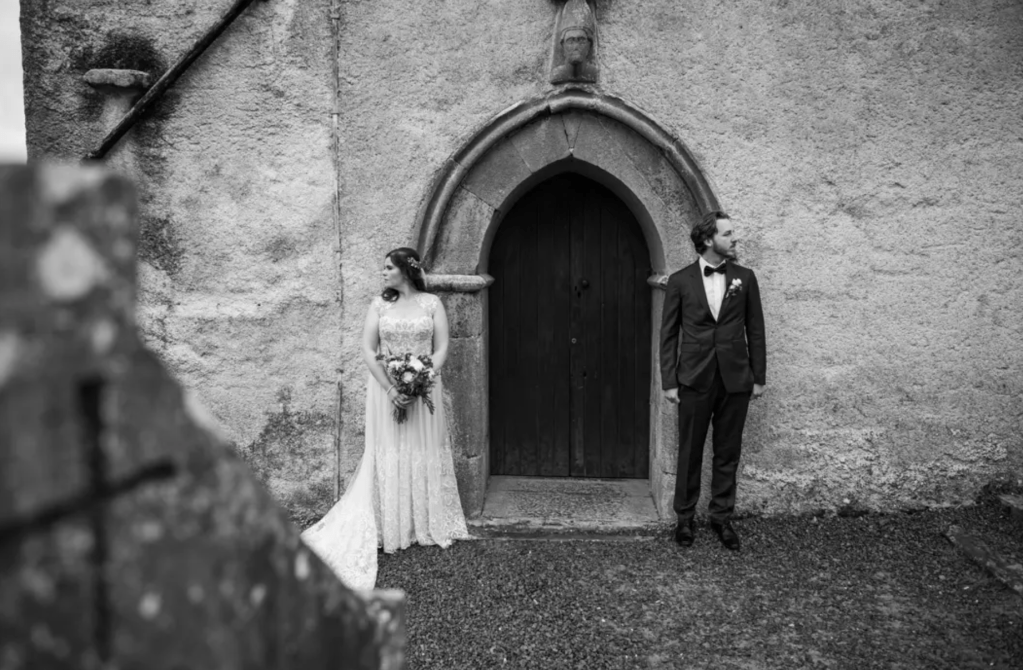
The Matchmaker: Architect of the Irish Marriage
The traditional Irish matchmaker was less a romantic and more a negotiator, go-between, and social strategist. He (and it was usually a he) operated within a tightly knit rural society where marriage was rarely a private affair between two people in love. Instead, it was a transaction involving land, livestock, and the long-term survival of the family.
“Official matchmaking was work done by a guy, often a publican,” Doyle said. “He would meet more people, because they’re working, and they go outside of the parish, or they’re meeting people coming in. They’re knowledgeable about who has an eligible son. Even if you’re not paying, a publican can offer. If you say you’re looking for somebody (to marry your daughter), he’d keep an eye out.”
In a landscape of small farms and tenant holdings, marriage decisions could determine whether a family rose, fell, or stayed afloat. The matchmaker’s role was to bring together two compatible fortunes: a son who would inherit land, and a daughter whose dowry could help secure or expand that holding. “To be married was status. If you weren’t married, you had none,” Doyle said. “They married specifically for land and respectability.”
For the genealogist, this helps explain why cousins often married within a limited geographic radius, or why you might see several marriages uniting the same few surnames in one parish. It wasn’t accidental. Matchmakers worked with a mental map of who had what: which families had ready cash, which had good grassland, which had a horse and cart, or the promise of remittances from America.
Matchmaking often began in informal settings: at fairs, markets, Lughnasadh gatherings. The matchmaker might approach a father with a proposal. There was a farmer’s son in the next parish, in need of a wife and a dowry; perhaps the man’s daughter was of a suitable age. Parental approval and economic suitability were paramount.
“Somebody is told there’s an eligible man, and then the parents meet. The couple didn’t actually meet,” Doyle said.
Dowries: Money, Cows, and the Value of a Daughter
The dowry—known in many areas as “fortune”—lay at the heart of Irish matchmaking. A daughter might bring money, cows, feather beds, or other valuables into a marriage. In return, she gained security, status, and the prospect of running her own household, often on her husband’s family land.
But for families with several daughters and limited resources, dowries posed a serious challenge.
“Wedding rings and things of value were passed around,” Doyle said. “Sometimes the dowry money that went to one girl might go to someone else, moved sibling to sibling, never spent.”
For some families, providing a fortune could be impossible, leading to difficult choices about who would marry, who might emigrate, and who would remain unmarried at home to care for aging parents. This is one key to understanding why you might see patterns like:
- One son remaining on the home farm and marrying locally
- Other sons and daughters emigrating, especially to the US, Canada, or Britain
- A “spinster aunt” or “bachelor uncle” appearing in census records, living with siblings
Dowry negotiations could be complex. The matchmaker, along with the two fathers, would haggle over the exact sum and goods. Was the girl “well-fortuned?” Did her brothers stand to inherit? Were there promises of land division? Witnesses might be present, and in some cases, these informal bargains led to disputes that ended up in local courts—records that can be a goldmine for the genealogist.
Even where no legal documents survive, the cultural weight of the dowry left traces in storytelling and family memory. An elderly relative might recall that “she married above herself,” or that “he married for the fortune.” Those phrases hint at the economic realities behind your family tree.
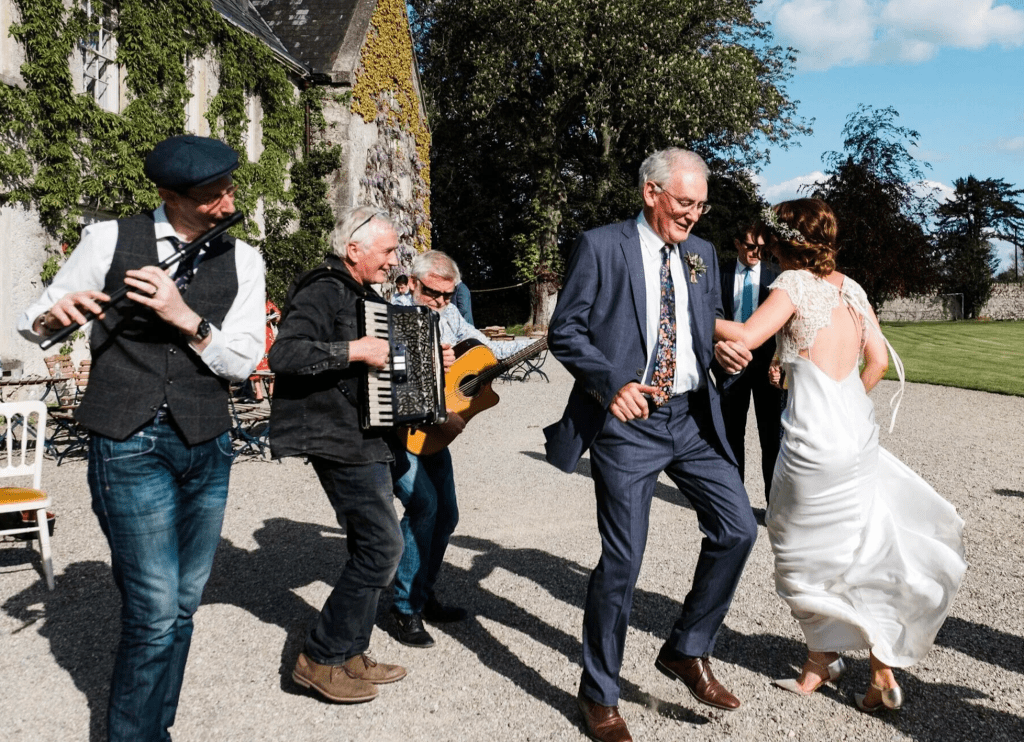
Shrovetide: The Season for Weddings
If you notice clusters of Irish family marriages in February and early March, you’re glimpsing another strong tradition: Shrovetide weddings.
Shrovetide is the period leading up to Lent, the 40 days of fasting and penance before Easter in the Christian calendar. In Ireland, the weeks before Ash Wednesday were a favored time for weddings, especially in rural communities. Lent was considered unsuitable for celebrations, so couples rushed to marry before this solemn period began.
Shrove was very important as the last day to get married. Easter could be late, April, May—then you’re already into the hard work of the land,” Doyle said. “It’s not a time for weddings.”
“The forty days with nothing happening, that’s a perfect period from Christmas to Shrove,” Doyle said. “Harvest is in by Halloween, there’s not much work to do, so it’s a perfect time to start matchmaking. In the winter, before everything starts up again, it’s the most important time to have a wedding up to Shrove Tuesday. That was really favored, because after that, we start getting into the ploughing and doing.”
The community looked forward to weddings, Doyle said, because they knew the period of fasting would soon be upon them. “In Lent, there was no drinking, no dancing. You go off so much food for lent, off dairy, off eggs, you’ve gone off pretty much everything, living on bread and porridge, no meat. It’s a time when people are lean anyway, because they’ve just planted potatoes by St. Patrick’s Day. It’s a period of deprivation, so having a Shrove wedding kind of suits because then they don’t have much left.”
Shrovetide, especially Shrove Tuesday, became synonymous with courtship and last-minute matches. “Shrove is the last chance saloon,” Doyle said.
Folk customs reflected this, with heightened pressure and harsh treatment of those who did not marry.
Unmarried men and women might be teased, chased, or symbolically “punished” for remaining single. Skits, rhymes, and local pranks reinforced the message that it was time to settle down.
Parish priests sometimes performed multiple weddings in a single day in the final days before Ash Wednesday. Looking at Catholic parish registers, you may see a sudden spike in marriage entries in late February or early March.
Pancake traditions on Shrove Tuesday were linked, not only to using up rich foods before Lent, but also to a sense of festivity and, in some areas, a degree of prophesying.
“The person who could flip the pancakes meant you’d be married,” Doyle said. There were other traditions that focused on predicting who would marry as well, she said.
RELATED☘️: Make your own Shrove Pancakes the Irish way
“You find that at Samhain (Halloween), the barmbrack tells the fortune. The time between seasons is a liminal time, not quite autumn, not quite winter, so the prophesying world is more open to you,” she said. “There might have a ring in the champ or something. You might have water, grain, or meal—you pick a bowl to put your hand in and it would predict. Clay with meant you’re going to die. The ring meant you were going to marry, meal meant rich, and water meant you’d emigrate. To get married was the important thing. So that’s why they want to find the ring. That was precious.”
Shrovetide customs sometimes extended beyond the marriage itself. In some localities, if a young woman remained unmarried past Shrovetide, her friends might “marry” her in jest to a local landmark—like a gate or a church bell. These rituals, though playful, underscore the social expectation that marriage was the norm and a near-obligation.
“They played practical jokes on bachelors and spinsters, they were real targets,” Doyle said. “They had Chalk Sunday, when all the bachelors and spinsters got chalked on their backs, singled out. They’re marked, and they have things are thrown at them. Also, Salt Monday: By the time they got marketplace, they would have salt thrown on them to be pickled for another year.”
If you find that one ancestor married “late” (especially a second son or a woman in her late twenties), that may reflect the time it took to arrange a suitable match—waiting for an older sibling to marry, an inheritance to be settled, or a farm lease to become secure. Or it could be that they were one of the unlucky siblings who had to emigrate.
“Loads of people emigrated. And they’re going away because they have no choice. They’d spend 20 years working in, say, Boston. Then a lady would come back with the money, and she has her pick then. Or a man has made his fortune,” Doyle said. “They’re in their 40s, but they’re such a good catch, (a marriage match) is going to happen. They probably can’t have kids, but they made good. Sometimes these matches worked out very well,” she said.
For those tracing Irish roots, these customs offer practical clues:
Check the season: If you can’t find a marriage, focus your search on Shrovetide first, then on other popular seasons (after harvest, around Christmas, depending on locality).
Notice clusters of surnames: Repeated intermarriage between a small circle of families may signal strategic alliances around land and dowry.
Mind the “unmarried” adults: An aunt who never married, or a brother who emigrated alone, may reflect dowry limitations, inheritance patterns, or the sacrifices made to secure one crucial marriage on the home farm.
Listen to the stories: Phrases like “she brought a good farm,” “he married for money,” or “it was arranged over a fair” are not just gossip; they are shorthand for the economic engine behind your family history.
Modern Romance, Old Echoes
Today’s Irish couples are far more likely to meet at university, work, a music festival, or through an app than through a village matchmaker. Legal reforms and social change have transformed Ireland’s approach to love and marriage, from contraception and divorce rights to marriage equality.
Yet the long memory of matchmakers, dowries, and Shrovetide weddings still shapes how many Irish families tell their stories. The idea that marriage is a family affair, that land and home matter deeply, and that the wider community has a stake in each union remains powerful.
“It’s the same thing all over the world, marrying families together. You’re not just marrying one person, you’re marrying their whole family,” Doyle said.
The process of matchmaking wasn’t always successful, Doyle pointed out. “Sometimes there are stories where a girl will run away,” she said, “if it’s better than marrying this feckin’ old lad.”
And it could be an unsavory proposition, referencing her own father’s mother from East Galway. “She was born around 1899, she’s (born) 12 or 13 in the family, a few die, a few emigrate. So when we’re loking at census records, the father was at least 30 years older. She was 40 having babies. He was at least 70. So, you can imagine, it was not easy.”
But sometimes, love and trade found harmony together.
“How would you like to be buried with my people? That’s the proposal,” Doyle said. “Do you want to walk the lands with me? They were showing what they had and what you had to gain. you stepped the land together, you knew how many acres you’d benefit from. That was couples getting to know each other.”
That’s a pretty romantic start to a life that created a hundred thousand descendants and spread around the world.
 RELATED ☘️