By SHELAGH BRALEY STARR
RELATED☘️ Staff
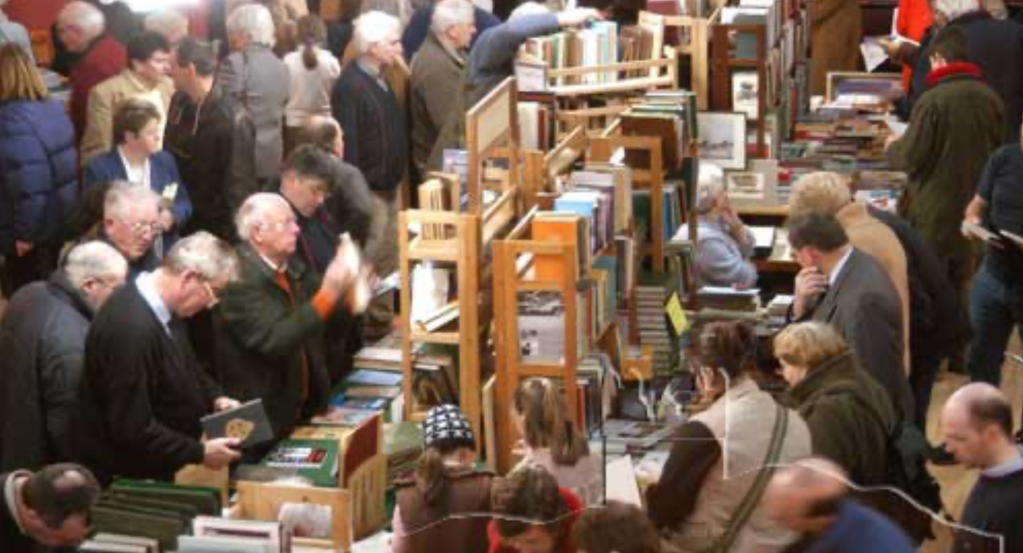
On a blustery February Sunday in Fethard, Co. Tipperary, the past changes hands at trestle tables. The Tipperariana Book Fair, now a fixture in Ireland’s literary calendar, turns the town’s Abbey Community Centre into a bustling maze of memories, scholarship, and serendipitous finds. It is part marketplace, part social reunion, and part celebration of everything the printed page has meant to this county—and still can mean.
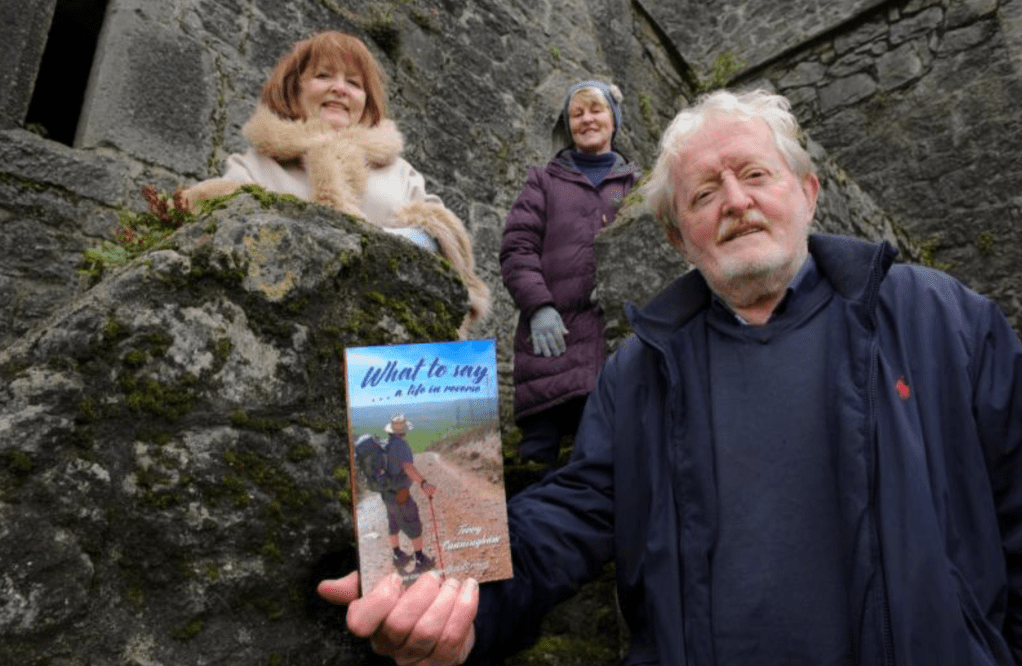
“Fethard,” (like feathered friends), Terry Cunningham, founder of the event, pronounced in a recent call. “It doesn’t happen like this anywhere else. We started with the concept (of the book fair) more than 30 years ago, and our thinking worked out.”
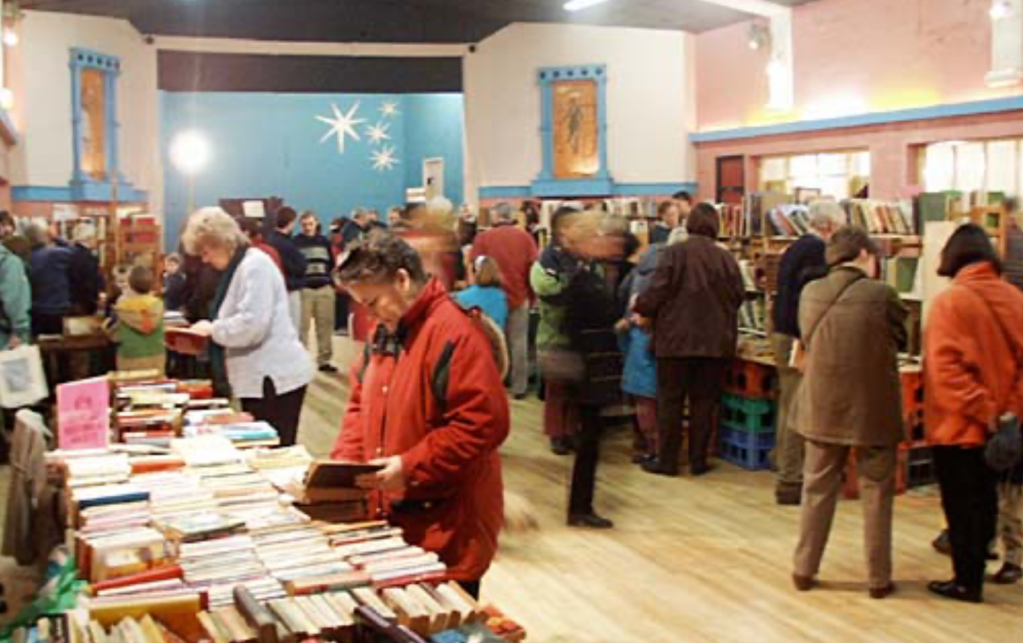
The Fethard Historical Society, in whose growth Cunningham has been instrumental for decades, collects book donations and once a year invites book dealers to share their wares in stalls in the Fethard Ballroom. “Obviously, it’s a fundraiser. No one likes a fundraiser, but in this case, we are dealing in books, which we like anyway. It was work we liked, it makes money,” he said. “But the other thing about it is, it’s one way of inhibiting books being dumped. Normally, they’re all dumped into the skip and away she goes.”
From mid-morning, the car park fills with trade vans, local cars, and the occasional bus of visiting enthusiasts. Inside, the air carries that unmistakable blend of old paper and dust jackets, fresh coffee and treats beckoning from the café run by local volunteers. A piano player provides a gentle soundtrack to the day. Booksellers from across Ireland unpack their boxes with practiced hands: first editions and signed memoirs, out-of-print biographies of sporting heroes, slim volumes of poetry, and shelves and shelves of Irish history that seem to grow a little each year. There are glossy histories of hurling clubs, parish journals with stapled spines, works of fiction, and long-vanished local newspapers that once chronicled fairs, funerals, and election dramas.
What sets Tipperariana apart from other book fairs is its sense of place, and that is precisely why it matters to a global audience. This is not just a generic book fair that happens to be in Tipperary; it is about Tipperary. Organized by the Fethard Historical Society, the event has quietly become a living archive of the county, drawing together collectors, writers, and ordinary readers with a shared curiosity about where they come from. For the Irish diaspora scattered from Boston to Brisbane, this fair is one of the places where the paper trail of their past is being gathered, preserved, and made findable.
“Fethard is a walled town, a very small place of course. And we are a historical society, so with us, there’s a great chance (books) won’t get lost,” Cunningham said, “the ones of value—significant, important. Like old journals. In that could be a photograph that could be nowhere else. All these local journal books, they have some chance of surviving and getting into the hands of someone who loves them.”
Making a distinction that history book collectors in particular will understand, Cunningham said, “We’re looking at significant books, as opposed to valuable. It might be a small pamphlet from 1942 that doesn’t exist on the internet. There could be photos of someone’s grandparents. We don’t want them to disappear.”
He said they are doing their best with Tipperariana to give these historical treasures a chance to survive. “We want them to end up in the hands of those who treasure them,” he said.
A visitor might arrive looking for nothing in particular and find a family name in a school register from the 1930s, or a photograph of a relative in a long-forgotten GAA match report. Parish histories, estate maps, emigration studies, and out-of-print local memoirs, rescued and resold here, are the raw materials of family history research in Toronto or Chicago a few years down the line. The care with which dealers and volunteers save a dog-eared booklet or bind a fragile pamphlet is, in effect, care for stories that have yet to be claimed by descendants who may not even know they are looking.
“The big thing about book fairs is Irish history. It’s a big interest for things that sell, Irish history, local history. That’s the gem you speak about.”
The answers to Irish identity—as best there can be answers—are found in these books, he said.
“Most people can’t explain their culture. How do you explain yourself? I don’t know how different I am from someone from Argentina. Most people can’t analyze their own culture,” Cunningham said.
But he knows that the Irish are different.
“There’s incorrect ideas and simplification. Irish people forget—you know from history—the Roman Empire was the basis of all western Europe and all romance language. They went from England down to the southern Spain and Italy, but they never came to Ireland. It’s the only country that Romans never came.”
“The next thing was the Roman Empire collapsed, and Germanic tribes invaded. They never came to Ireland, but they did to every other place in Western Europe. The fusion of those two, Roman and Germanic, made the absolute basis of all Western European culture. They never came here, and that’s Ireland. Christianity came, and Vikings, and that was 400 years later. They burned the books, but they didn’t affect the culture, it was just for trade.
“The whole point, the whole wavelength is the Roman empire and Germanic tribes … how do you put words on how you feel, what you see, what you think is good and bad? We are the only people not influenced by those who created all of the rest of culture. It’s pure logic that we’re different. We accept it as another reality. Trying to describe it is like talking to the wind,” he said.
Conversations at Tipperariana are constant and overlapping. A dealer explains the rarity of a 19th-century travel account; a local historian points out a miscaptioned photograph; an elderly farmer leafs through a volume on horse fairs and nods at familiar scenes. In these exchanges, details are corrected, names are remembered, and context is restored—quiet acts of curation that ensure the next generation of ancestry seekers will have richer, more accurate material to discover.
The community aspect of the event creates the feel of a reunion, Cunningham said. “People meet up, and they haven’t met for a year or two years. I see them coming in the door, and an hour later, they’re not even at the end of the door,” he laughed. “They meet people who are into history, that’s our main market. It becomes a meeting-up place. ‘I’ll meet you at the fair,’ they say, like my own father going to the horse fairs. They won’t see each other, then they’ll come and meet here. It’s a great meeting.”
Throughout the day, the fair feels like a town’s collective attic opened to the public, but its reach extends far beyond the parish boundary. Proceeds support historical and cultural projects, from digitization efforts to local research, meaning the books on the tables echo onward into archives, websites, and databases accessed from living rooms across the world. For the millions who trace their roots to Tipperary, Tipperariana is an annual reminder that their history is not a vague legend but a tangible record, still being found, catalogued, and cherished in a small town where the past is not merely remembered, but made ready for discovery by those who need it.
“The book fair, the piano player, the serenades, it’s kind of a jolly thing,” Cunningham said. “We keep the prices low so people will come, and they can’t give out to us. It’s cheap, people come, they don’t complain. Everyone is happy, that’s the thing about us, that’s what we want.”
 RELATED ☘️