We ask you, the Irish by Ancestry community, each month to share stories based on our Ancestor Memoir theme, and you never disappoint. This month’s theme was GREEN TO MULTICOLOR: Our Changing Irish Family.
Thank you to everyone who submitted! Please keep writing, keep imagining the lives that matter so much to you. Keep those family stories alive!
Our winner this month, KRISTINE VICCA, shares her ancestors’ journey through hardship to advocacy, a touching story that connects her Irish roots to Torres Strait in Australia.
Congratulations, Kristine!
She is the winner of this month’s Irish by Ancestry prize pack, and she will help choose next month’s theme. Here is her story …
Our Changing Irish Family
By KRISTINE VICCA
Irish by Ancestry Member
I am proud to be of Irish and Torres Strait Islander descent (Erub Island). I am proud to be a First Nations indigenous woman born in Australia.
My dad was a proud black man, solid build with an afro. He worked his way down from the Torres Strait Islands to Brisbane. He became a singer in a rock band called the Shades, until he found a permanent career in the city council.
My mum was an innocent Irish beauty with a porcelain radiant glow and dark red hair. She became a childcare worker with a deep love for children.
My parents met at a popular place called Cloudland, an iconic ballroom and entertainment venue. They married and settled in Brisbane, Queensland, and had a small family. They were later divorced due to domestic violence.
My dad took the family home for himself, and my mum moved us away and raised us as a single mum. She struggled but was a strong woman who had to start over. She made us a home and did it up bit by bit over time. She had the most beautiful garden filled with roses and carnations.
My mum raised her granddaughter (my niece), who had Cerebral Palsy and who was nonverbal. My mum loved us and my children and grandchildren, and she was a kind, compassionate woman. She was also a fierce advocate for the vulnerable children in need.
My mum was proud to be Irish, and she would dance and loved the music. She wanted to go to Ireland, and but she stayed caring for her granddaughter, putting aside her own dreams of travel until she had dementia and sadly passed away. My dad passed away three months after her due to cancer.
My grandparents on my dad’s side stayed on Erub Island, but my dad took us one time to the Torres Strait Islands when we were growing up, to show us culture, to meet family, and to see where he grew up.
My grandparents on my mum’s side were both of Irish descent. They were local independent poultry farmers for Sunny Queen Eggs. They had a little store outside the front of the farm where they sold eggs, butter, and chocolate. (Sunny Queen Eggs company today is Australia’s leading supplier of eggs and was inducted into 2025 Qld business leader Hall of Fame).
My grandparents got divorced because of domestic violence. My grandad was also a plumber, but he had an accident kicked in the jaw by a horse, was diagnosed with cancer, and took his own life. We never met my grandad’s side of the family, but my great grandmother was born in Kilkenny, and my great-great grandad was born in Co. Clare, and my great-great grandma was born in Kildare.
My grandmother was a skillful seamstress and talented pianist, and she held her way of life as a warm, wise lady. My grandma and I were very close, and she taught me so much. She was a very important person in my life while growing up. She was the strength for my mum as a single parent, when she went through hard times and she supported us and made all our clothes, paid for any extra things we needed and took us to every classic Disney film at the movies. She showed us a different culture of working hard, buying nice quality things, laughing, music, dancing and how to live your best life. My grandma travelled to many places but never got to go to Ireland.
My great-great grandad on my grandma’s side was born in Co. Fermanagh, and my great-great grandma was born in Ireland (not sure which part).
With all older generations and my parents having passed away, I am now that next generation, the elder of my tribe, my family, my children and grandchildren.
I miss my mum, and I understand now the hardships she went through to keep us safe. I was also in a domestic violence marriage, and I now am raising my grandchild who has special needs, and I am still watching out for my niece who my mum raised. I have a strong pull to go to Ireland and to visit all the places that my family were born and to live my mother’s and my dream to stand on homeland Ireland soil.
I work as a facilitator of a program called The Healing Journey, which was created by Strong Women Talking, for First Nations women to heal from domestic and family violence, sexual violence and intergenerational trauma. Strong Women Talking are First Nations women who are educating, equipping, and empowering other First Nations women.
I am breaking the cycle, with the strength and endurance of my matriarchs who have gone before me. I am an author, speaker, Facilitator, consultant, advocating on domestic and family violence, sexual violence, child safety, and vulnerable hidden/difficult issues to bring positive change.
I want to share my story of resilience, faith, hope, healing, and that I believe the strength of my Irish blood lines, my Irish heritage continues through me to my children and grandchildren. I will go to Ireland. I wake up thinking about it. I have been looking at photos and working hard to save as I feel it will bring peace to my soul once there. My family are from Island and Ireland, we are unique and proud of it.
Our next submission from KATHLEEN PROBST shares the sad effects of trying to blend Catholic and Protestant, Irish and Spanish—and the struggles lovers must face when their families are not accepting of their love. Great story, Kathleen, thank you! Here it is:
Our Changing Family
By KATHLEEN PROBST
Irish by Ancestry Member
My maternal grandmother was Adeline Lavinia Darling Galvin. She was born in 1905 in Brooklyn, N.Y. When I was a child, she would never talk about her ancestry. If we asked her about her Spanish grandfather, she got mad and said, “We do not speak of him!” I never understood why this was such a sore subject for her.
All my ancestors were 100 percent Irish-Catholic except for my mother’s mother, Adeline. Her grandfather, Frederick Darling, emigrated to the U.S. in 1863 from Co. Cavan, Ireland, and was drafted into the NY Calvary to fight in the Civil War as soon as he got off the boat. His son Samuel, born in 1871, married Adeline Marie Gimenez who was born in Brooklyn, N.Y. in 1879. And for this, Sam’s parents never forgave him. They completely disowned him from their lives. It was bad enough that her father was not “white,” but her mother was a Protestant from the North, and there was no forgiving that in their eyes.
Adeline’s father was Francisco “Franco” Gimenez. He was born in 1835 in Malaga, Spain. His family were wealthy tobacco farmers. When he was 15, his father sent him to Louisiana to learn about a certain type of tobacco grown there. When he was 26, he joined the Spanish brigade out of New Orleans and fought for the side of the south in the Civil War. After the war, he relocated to Brooklyn, N.Y., to open his own tobacco shop.
It was there he met the 18-year-old Maryann Cairns, born in Canada in 1853. A neighborhood girl whose parents were from the North of Ireland, County Down, and who were Episcopalian. They had been famine immigrants who arrived in Canada in 1849 but came to the United States by 1855. These strict Northern Irish Protestants forbid their daughter to see Franco again. They were horrified that she would marry someone who was not “white” and who was Catholic. Maryann and Franco eloped anyway, but losing her family caused her a considerable amount of grief throughout her life.
Maryann and Franco married in 1874 and struggled to have a life in Brooklyn. They were considered outcasts by most of their Irish-Catholic neighbors. They had seven children but only three lived to adulthood. All their children had to help roll cigars for their father’s shop, and it was a hard, dirty, and smelly existence. The three children, Adeline and her two brothers, were raised in the Episcopal church.
In 1900, during the Spanish-American War, Franco was found to have Cuban tobacco in his cigar shop and was promptly deported back to Spain. He had been in the United States for 50 years. He sent money home for his family’s support for the rest of his life.
Maryann changed the sound and spelling of their last name from Gimenez to Jemaines, so they sounded more American. Their poor daughter, Adeline, had inherited the dark complexion of her father and found it hard fitting in most places.
Sam Darling had found her “exotic looking.” They met on the Boardwalk at Coney Island on a spring day in 1874. Sam had a job as a singing waiter, and Adeline was instantly smitten with him. They were married Oct. 4 of that year, in Brooklyn, N.Y. None of his family attended.
Years later, when he heard his mother was sick and dying, he tried to see her, but she told him to leave. She wanted no part of a Protestant lover.
Adeline and Sam Darling had seven children. Five girls lived to adulthood. Out of those five girls, four had the blue eyes and red hair of their Irish father. Only my grandmother, Adeline, inherited the dark looks of her mother. She was beautiful, but again, was teased in school, called racist names, and had trouble fitting in. She was also raised an Episcopal like her mother.
In 1925, she met my grandfather, Arthur Galvin, born in 1905 in Brooklyn, NY. He was Irish, first generation on both sides of his family. Most of his family were from Co. Roscommon. My grandmother also became a devout Catholic. She felt she finally fit in.
Today, my DNA says I have 2 percent Iberian Peninsula. My daughter has none. I wonder how my grandmother would feel, knowing he was finally washed out of the bloodline. I am proud of my tiny bit of Spanish blood!
CAPTION: This picture below is of my Great Grandmother, Adeline Gimenz Darling, the daughter of Francisco Victor Gimenez.
And finally, we offer a story of being first-generation in a new land, at the crossroads of Ireland and Belgium. Thank you, as always to our bard and previous winner, ERIC CRONIN. Another beautiful heartfelt tale.
Leaving Ireland
By ERIC CRONIN
Irish by Ancestry Member
How strange to think that my brothers and I are the only ones not born in Ireland. To know and realize that all my family on my father’s side lives and resides across the great North Sea. In fact, until a few months ago, I only met a few of them. My father did everything he could to instill our Irish roots in us from an early age, so that from a young age, we lived with the knowledge that a significant dose of Ireland was in our blood. And yet, many questions remain unanswered to this day and will remain so. Simply because I didn’t ask my father. Regret comes too late and stays present in all of this.
There are many things I don’t know, and yet my memory can help me reconstruct our family history.
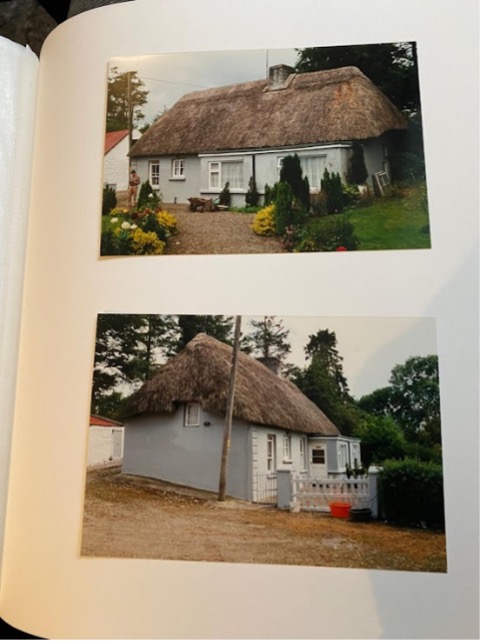
Grandfather Daniel Cronin married Bridget Dunlea in 1932 in Fermoy, Co. Cork, and they lived in a small house on St. Patrick Street. My father was born in 1933. I know that Daniel Cronin worked as a farmhand in Fagot Hill. The facts are documented and certain. However, it was a great surprise to discover that only one document concerning his death could be found.
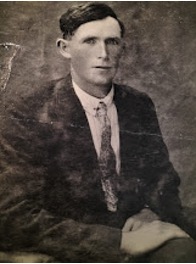
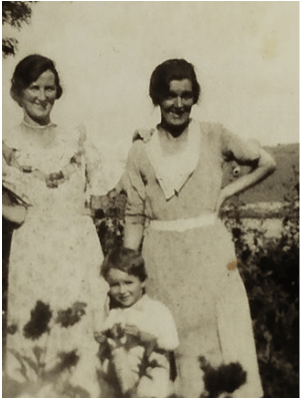
After a long search, we learned that he passed away in Brentford, England, in 1936. How he got there remains a mystery. We only have his name, date, and place of death, nothing more or less. And then you start guessing and asking questions. What did Grandfather do in Brentford? Why did he have to leave his young family behind? The answer, I think, is easy to find. He had to perform; a person had to have and keep a job. The time he spent in this foreign country was short, no longer than three years. Grandmother had her husband buried in Ireland, his homeland, with his family.
She was left behind with her son, who was barely 3 years old. My father never really knew his dad well. His father’s memories were always limited to a few photos and what his family members had told him. Grandmother was likely forced to move and live with her sister-in-law, Mary Cronin. Mary lived in the family home at Ballyhindon, near Fermoy, where generations of the family lived. Grandma never remarried.
For her, the only solution was to work in England. From 1937 to 1942, she commuted between the country where she worked and her home country, always accompanied by her son. I found the periods and dates of her travel and work on her passport. In 1942, she received a permanent work permit and settled in England during the height of the war. She worked there as a waitress for a very well-to-do family for the rest of her life. They lived in a small flat in London.
You can imagine that this was a major change for mother and father. Moving to a big city after having lived in the countryside all your life is no easy feat. The contrast from the tranquil greenery to the gray, crowded atmosphere is too stark. The fact that the Irish were indirectly considered second-class citizens made life difficult. Father rarely spoke about his time in England, but all the more about his green and proud Ireland.
At 17, he enlisted in the British army, probably to escape the gray reality he lived in. He often recounted this period. He often had to literally knock to make it clear to others that he wouldn’t be messed with, under any circumstances. He wouldn’t back down for anything or anyone. How often did we hear the words “never back down” and “stay put?” I can still see the scars on his face. Inflicted by being struck by an army boot from another soldier while he was sleeping. I’m sure the man would have had to pay double for it afterward. If there was one reference father didn’t possess, it was fear. He didn’t know that, not from anyone. It wasn’t for nothing that his military passport stated that “Jerome was a good soldier, strong in his own right, very individualistic, and short-tempered.” His lack of fear helped him more than it hindered him.
Being stationed as a soldier in Herentals brought him great happiness and the love of his life. A sweet and beautiful secretary, Rosa Leysen (my mother), worked at the British base not far from where we lived. Father was far from a Don Juan, not in words and, “according to many,” not in images. But the chemistry of love worked. In 1955, they got married. My father remained in Belgium, and together they made their little house a true home. Blessed with five sons, they did everything they could to make the most of their lives.
Father spent his first years working in the coal mine, a tough and dangerous job. It was good money, but not without danger. According to him, the coal mine was a source of equality among the miners: “Everyone looks equally black,” he often remarked. “We’re all the same.” Mother remembered those days and knew that if he came home from work early, something had happened. Father often came home early, a sign that a fatal accident had occurred, an event that was quickly covered up and, above all, not allowed to be discussed by the “bosses.” Back then, if you worked in a coal mine for several years, you received a permanent work permit in Belgium, which you needed to stay in the country.
He left the coal mine and started several other jobs, combined with learning in the evenings. He ended his career as an office manager, so I can proudly write that he made the best of his professional life.
I think that’s inherent in Irish people: They have the knowledge to adapt and to build their lives for the best all over the world and keep their Irish pride.
 RELATED ☘️