By KARLEE TWINER
RELATED☘️ Staff
On March 17, the world will drown itself in green beer, plastic shamrocks, and cartoon leprechauns. Parades will wind through cities from New York City to Sydney, rivers will glow an impossible emerald, and strangers will pin on cheerful badges that read “Kiss me, I’m Irish.”
But for those of us with Irish roots, St Patrick’s Day can be something quieter, and far more powerful.
Behind every novelty T-shirt is a real person who once stood on a quayside at Cobh Harbour or waited on a windswept platform in Dublin, clutching a ticket to a place they had never seen. Behind every shamrock is someone who left a townland, a parish, and a life that would never look the same again.
This month, instead of raising a glass to a stereotype, what if we raised it to a name, a person … our family?
Irish emigration is not a single story. It is waves upon waves of departures, some driven by famine, others by economics, politics, faith, or sheer necessity.
During the years of the Great Hunger, millions left. Ships sailed from Cobh/Queenstown, Limerick, Belfast, Liverpool, and Dublin, carrying families toward America, Canada, Great Britain, Australia, and everywhere else. Later generations would follow—young men and women boarding ships in the 1880s, the 1920s, the 1950s—each departure a quiet heartbreak folded into a small suitcase.
For many descendants today, Ireland has become a mythic place. We speak of “the old country” without knowing the county. We claim a heritage without knowing the parish. Yet somewhere in the paper trail—on a passenger list, a civil register, a fading headstone—is the story of the first Irish ancestor in your line.
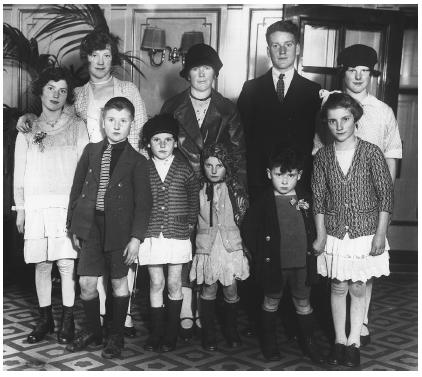
Finding that person transforms St Patrick’s Day.
Because once you know that your great-great-grandmother was Mary O’Connor from a specific townland in Co. Kerry, who sailed in 1873 at age 19, the celebration changes. The music sounds different. The toast lands deeper. The green feels less like decoration and more like inheritance.
Every family line has a crossing point, the moment Ireland shifted from lived reality to remembered homeland.
Genealogists sometimes call this person “the immigrant ancestor.” They are the hinge in your history. Everything before them happened in Ireland; everything after unfolded somewhere else.
Meeting that ancestor does three powerful things:
1. It replaces myth with memory. Instead of “we’re Irish,” you can say, “My people were from a farming townland outside Ennis.”
2. It grounds identity in geography. Ireland is not just a country; it is counties, parishes, townlands, and neighbors.
3. It restores individuality. Your ancestor was not a caricature in a green hat. They were a real person with fears, ambitions, and likely a lump in their throat as the shoreline faded.
And that is where your St Patrick’s Day can begin.
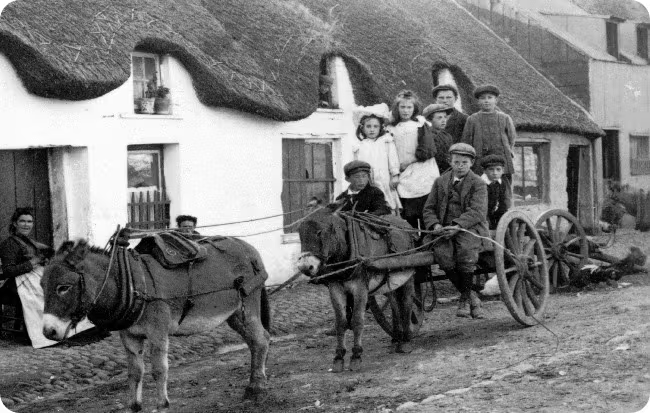
A 4-Step Guide to Tracing Your Irish Ancestry
If you are new to genealogy, Irish research can feel intimidating. Records were lost. Names were repeated. Spellings shifted. But every journey begins somewhere.
Here is a simple four-step path to help you meet that first Irish ancestor:
Step 1: Start at Home (And Work Backward)
Before you dive into Irish archives, exhaust what you can find in your own country.
Gather:
* Birth, marriage, and death certificates
* Obituaries
* Family Bibles
* Old letters
* Naturalization papers
* Passenger lists
Look especially for documents that name a specific birthplace, not just “Ireland.” A county is good. A parish or townland is gold. If you can’t find records like this for your direct ancestor, try looking for other members of the family if they came over as well. Also, check out johngrenham.com and search your surname.
Census records in countries like the United States, Canada, Australia, and the UK often list year of immigration and naturalization status. These clues narrow your search dramatically.
Resist the urge to leap straight to Irish databases. The key to Ireland is almost always found abroad first.
Step 2: Identify the County (Then the Parish)
Ireland is divided into 32 counties, but genealogical research often depends on even smaller units: civil parishes and townlands.
Once you know the county, you can begin exploring:
* Civil registration records (births, marriages, deaths)
* Church registers (Catholic and Church of Ireland)
* Griffith’s Valuation (mid-19th century property records)
* Tithe Applotment Books (earlier land listings)
The goal here is precision. “Co. Cork” is helpful. “Kilshannig Parish, Co. Cork” is transformative.
Remember that Irish surnames were frequently repeated within the same region. Location is what distinguishes your Patrick Murphy from the five others nearby.
Step 3: Find the Departure Trail
The year your ancestor left Ireland places them in historical context.
Were they fleeing the famine of the 1840s?
Leaving during through chain migration in the 1850s and 1860s?
Seeking work in post-war Britain in the 1950s?
Passenger manifests, naturalization petitions, and sometimes local newspapers can reveal departure years and ports. Knowing that your ancestor sailed in 1851 tells you something very different than a departure in 1903.
History suddenly becomes personal.
When you learn what Ireland looked like the year they left—the crops that failed, the rent that rose, the political tensions that simmered—you begin to understand their decision not as an abstract migration but as a lived moment.
Step 4: Reconstruct the Ireland They Left
Now comes the most meaningful part: Step into their world.
Research:
* What was happening in their county that year?
* Was the population rising or falling?
* What religion dominated the parish?
* What language was spoken: English or Irish?
Look at historical maps. Study townland boundaries. Read about local industries: farming, fishing, linen, railways. If possible, connect with local heritage groups in the area.
You may never walk the road your ancestor walked. But you can know its name.
And that knowledge changes everything.
St Patrick’s Day will always carry a festive spirit. There is nothing wrong with music, laughter, or even a pint dyed green. Celebration is part of the Irish story, too.
But imagine this year raising your glass and saying:
“To Bridget Ryan, who left County Clare in 1866.”
Or:
“To Michael Donnelly of County Tyrone, who crossed the Atlantic in 1923.”
Suddenly the toast is not generic. It is intimate.
Genealogy does not diminish celebration; it deepens it. It reminds us that heritage is not costume. It is continuity. Somewhere in your family tree is a departure date waiting to be rediscovered. A ship’s name waiting to be read again. A townland waiting to be spoken aloud in your kitchen on March 17.
And when you speak it, you are doing something extraordinary. You are reversing the erasure that emigration can bring. You are anchoring identity in evidence. You are turning a holiday into remembrance.
So this St Patrick’s Day, find the first Irish ancestor in your line.
Learn their name.
Learn their place.
Learn their life.
And when you raise your glass, raise it, not to a stereotype, but to a real life that crossed an ocean and made yours possible.
Look for Karlee’s posts every Genealogy Wednesday on Irish by Ancestry, when she posts tips and tricks for finding those elusive relatives in records. She also takes questions for her biweekly FB Live sessions Wednesdays at 5 p.m. EST. so get them in early! The great benefit of a resident genealogist, a trusted resource: You have someone knowledgeable available to make your searches easier. You can also take her classes. Check the link for more info right HERE.
 RELATED ☘️