By SHELAGH BRALEY STARR
RELATED ☘️ Staff
For much of Ireland’s history, St Patrick’s Day looked very different from the big, boisterous celebrations many people know today. Until surprisingly recently, it was a quiet, mostly religious day at home—while the parades and partying were happening abroad.
A Holy Day, Not a Holiday
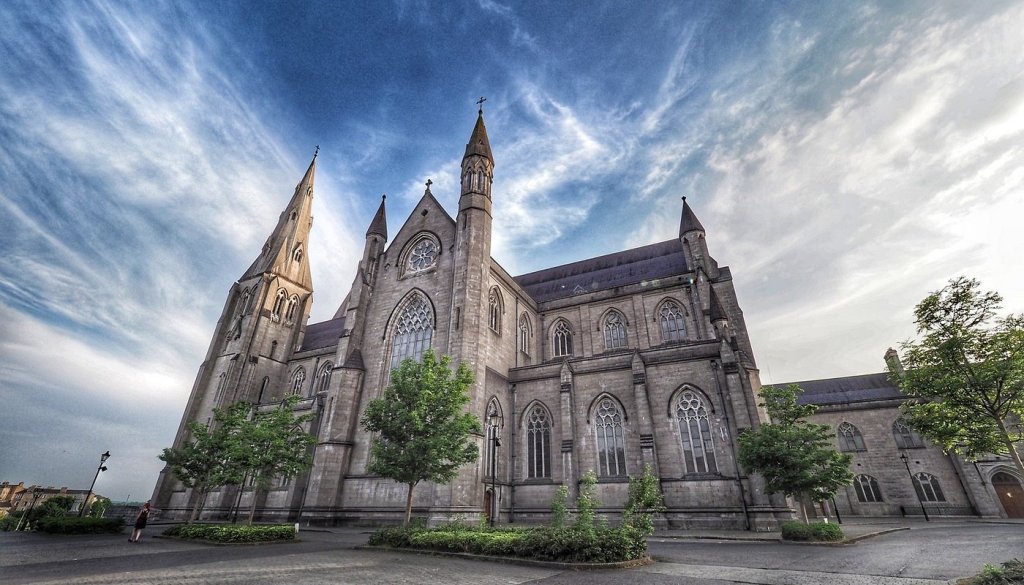
In Ireland, 17 March was first and foremost a holy day of obligation in the Catholic calendar, not a festival in the modern sense. Families dressed in their Sunday best, went to Mass, and said prayers for Ireland and for loved ones far away. Many households marked it as a Lenten “day off” from fasting, but the focus was devotional rather than public.
For generations, most Irish people would never have seen a St Patrick’s Day parade in their own country. Those belonged to Irish communities overseas, especially in cities like New York, Boston, and Montreal, where marching through the streets was a statement of identity in a sometimes hostile new world.
Closed Pubs and Quiet Streets
One of the biggest surprises for visitors to mid‑20th‑century Ireland was that pubs were actually closed on St Patrick’s Day. From 1927 until the late 1960s, Irish licensing laws required most public houses to shut their doors on 17 March. It was seen as a day for piety, not pints.
Outside the church, celebrations were modest and local. Families might share a slightly better meal than usual in the middle of Lent. Men would often attend cattle marts or GAA matches, which became some of the few large public gatherings on the day. In many towns, the streets would feel like a quiet Sunday rather than a national carnival.
Tourists expecting the kind of spectacle they’d seen in America were sometimes baffled to find little more than Mass, a walk, and an early night.
Shamrock on the Lapel, Not Green Head‑to‑Toe
Before novelty hats and green wigs, the traditional way to mark the day was simple and symbolic: Wear the shamrock. Men and boys pinned a small sprig of shamrock to the lapel or cap. Women and girls might wear a shamrock or a ribbon in the hair or on a coat. In some areas, people also wore a little bunch of fresh flowers—a “croppy boy”—as a patriotic gesture.
There was also a custom known as “drowning the shamrock.” At the end of the evening, the shamrock was placed into a glass of whiskey or beer, a toast was made to St Patrick and to Ireland, and then the shamrock was thrown over the left shoulder or kept as a keepsake.
Rural Customs and Quiet Patriotism
In rural Ireland, especially in the 19th and early 20th centuries, St Patrick’s Day carried undertones of national pride but rarely the overt, flag‑waving politics you might imagine. Local bands sometimes played on village greens, but full parades were rare. Storytelling, music, and dancing were mostly home‑based: Neighbors gathered in kitchens for songs and tunes rather than in public squares. In some regions, the day was used to bless fields and livestock, asking St. Patrick’s protection for the year ahead.
For families with emigrant relatives, it was also a day of remembrance. Parents and grandparents thought of sons and daughters in America or England, lighting candles and praying for them at Mass. Ironically, while Irish people abroad marched under banners, many of their relatives back home were marking the same day in silence.
When the Parade Came Home
Some local historical accounts say the first St. Patrick’s Day parade in Ireland occurred in Waterford in 1903. There’s news records that show Dublin held one in 1931. But the idea of an annual showpiece national parade in Ireland itself is relatively recent. Dublin’s official St. Patrick’s Day Parade only became a major annual event in the second half of the 20th century and evolved further into a multi‑day festival in the 1990s.
By that stage, the global popularity of St. Patrick’s Day—driven largely by the Irish abroad—had boomeranged back to Ireland. Tourism bodies and local councils began to see the potential in turning what had been a quiet religious feast and semi‑closed holiday into a public celebration of Irish culture.
From Holy Day to Global Holiday
For readers with Irish ancestry, it’s worth remembering that your grandparents or great‑grandparents might have grown up in an Ireland where the biggest public displays of Irishness on 17 March were happening in New York or Boston, not in Dublin or Cork. The day was marked more by prayer than by parades. A sprig of shamrock on a coat said everything that needed to be said.
Today’s fireworks, festivals, and rivers dyed green are part of the living, changing story of Irishness. But behind them stands a simpler image: an ordinary Irish family at Mass on a cold March morning, a little shamrock pinned over the heart, saying quiet prayers for a country—and a scattered people—still finding their way in the world.
 RELATED ☘️