Enjoy a traditional Irish meal for St. Patrick’s Day
By SHELAGH BRALEY STARR
RELATED☘️ Staff
On a blustery early-spring evening in Dublin, there’s a smell that drifts from terraced houses and country cottages alike: bacon and cabbage gently simmering on the stove. Long before “Irish food” became a theme for overseas pub chains, this was simply dinner—humble, hearty, and built for the damp Atlantic chill.
Bacon and cabbage is as traditional as it gets in Ireland, a dish that speaks of small farms, kitchen gardens, and a time when every scrap of pork was precious. Here, “bacon” doesn’t mean the thin, crispy strips called “streaky bacon” in Canada and familiar in other parts of the world. It’s a cured pork joint—usually collar or loin—slow-cooked until tender, then sliced in thick, rosy slabs. Paired with soft potatoes, sweet carrots, and crinkly cabbage, topped with parsley sauce (a thin, white gravy) it’s a plate that’s both comforting and surprisingly delicate in flavor.
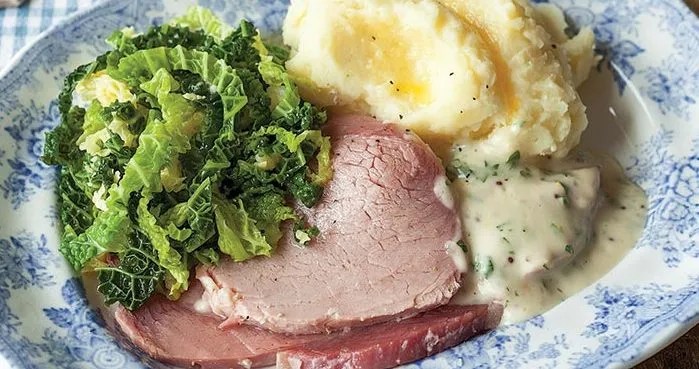
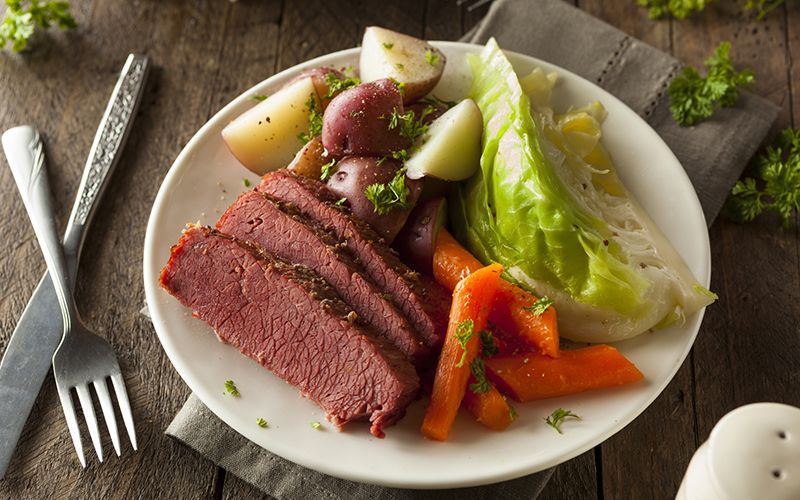
Many people outside Ireland assume that corned beef and cabbage is the national dish. In truth, corned beef is not an Irish native tradition at all. It was largely an Irish-American creation, born when immigrants in the United States found corned beef more affordable and available than the cured pork they were used to at home. In Ireland, bacon remained king on the family table. Even today, a typical Irish kitchen is far more likely to simmer a bacon joint than a corned beef brisket by far.
And here’s another surprise for visitors: There is no single, special “St Patrick’s Day meal” in Ireland. Restaurants may offer set menus, and families might cook something a little nicer, but there’s no universally agreed festive dish. (Jonathan let me know, last year he ate pizza!) The elaborate corned beef-and-cabbage spreads, green-dyed beers, and highly themed menus are largely products of the Irish diaspora, especially in North America. At home, ordinary Irish households are just as likely to eat a familiar comfort dish like bacon and cabbage.
Part of the enduring charm of bacon and cabbage is its economy. Similar to corned beef, the cured pork is a “boiled dinner.” The long-simmered meat flavors the cooking liquid, which in turn infuses every vegetable in the pot. Nothing is wasted; the broth can be saved for soup, the leftover meat turned into sandwiches or fried with potatoes the next day. This is everyday food that quietly earned the status of culinary heritage.
Below is a classic, no-fuss version you can make wherever you are. It’s perfect for a chilly evening, whether it’s March 17th or any other date on the calendar. And you might wonder, where can I get a proper bacon? The specialty store BRITSRUS ships it right out to you. Here’s a link: https://britsrus.com/shop/donnellys-irish-boiling-bacon-in-stores-only/.
Traditional Irish Bacon and Cabbage
Serves 4
Ingredients
2-3 lb (1.3–1.6 kg) cured pork “bacon joint” (collar or loin)
1 onion, peeled and halved
3 carrots, peeled and cut into chunks
1 small turnip (rutabaga/swede), peeled and cut into chunks (optional but traditional)
1 large head Savoy or green cabbage, cored and cut into wedges
2 lb (900 g) floury potatoes (such as Russets), peeled and halved
8–10 whole black peppercorns
2–3 bay leaves
Cold water, to cover
For the parsley sauce (optional but very Irish):
2 T butter
2 T all-purpose flour
2 c (480 ml) warm milk
Small bunch fresh flat-leaf parsley, finely chopped
Salt and freshly ground black pepper, to taste
Method
Prepare the bacon.
If your bacon joint is very salty, place it in a pot, cover with cold water, bring to a boil, then drain and refill with fresh cold water. This lightens the saltiness.
Simmer the meat.
Place the bacon joint in a large pot with the onion, peppercorns, and bay leaves. Cover with fresh cold water. Bring to a boil, then reduce to a gentle simmer. Cook for about 1½–2 hours, depending on thickness, until the meat is tender and a skewer slides in easily.
Add the root vegetables.
About 40 minutes before the bacon is done, add the carrots and turnip to the pot. Continue to simmer gently so they soften in the flavorful broth.
Cook the cabbage.
About 20 minutes before serving, add the cabbage wedges on top of the bacon and vegetables. Press them down gently so they’re mostly submerged and simmer until just tender but not mushy, 10–15 minutes.
Cook the potatoes.
While the cabbage cooks, boil the potatoes in a separate pot of salted water until tender, 15–20 minutes. Drain and keep warm. Serve simply with butter, or lightly crush them with a fork.
Make the parsley sauce.
Melt the butter in a small saucepan over medium heat. Stir in the flour to make a smooth paste and cook for 1–2 minutes. Gradually whisk in the warm milk until smooth. Simmer for a few minutes to thicken. Stir in the chopped parsley and season with salt and pepper.
Serve.
Lift the bacon from the pot and let it rest for a few minutes, then slice thickly across the grain. Arrange slices on warm plates with cabbage, carrots, turnip, and potatoes. Spoon some parsley sauce over the bacon and cabbage, and serve the rest at the table.
Whether you’re in Cork or Chicago, this is the real taste of Irish comfort food—quietly traditional, unpretentious, and perfect any day of the year. Now you’re closer to the authentic Irish experience you’ve been looking for.
 RELATED ☘️