Test how well you really know Ireland’s patron saint.
Answer TRUE or FALSE for each statement. Then check your score in the key below.
1. St Patrick was born in Ireland.
2. As a teenager, Patrick was kidnapped and taken to Ireland as a slave.
3. Patrick later chose to return to Ireland as a missionary bishop.
4. We know about Patrick mainly from medieval legends; he left no writings of his own.
5. Patrick worked mainly in the north and west of Ireland, not all over the entire island.
6. St Patrick’s Day has always been celebrated with big parades in Ireland since ancient times.
7. Patrick drove all the snakes out of Ireland.
8. The story that Patrick used a shamrock to explain the Holy Trinity is a much later tradition.
9. There were already some Christians in Ireland before Patrick arrived.
10. Patrick was the only missionary to Ireland and single‑handedly converted the whole country.
11. Two texts survive today that were almost certainly written by Patrick himself.
12. The famous Celtic Cross design was invented by St Patrick.
13. Medieval stories about Patrick include miracles like raising the dead and cursing enemies.
14. We can say with confidence exactly which town in Britain Patrick was born in.
15. Patrick’s traditional feast day of 17 March is a very old part of Irish Christian tradition.
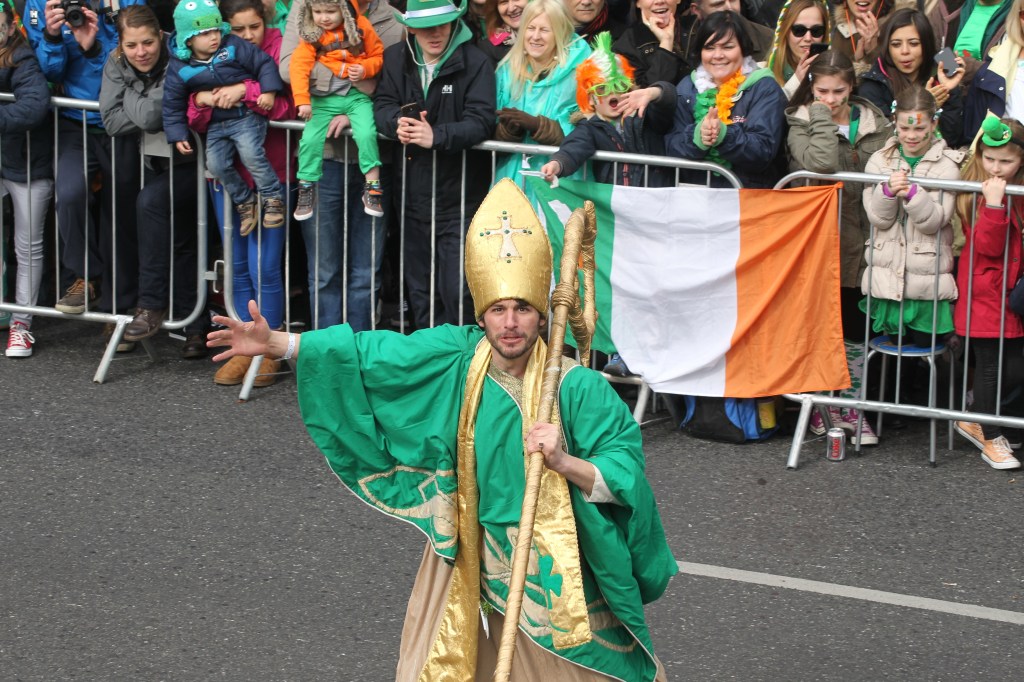
Answer Key & Explanations
1. FALSE – Patrick was almost certainly born in Roman Britain, not Ireland.
2. TRUE – He tells us he was captured by raiders and enslaved in Ireland as a teenager.
3. TRUE – After escaping and returning home, he later came back to Ireland as a missionary bishop.
4. FALSE – We actually have two surviving texts written by Patrick himself: the Confessio and the Letter to the Soldiers of Coroticus.
5. TRUE – Evidence suggests his mission was mainly in northern and western Ireland.
6. FALSE – For most of Ireland’s history, 17 March was a quiet, religious holy day. Big parades came much later and often began in the Irish diaspora.
7. FALSE – Ireland probably never had native snakes after the Ice Age. The “snakes” are understood symbolically, representing paganism or evil.
8. TRUE – The shamrock‑Trinity story appears in sources many centuries after Patrick’s time. It’s beloved folklore, not early evidence.
9. TRUE – Christian communities existed in Ireland before Patrick, likely through trade and earlier missionaries such as Palladius.
10. FALSE – Patrick was important but not alone; conversion was a long, gradual process involving many people.
11. TRUE – His Confessio and his Letter to the Soldiers of Coroticus are considered authentic writings of Patrick.
12. FALSE – The high cross with a ring (the “Celtic Cross”) developed later, mainly in the 7th–9th centuries. Attributing it to Patrick is legendary.
13. TRUE – Later medieval “lives” of Patrick are full of dramatic miracles. They’re great stories, but written long after his death.
14. FALSE – Patrick mentions a place called Bannavem Taberniae, but historians still don’t know exactly where that was.
15. TRUE – Patrick’s feast on 17 March is attested in early medieval Irish sources and is an old part of Irish Christian life.
 RELATED ☘️