Daughter of Trad Music Legend speaks to his influence
By SHELAGH BRALEY STARR
RELATED ☘️ Staff
DOVER, N.H.—As a little girl, Katie Makem-Boucher could hardly tell an Irish legend lived in her house. She just called him “Dad.”
“How honestly lucky I was growing up,” she recalled in a recent interview. “How lucky I was to have that. What a sense of cultural identity I got from listening to him, to his music.”
Her father—the Godfather of Irish Music, the Bard of Armagh—is Tommy Makem. His music—timeless, touching, and instantly recognizable—is the conduit to Irish identity for millions of Irish diasporas.
The troubadour, best known for his influence in bringing Irish folk music to mainstream audiences alongside the Clancy Brothers, hailed from Keady, Co. Armagh, and followed his own ancestors to this New Hampshire mill city of 15,000 in the 1950s. He played at least half a dozen instruments, including the long-neck five-string banjo, the bodhrán, and the tin whistle, and made appearances at Carnegie Hall as well as all the big TV shows of the time, including Ed Sullivan. The list compiled would hardly do justice to his talent for song and storytelling. He passed in 2007, at age 74.
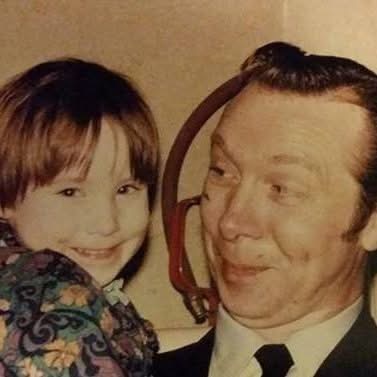
His family still thrives in this place that Makem’s ancestors claimed as their home away from home, though now it has doubled in population. “His aunts and uncles came to Dover to work in the mills,” Makem-Boucher said. The only one who didn’t come was his mother, a known “song-catcher” herself, who stayed in Keady. “She was on her way to come to the United States when my grandfather came to the station and said, ‘Don’t go, marry me,’ and so she stayed.”
Makem’s children, Rory, Conor, Shane, and Katie, growing up in the nourishment of their father’s music, all found their place in performing arts.
“My brothers all performed with him, Rory was his accompanist,” Makem-Boucher said. “But he never pushed it, he was never like ‘you need to (perform). My brothers sang and he was extremely supportive of it but not in a stage father kind of way.”
She performed with him as well. “There was a Milwaukee Irish Fest, a celebration of 50 years in performing. I performed at a couple of the shows,” she said. “I sang the Butcher Boy.”
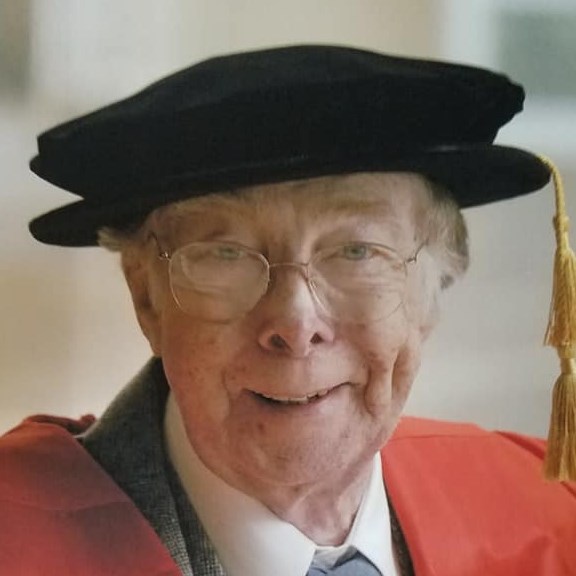
Makem-Boucher took after her father in a different way, too. She is a bastion in the local theatre community, not known just as a marquee name, but also for serving many years in leadership for the Garrison Players, the second-oldest continually performing theatre troupe in New Hampshire. Her father, according to an account on the group’s website, once played a leprechaun in a production of Finian’s Rainbow. “He was very supportive of me doing community theatre,” she said.
“My dad actually came to the U.S. to be an actor, not a singer,” she said. “He was part of an acting troupe. He won accolades in the Old Vic (the famous London theatre) and was offered a spot in London.” Ultimately, he thought he’d have a better chance to do theatre in the United States, she said, so he came here.
And although the rocky road to stardom lead him ultimately to music, Makem still incorporated the spoken word in many of his performances.
“He was very well versed in Irish history, back to the druids and Tuatha de Danann (gods of Irish mythology),” Makem-Boucher said. “He did a one-man play, Invasions and Legacies. The first half was myth-based, and the second half was a concert. They had him back, held the show over for another two weeks at the Irish Rep in New York City.”

For her, the songs and stories are a testament to how her father wanted his audience to learn about true Irish culture, to hold onto it and help preserve it.
“I think the songs he sang are timeless songs. They survived British rule, trying to stamp out our language, our culture. (Makem’s) legacy is that the songs will continue to survive, and people will learn the history and the culture that way,” she said.
“There are times when I literally just stand in awe of his talent, not just how good his voice was, but he had a way of capturing an audience. When he was on stage, he had their attention.” Makem-Boucher recalled a time when Makem was in Armagh with Liam Clancy, set to perform. “It was in a hall, not like a concert hall. He took the stage, and Liam thought, ‘Oh, this poor guy, no one will listen.’ But by the second line, everyone was hooked.”
There were definitely benefits to having a father with star power, like when it came time for school fund-raisers. “I didn’t stop to think that nobody else’s dad was doing this—my dad was around, he was singing, he was on television. He and Liam (Clancy) did a benefit concert for my class, and we made enough to take us through. We didn’t have to do any more fund-raising after that,” she laughed.
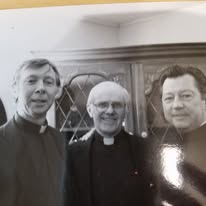
Makem was generous with his talent for good causes beyond his kids, too, his daughter said. “For years and years, he did benefits with Liam Clancy for the Dover firefighters’ charity fund, the Saturday after Thanksgiving.”
But most times, he was just “your typical dad,” she said. “He mowed the lawn, shoveled snow. If he was home, he was at the school plays and the recitals and very supportive of us and our endeavors.”
She recalled a time when her mother, not in great health, asked her to move home to help care for her, which Makem-Boucher did. “And the dog got sprayed by a skunk,” she said, laughing. “Rory came over wearing the Gorton’s Fisherman outfit—the pants, the gloves. Conor wasn’t allowed to help, he’s allergic to dogs. I wasn’t allowed because I’m a girl. I can just see my dad, wearing gloves, de-skunking the dog. He was just dad. He did dad things.”

And he loved the holidays, she said. “I don’t remember a holiday dinner when we weren’t just rolling with laughter at his stories. He was a good man, and funny.”
But sometimes even the good memories can hurt, understandably, facing the loss of such a great influence. “I often tell the story about his wake, it was three days long. We stood for hours (receiving mourners), and there wasn’t anyone who talked about his music first. I don’t know that he would want his memory to be only about his music. His music was important, but he would want to be known, that he always had time for his fans. He always took the time to listen to their stories and converse with them. He was a good person. If you can go out with that legacy, that’s important.”
This past November marked the success of the inaugural Tommy Makem Festival in Keady, with trad performers and enthusiastic audiences turning out to honor the late singer’s legacy with live music, storytelling, poetry, walking tours, and more. That continuation, the handing down of songs to the younger generation, was something that Makem encouraged, in his own kids and in performers everywhere he went, according to many accounts from those who knew him and worked with him.
It wasn’t just that Tommy Makem preserved Irish folk songs, it’s that he turned them into a shared emotional language that resounds for listeners and performers around the world. His voice continues to shape how the Irish understand their own ancestors, hearing and feeling history through his songs. His children speak that language in memory of him. She carries the pride of knowing strangers pass on his tunes. Makem-Boucher can hear his voice whenever she chooses, and she has many favorites. “His songs have woven themselves into Irish music tradition. If they don’t know about Four Green Fields, (listeners) will often think it’s hundreds of years old,” she said.
“I will tell you, though—” she confided, “I cannot listen to Gentle Annie, not without crying. He wrote it for my mother. Her name was Mary, but he’d done so many with that name, he used Annie. But it was for her.”
 RELATED ☘️