By SHELAGH BRALEY STARR
RELATED ☘️ Staff
Sponsored/ on behalf of Druid Heritage Designs
For writers, a story can begin with a pen. But for Craig Brown, the maker behind Druid Heritage Designs, every ancient bog-oak pen begins with a story.
“I don’t actually sell pens,” says the Kilcolgan, Galway native, “I sell history. The pen is just the packaging.”
The history he mentions is primal and older than the pyramids, buried deep within the bogs of a land where so many long to return.
But the sleek packaging isn’t bad, either. Brown offers ancient bog-oak pens from his Co. Galway work shed, where he carves mini masterpieces of reclaimed bog oak, as well as other preserved wood—yew, pine, alder, and other native species. He also works with reclaimed wood sources still above ground, like cherry, beech, ash, other hardwoods. “They come from estates, historic grounds, family farms,” he says in a recent interview.
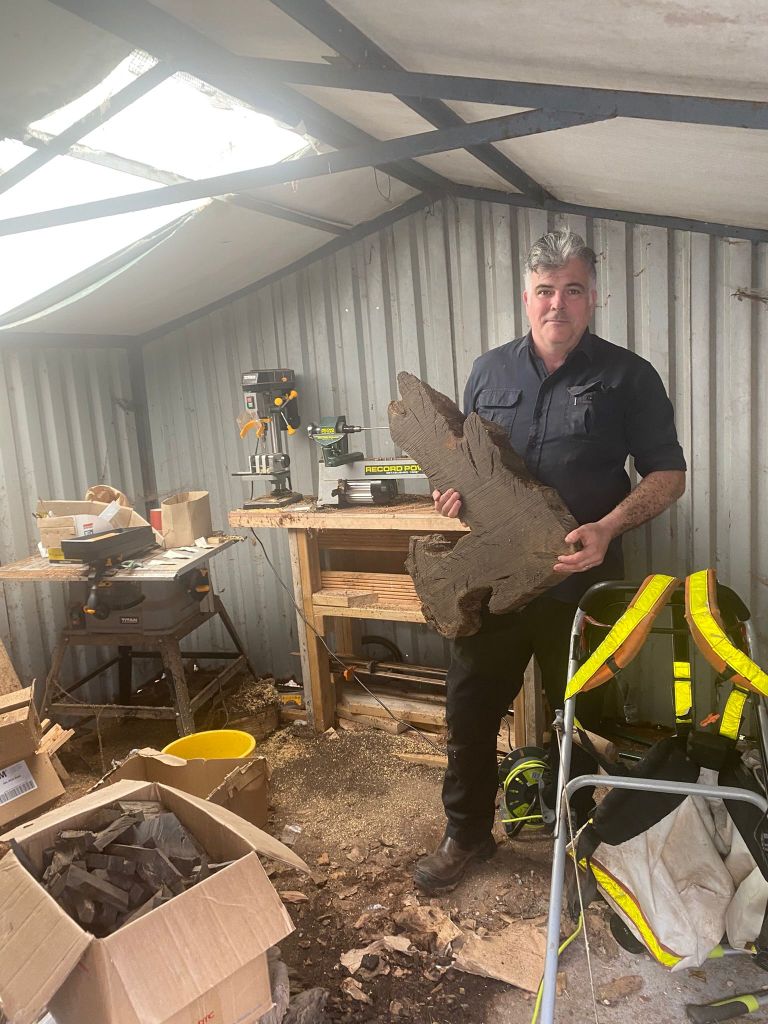
“Do you know how they’re found?” he asks. “A lot of bogs become turf for fuel. The first step to creating that fuel is (the bog) has to be drained and dried. And every now and again, boom, they hit a log. For the farmers, it becomes waste.” Then Brown is there, ready to upcycle it. But it can’t be used right away.
“So the wood itself has to dry out for about a decade. Most timber has to lay out for about a year, but (the bog oak) takes longer. I ask around to various farmers. The only people who are allowed to source turf now are farmers if they have their own bog, so for me, it’s about going to see if they have any bog wood.”
The payoff is a bit like going antiquing and finding treasure in a barn.
County Mayo has a large number of bogs, he says, stretching down from North County Galway—this is where he has the most success sourcing wood. “These are the ones I’m familiar with; most of mine comes from Mayo,” he says. “That’s the next county up.”
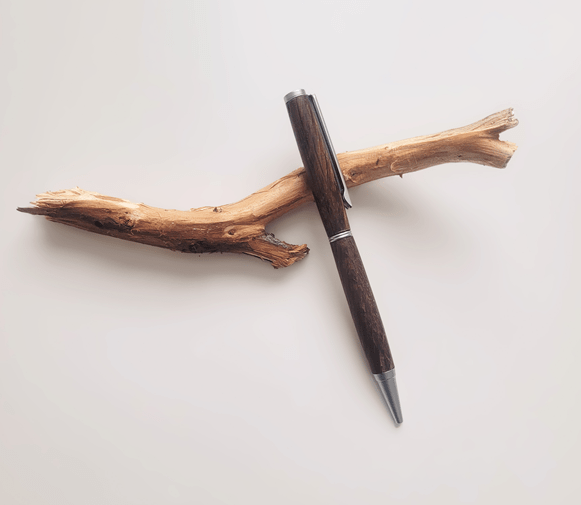
In ancient Ireland, much of the landscape was covered by dense oak forests growing on often waterlogged ground. When large oaks died or were blown over, they fell into these saturated hollows, where they slowly sank and became buried in layers of peat. Over centuries, the low-oxygen, acidic conditions of the bogs preserved the timber, creating deposits of “bog oak” that are still uncovered today during drainage projects, peat cutting, and construction.
“You sort of wonder what was going on when that tree hit the water, about 5000 years back,” Brown muses. He says he thinks about the ancient Irish landscape and how much it has changed. “The whole country was forested. About a hundred years ago, it was only 1 percent forested. A lot of timber would’ve been felled for hulls of ships, so there’s not much around.”
But the rare find makes the finished product that much more precious.
“The bog oak is a funny material to work with. It’s so dark because it absorbs the iron from the water.” He says he likes the look of the bog oak the best, because the pens all turn out “very, very unique.”
Bog oak may be the most unique, but it’s not the most challenging to work with on the lathe, Brown says.
“I worked with some spindle the other day … you know, the needle of the spinning wheel? It was made of spindle; it grew even more dense than oak. That’s why it was used for spindles. If I don’t go slow, the drill bit will go to the side, to follow the grain,” Brown says. “It’s easier to work with modern cherry or ash, because they’re not petrified.”
His own land, a small farm where Brown, his family, and a sweet collie mix named Bobby tend pigs, geese, bees, also holds an orchard thick with more than 2,000 mixed native trees. “It’s about 50 percent birch and elder, and a mix of oak, rowan, spindle, and hazel. The idea for us is that we would have firewood around the 10-year mark—that’s now,” he says. “You leave the strongest, and the rest are firewood,” he says.
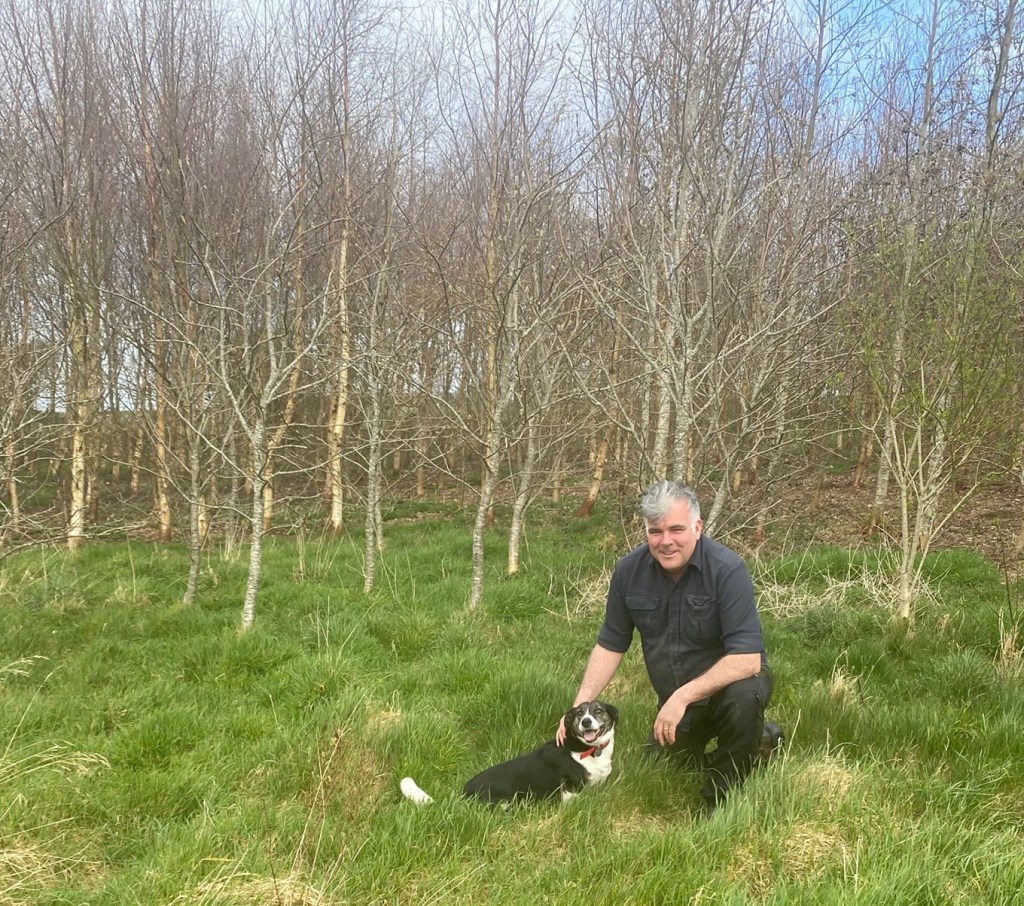
Brown, a father of three, says once his youngest got his driver’s permit, he began looking for something to do with his newfound free time. So he began perfecting his pen craft, after decades of “Dad’s taxi service.”
“You have to just take your time. To get each hand-turned pen to quality, I don’t do too many in a day, and I pay attention to the details.” He comes from a woodworking family, so his love of timber-craft is somewhat handed down. “When I was small, my father used to build houses,” he says, “so just the smell of sawdust creates positive memories for me.”
Now he’s using his skill to preserve a little piece of Ireland, so others can bring an authentic piece of Ireland home with them as well.
“I like the idea that they’d (the pens) be used, but a have a feeling they’re not. I think they’re set on a box above a fireplace,” he says. “They’re good for marking special occasions and those roundy birthdays—we get a lot of customers for that. So if somebody has a connection to a particular county going back a few generations, that’s a nice thing.”
Druid Heritage Designs has a SPECIAL GIFT for Irish by Ancestry members: Receive 20% off your purchase on druidheritagedesigns.ie with the code SALE2026.
Do you have an interesting product or service you think our audience would like? Reach out to shelagh@byancestry.com to let us know.

