Dear RELATED readers,
As editor of this magazine and admin of the Irish by Ancestry group, I’m reminded every day that Irishness is no longer defined solely by a small island at the edge of Europe, but by a global community of more than 70 million people. We are spread across continents and generations, yet connected by memory, imagination, and a sense that our story did not end when our ancestors stepped onto a ship or an airplane. To honor that story, we must do two things at once: Learn our history deeply, and understand the Ireland that lives and breathes today.
Genealogy is often our first doorway in.
A surname, a parish, a faded photograph, a ship’s manifest … these fragments give us a starting place. But they only come fully alive when we place them in history. To trace a great-grandparent who left in 1849 is to confront the reality of An Gorta Mór, the Great Hunger; to follow someone who emigrated in the 1950s is to encounter an Ireland of rural poverty and limited opportunity, poised on the edge of change. Without that understanding, our ancestors’ choices risk becoming sentimental anecdotes.
With it, they become chapters in a much larger human drama of survival, loss, resilience, and hope.
Yet history is not a museum where the diaspora stands outside the glass. Ireland today is not the same country our ancestors left. It is a complex, modern society. It’s multilingual, multicultural, and wrestling with new questions about identity, equality, and belonging. To love Ireland only as it was is to love a memory, not a people. If we are to claim kinship with this place, we must be curious about its present—its politics, its art, its music, its languages, its everyday struggles and joys.
That means listening to voices in contemporary Ireland as attentively as we listen to the voices of the past.
At the same time, the Irish story no longer belongs only to the island. It belongs to all of us who carry it forward in Boston and Buenos Aires, in Birmingham and Brisbane, in Cape Town and Toronto. Each community has shaped Irishness in its own way, adding accents, traditions, and experiences that sometimes seem far apart. But when we look closely, we find the same threads: an attachment to place, a respect for the spoken word and the song, a stubborn humor in hard times, a belief in education and possibility for the next generation.
Our task as a diaspora is not to erase our differences but to weave them into a shared tapestry.
When we learn the Irish language, study local histories, and understand the contexts that shaped migration, we gain the tools to see ourselves as part of one continuing narrative. When we share our own stories, from the coal towns, city streets, farms, and factories where our families made new lives, we expand what it means to be Irish for everyone.
In doing so, we move toward a future where our shared culture, values, and memories weigh more heavily than the borders and backgrounds that divide us. The more we know, the more we listen, the more we connect, the more we realize that we are not a scattered people looking back at a lost home, but a global family writing the next chapters together.
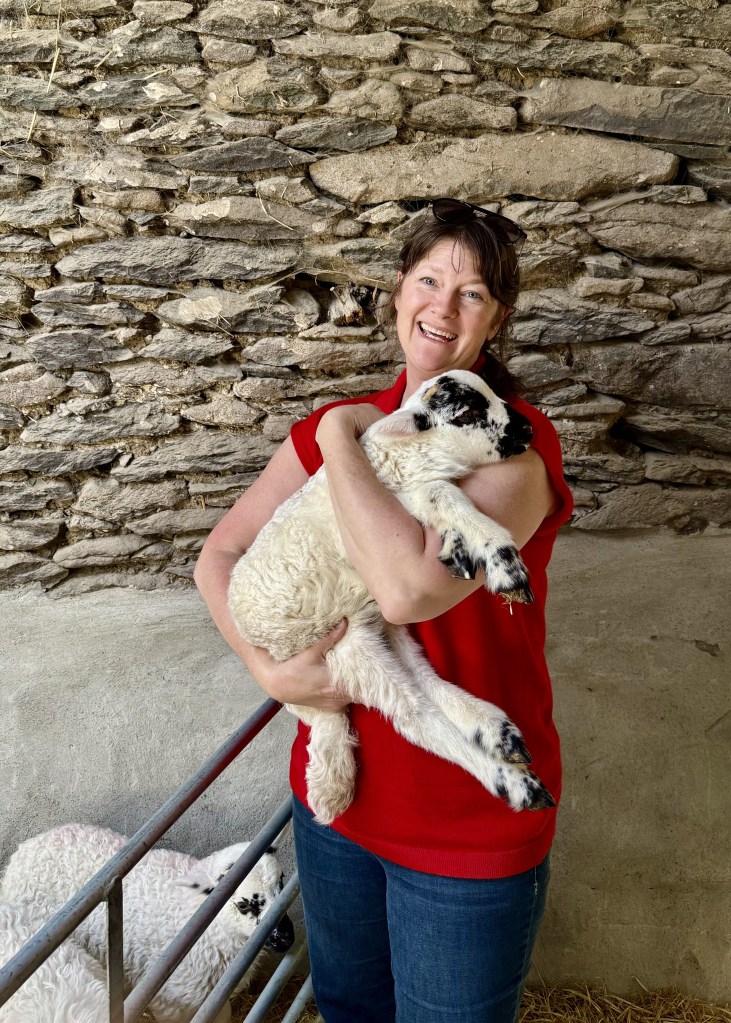
In this issue of RELATED ☘️, you will find stories on the Irish people shaping modern culture, advocacy, and the arts, tips on collecting your grandmothers’ stories before they’re lost, a special section on the supreme craic on the Irish by Ancestry SPRING TOUR, and more. Thanks for giving it a read, and we’d love it if you’d share with the Irish culture lovers in your life.
Le gach dea-ghuí,
(With every good wish)
Shelagh
Editor, RELATED ☘️
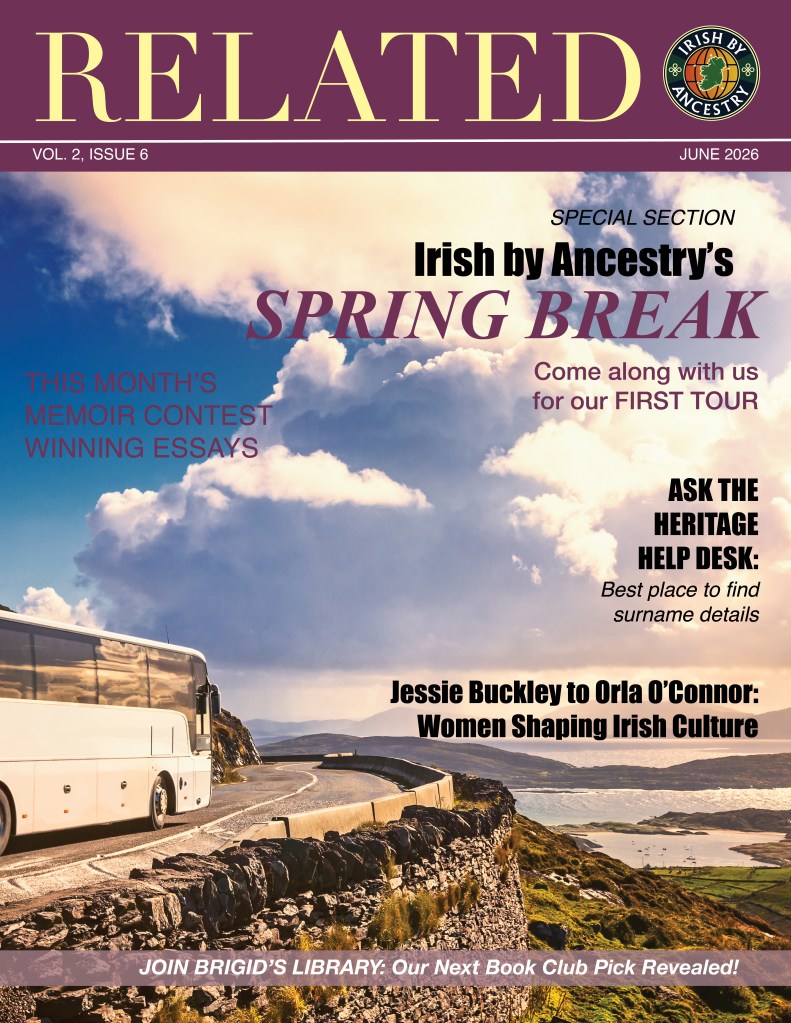
 RELATED ☘️