We ask you, the Irish by Ancestry community, each month to share stories based on our Ancestor Memoir theme, and this month, these entries blew us away.
Our theme was WHAT BEING IRISH MEANT IN OUR HOUSE. We did not expect such introspective essays. Your submissions touched us on the editorial selection team, and we know they will touch you, our readers, as well.
Thank you to everyone who submitted! Please keep writing, because these impressions of being Irish, from different paths of diaspora, are the incredible results of your genealogy and search for meaning in your data.
We don’t have one winner this month; we chose three equal winners because they diversely reflect the Irish identity abroad. Great work, everyone.
Mary Catherine Donnelly shares her perspective on what it was like to step into an Irish identity as an Irish Catholic. Julian Fitzmaurice comes from a family that moved to the UK, and talks about the particular pitfalls of being third generation. And finally, Joseph Patrick Keane digs into the trio of Canadian Irishness: humility, hard work, and preservation.
All three are winners of this month’s Irish by Ancestry prize pack, and they will help choose next month’s theme. Here is Mary Catherine’s, to start:
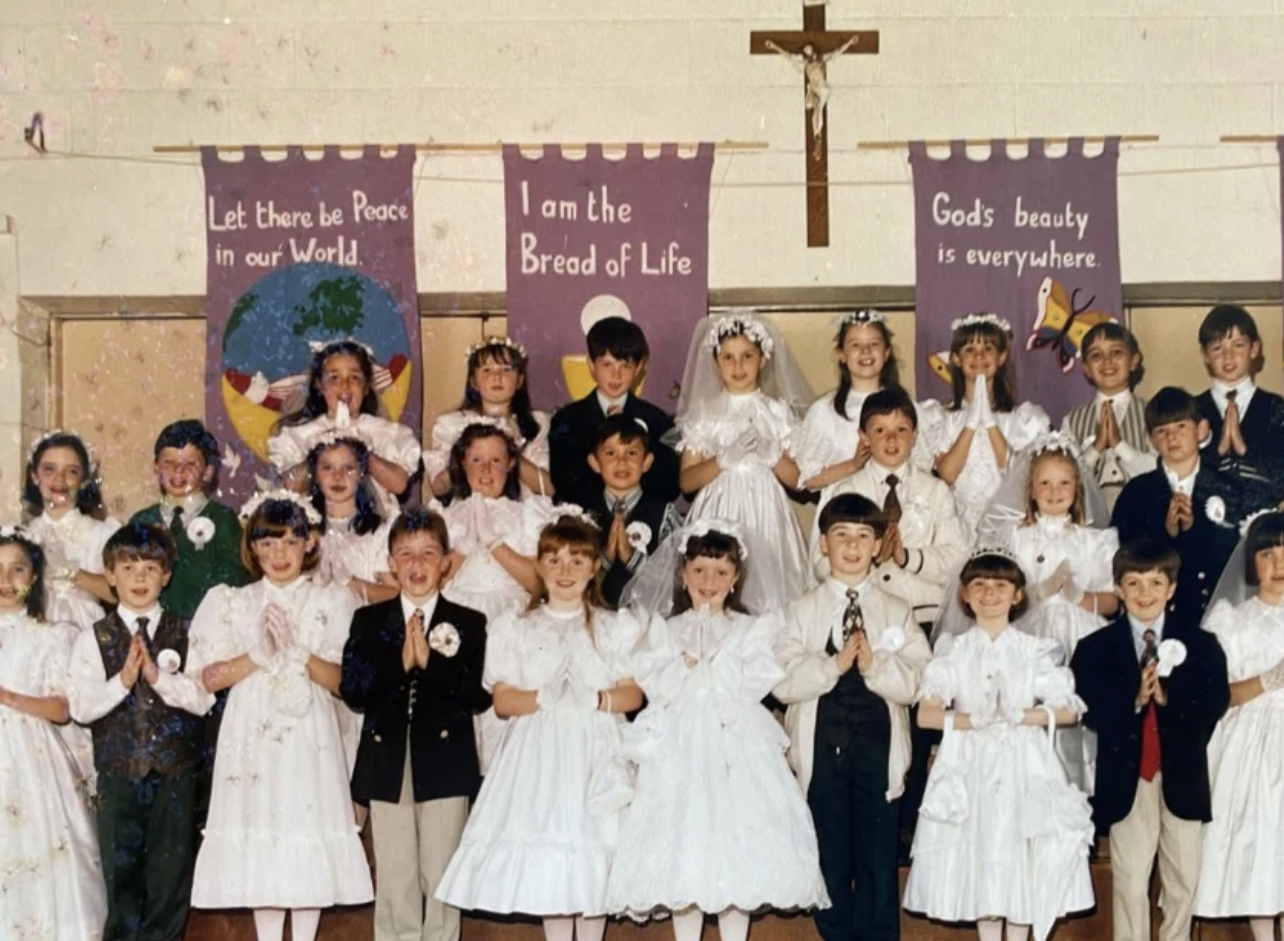
Faith, Family, and Irishness
By MARY CATHERINE DONNELLY
In my house growing up, Ireland was not really a question of geography. It was not a place we knew in any practical sense. It was a feeling, a family style, a moral atmosphere. It lived in the way my mother set the table for Sunday dinner, in the way my father spoke about loyalty as if it were a sacred obligation, and in the way our Catholicism shaped what we believed, and how we understood suffering, pride, guilt, and love. Being Irish in our house did not mean that we had crossed the Atlantic ourselves. It meant we had inherited a particular script for how to be in the world.
In our family, being Irish and being Catholic were almost the same thing. The two identities were so closely tied that I rarely separated them. The church was where births were celebrated, marriages blessed, and deaths made meaningful. The saints and the dead occupied a place in our lives that felt almost familial. We prayed for people constantly. We lit candles. We went to Mass even when we did not feel like it, because that was simply what our people did. Religion was not joyful, it was foundational. It gave shape to our days and hope to our hardships.
There was also a kind of emotional code in the house that I came to think of as Irish, whether or not that was fair or accurate. We were affectionate but not always direct. Feelings were often displaced into humor, sarcasm, storytelling, or argument. People did not say exactly what they meant, but they expected you to understand anyway. Love could come disguised as teasing. Concern could sound like criticism. Grief might emerge only after a few drinks, or in the middle of someone telling a funny story. There was warmth in the house, but also intensity. We were loud, sentimental, stubborn, and easily wounded, though we didn’t reveal that sensititivity.
Family history was treated with great seriousness, even when details were vague. Certain names, counties, and stories were repeated so often that they took on the weight of legend. I grew up hearing about hardship, immigration, sacrifice, and endurance, but usually in broad strokes. The point of these stories was not historical precision. It was to remind us who we were descended from, and what kind of people we were expected to be. Survival itself was part of our culture. So was resilience. So was the idea that dignity mattered, especially when money was scarce or life was unfair.
At the same time, being Irish American meant being part of a group that had already become familiar, almost conventional. Whatever struggles our ancestors may have faced, by the time I came along Irishness had become a source of pride that fit comfortably into American life. It was there in parades, in political loyalties, in songs, in jokes, and especially in St. Patrick’s Day, though my family always claimed to find the public version of it embarrassing. We looked down a little on green beer and plastic shamrocks, while still feeling possessive about the day itself. That contradiction was very typical of us: sentimental and self-mocking at once.
As I got older, I began to understand that what we called being Irish was partly memory, partly performance, and partly religion. It was a way of organizing identity through habits and inherited emotion. I do not know how recognizably Irish it would appear to someone from Ireland. In some ways, it was probably much more Irish American than Irish. But that distinction mattered less in our house than belonging did. Being Irish meant being tied to a chain of family, faith, and feeling that stretched backward farther than we could see clearly.
Even now, when I think of what being Irish meant where I grew up, I think less of a nation and more of a household temperament. It meant obligation and wit, reverence and defiance, guilt and generosity. It meant stories repeated at the table until they became a form of prayer. It meant loving your family fiercely, complaining about them constantly, and showing up for them no matter what. More than anything, it meant that identity was not something you invented for yourself. It was something handed down, sometimes heavily, always insistently, and expected to be carried forward.
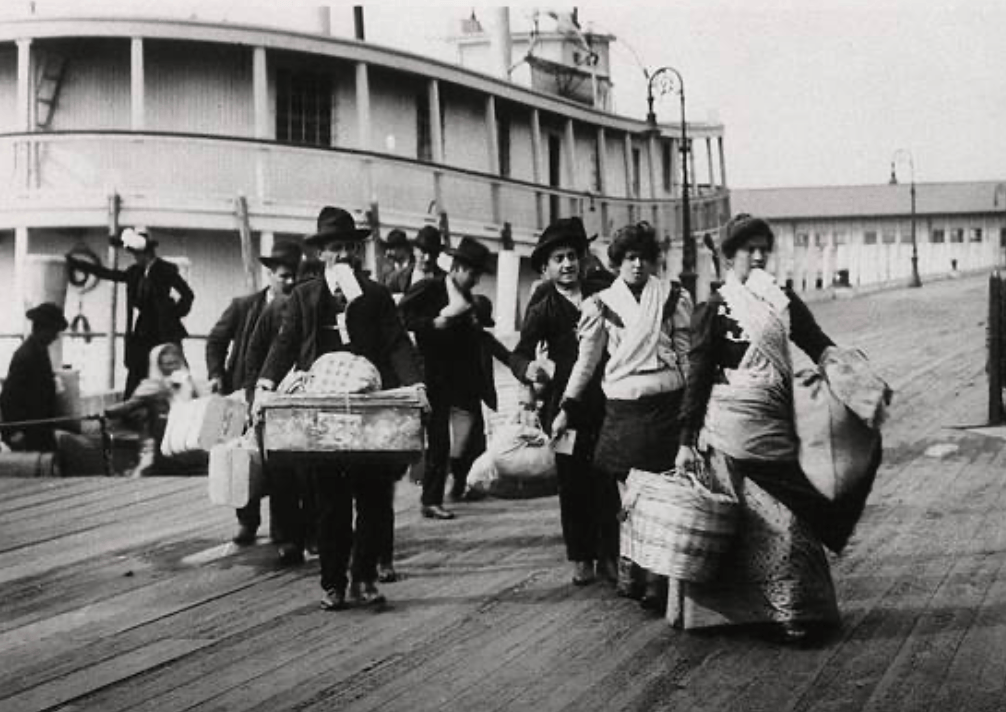
Irish at a Polite Distance
By JULIAN FITZMAURICE
What being Irish meant in my house growing up was, for the most part, not talking about it too much. It existed, but obliquely. It surfaced in surnames, in certain family sayings, in the occasional story about grandparents, and in a slightly performative fondness for Irish writers and music. But it was not something worn openly or discussed with much clarity. Ours was the sort of family that preferred polish to confession, and ambiguity to declarations. If being Irish meant anything, it meant existing without fluency and proximity without confidence.
I grew up in a comfortable English environment where manners, education, and social ease mattered enormously. We were not exactly encouraged to pick apart or question our identity, especially if doing so risked awkwardness. Irishness, such as it was, hovered in the background of family life as a fact that had somehow become decorative. It was there in genealogy, in the names of ancestors, in silver-framed photographs of stern-looking relatives, and in the occasional reference to “where the family came from,” but always at a tasteful distance. No one seemed especially interested in making it immediate.
Part of the discomfort, I think now, came from class. Ours was an upwardly mobile, well-settled version of Irish, one that had learned to smooth itself into acceptability. If there had once been sharp edges in the form of political anger, religious difference, or social exclusion, they had long since been filed down. We retained something safer: a faint claim to distinctiveness that could be invoked when charming and ignored when inconvenient. That left me with the odd sensation that Irishness was available as an anecdote but not as a full person.
As a child, I did not question this much, as I said. I understood only that there were different kinds of belonging, and that ours seemed qualified. We were not straightforwardly English, at least not in a traditional way. There was sometimes a hint of suspicion toward Englishness in older relatives, an emotional restraint, self-satisfaction for assimilating, like self-imposed historical amnesia. Somewhere between here and there, that slate had been wiped clean, whatever they had to survive to get us here. And yet our lives were unmistakably English in habit, education, and aspiration. We lived inside English institutions and benefited from them. So there was a quiet inconsistency at the heart of it all. We wore a notion of being not entirely English while doing very little to sustain anything concretely Irish.
That ambiguity became more noticeable as I got older. The more curious I became about Ireland, the more self-conscious I felt. I had no real claim to authenticity. I did not grow up there. I did not know the language, the politics, the regional differences, the depth of the history, or even the family history in enough detail to speak with any authority. Yet neither did I feel wholly uncomplicated in my Englishness. There was a hesitation there, a sense that my family had come into English life slightly from the side, and perhaps with some effort. To be third-generation is, in some ways, to take on all the aftereffects of a journey without the journey itself.
So being Irish in my house meant living with a version of it that was both real and elusive. It did not structure our daily life in the way religion or food or family bonding might have done in another household. Instead, it existed as a low, persistent undertone, mostly ignored, occasionally embarrassing. Rarely proud. It gave me a sense of partial distance from the culture I was raised in, but not a sufficient alternative.
What I feel now is curiosity, still mixed with discomfort. I am aware that late-discovered identity can easily become self-indulgent, especially when one’s life has been largely sheltered. But I can’t help wondering. What survives across generations without clear markers? In my house growing up, being Irish meant a subtle, unresolved awareness of coming from somewhere that still matters. I am still, even at 74, trying to claim it.
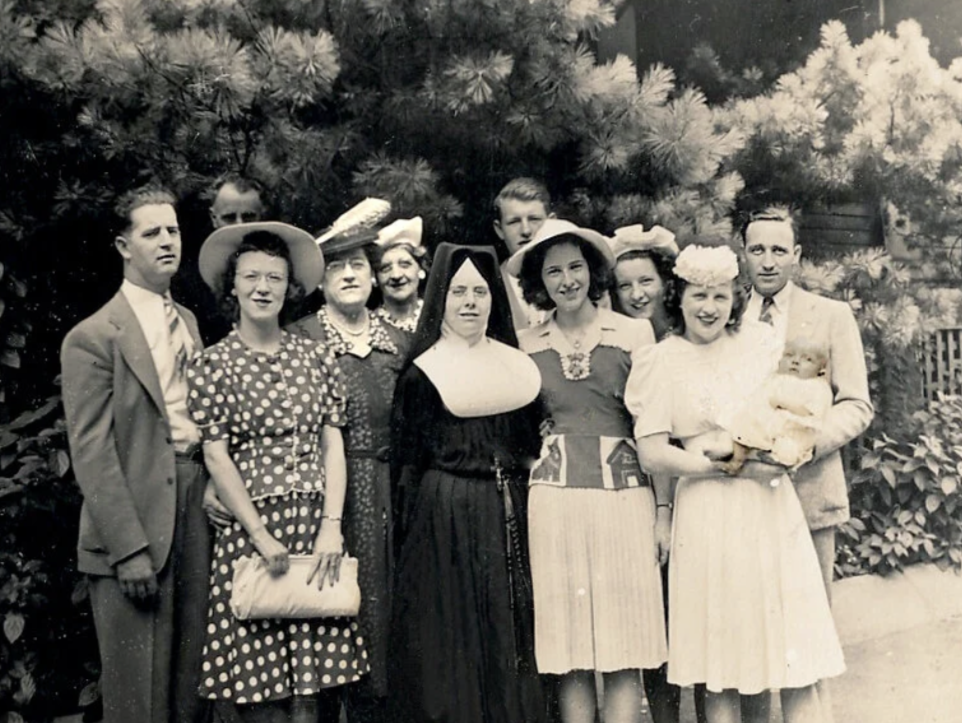
Leaving Ireland, Keeping its Shape
By PATRICK JOSEPH KEANE
What being Irish meant in my house growing up was tied very closely to our family’s departure. Ireland was not simply “where we were from.” It was the place my family had left in the 1940s, in the shadow of war, scarcity, and limited opportunity, and that leaving shaped everything. Even though I was born in Canada, I grew up in a house where emigration was well-known family history. It influenced how money was treated, how food was discussed, how gratitude was expressed, and how ambition was understood. Being Irish in our house meant remembering that life could be more precarious than it looked.
My parents did not romanticize immigration. They were proud of what they had built in Canada, but they did not tell the story as one of heroic reinvention. It was more practical, and more humble, than that. They left because they felt they had to. Canada represented work, space, and possibility, but also coldness, distance, and homesickness. That combination of realism and longing sat at the center of our life. Ireland was spoken of with love, but also with frustration. It was a homeland, yes, but not an easy one. They missed it deeply while being quite clear about why they had gone, and a bitterness because they had to.
There was a particular kind of thrift in our household that I associated with this. Nothing was wasted. Meals were substantial and carefully managed. Clothes were mended, everything reused, handed down. Extravagance was viewed with suspicion. Even as the family became more stable, we had an almost superstitious sense that security could vanish. This was not presented dramatically. It was simply part of life. Save things. Finish what is on your plate. Be thankful. Don’t show off. These lessons were less ideological than habitual, but they came from somewhere, and that somewhere was the ghost of harder times.
At the same time, being Irish also meant sociability. Ours was a house where people dropped in, stayed late, and were fed whether or not there was a plan. There was always tea, always talk, always another story. Humor played a huge role in family life, particularly the dry, understated kind that can make affection difficult to distinguish from teasing People were not especially demonstrative, but they were attentive. Care was shown through labor, food, rides, practical advice, and relentless checking in. Emotional life was there, but often not direct.
Music and storytelling mattered too. Songs came out at gatherings, sometimes cheerfully and sometimes with uncomfortable emotion. Family stories were told and retold, not always consistently. A person’s character could be established in three anecdotes and a nickname. The dead remained present through repetition that became legend.
What is striking to me now is how time-sense our version of Irishness was. It belonged to people who had left Ireland in the 1940s and carried that particular Ireland with them into Canadian life. The country they remembered was not necessarily the one that exists now. The Ireland in our house was preserved our way: rural, Catholic, shaped by emigration and humility.
Even so, it gave me a strong sense of who we were. Being Irish meant knowing that family history mattered, that leaving a place did not end your relationship to it, and that success should not be met with self-congratulation. Our Irishness was not loud or theatrical. It was steady, disciplined, funny, and occasionally sad. It was there in the caution around money, in the importance of family, in the cadence of certain phrases, and in the idea that where people had come from remained important, even generations later.
Do you have an ancestral memoir you want to share? You could be our next winner. The next theme will be announced August 3 on the Irish by Ancestry FB group. Send a note to stories@byancestry.com with the subject MEMOIR CONTEST THEME to be notified by email.
 RELATED ☘️