We asked you, the Irish by Ancestry community, to share stories using the theme Our Irish Family Table for this month’s Ancestor Memoir Contest. We received some beautiful stories for this topic! Thank you to all who participated, we appreciate your creativity and sharing. Keep writing! Your family stories will outlive you, your descendants will have to do less research, and your ancestors will be proud. (And please note: No AI-generated submissions will be published.)
Our winner this month is Maggie Sullivan. Congratulations, Maggie! Your story is the winner of this month’s Irish by Ancestry prize pack. A lot of Irish women will relate to this experience.
BY MAGGIE SULLIVAN
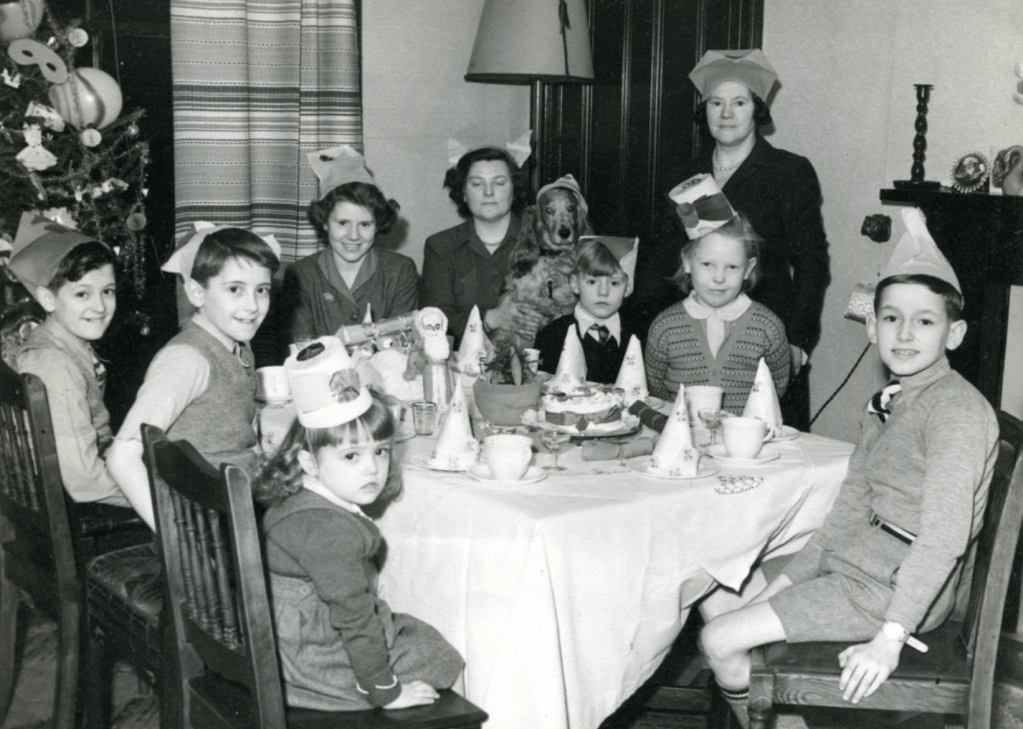
By the time I was born, we were three generations in America, but no one in our family would have said that made us less Irish. It only made us Irish with better access to flour and room around the table.
I was one of five girls, with two brothers who always seemed to arrive at the table just as the platters were set down. The men carved and rarely washed a dish, especially if company was still present. The girls did the work. We learned to peel potatoes until our thumbs wrinkled, to rub cold butter into flour with our fingertips, to dry glasses and carry hot dishes with our wrists steady, no matter how crowded the kitchen got.
My grandmother Nora was the daughter of Irish immigrants and the first born on American soil, in a brick row house where the back yard was hardly more than a strip of dirt and basil. She cooked in poverty and nothing was wasted in her kitchen. Ham became sandwiches, bones became soup, stale bread became pudding, and leftover mashed potatoes turned into boxty fried crisp in a skillet.
I was hardly tall enough to reach the sink when I started peeling vegetables. Thanksgiving was the largest production, which my mother hated. She said turkey is dry, even while overseeing big bowls of stuffing and gravy. She made stuffing with sage and onions. There were buttered turnips and green beans cooked too long. The only cranberry sauce came with lines from the can, but she made mashed potatoes smooth with cream. She loved pie, all three on the sideboard of pumpkin, apple, and one lemon meringue because my Aunt Kathleen liked it.
Christmas was more effort. We girls polished the silver, ironed the good napkins, and were trusted with jobs. At six I could set the table; at eight I could shape the dinner rolls; at ten I was allowed to carry the gravy boat without supervision, which in our family was the sign you made it.
The ham was always glazed dark and shining. There was sometimes roast beef too, if enough cousins were expected. My mother made scalloped potatoes in deep casserole dishes, the tops browned and bubbling, and baked carrots with butter. My oldest sister Kathleen baked the brown bread because she did the best with dough. Maureen was in charge of desserts and could turn out a coconut cake so light it seemed impossible after such a heavy meal. I was usually assigned the vegetables and all the thankless chopping, brussel sprouts, cabbage, onions, celery, parsley. I cried my way through many dinners.
The meals were good. The matriarch of our family knew how to make magic. My mother could feed twenty people on a budget that should have fed ten. I still don’t know how she did that.
As girls, we understood something our brothers did not. A holiday meal meant standing for hours in an apron and flat shoes, keeping the younger children out from underfoot. It meant swallowing irritation and serving anyway because that was part of the job.
I remember my grandmother’s nod when the gravy was smooth, my mother’s rare stillness after everyone had been served, my sisters leaning against the counter sharing the broken cookies and uneven rolls that never reached the table. In those moments, we were closer than usual.
Now, when younger cousins ask for recipes, I tell them the truth as Grandma Nora did it. There’s nothing written down. We were three generations in America by then, yes, but in that kitchen we were also daughters of Irish women who believed a meal was a way of saying, without much sentimentality, I am glad you are here.
***
Our next submission from PATRICK O’MALLEY shares the realization of what went into those fine family meals, years later. Great story, Patrick, thank you! Here it is:
By PATRICK O’MALLEY
At every family gathering in our branch of the O’Malley clan, the women cooked as if we might go hungry.
I was born in New South Wales, but ours was an Irish house. My grandmother said you could tell an Irish Australian family by the table: never enough chairs, too much food, and somebody insisting you take another helping while pretending there was not much to offer. We were descended, so the story went, from a stonemason from County Clare and a girl from Cork who came out in the hard years of the 19th century, carrying a prayer book and a wooden spoon.
When I think of my people now, I smell my grandmother’s kitchen at Christmas, cloves pressed into a ham, tea and fruit steeped for pudding; onions in butter for stuffing.
Christmas dinner was the grand performance. There was roast lamb glazed with rosemary and wee lovely garlic, though Nan would still call it “the joint.” There were potatoes in several forms, because no single potato dish could carry a meal. There was cabbage cooked with pepper and a scandalous amount of butter, and carrots glazed until they shone. Then came the pudding, boiled in cloth. When she carried it in, we all fell quiet for a second, salivating.
When my Nan got too old, it was my mother’s turn. She was more exact as she cooked. The whole house smelled of spice and orange peel. She made a leg of lamb with mint sauce, and afterward a sponge cake layered with jam and cream. I remember being a boy at the table, my cousins muddy-kneed from the yard, my uncles discussing rain, horses and politics, while my mother and aunts moved in and out from the kitchen carrying dishes.
It shames me a little now that I noticed the food before the labour. As a child, meals appeared because holidays required them, in the same way candles required matches and Sundays required church. Only later did I understand the worry over whether there would be enough. The women in my family fed us.
Now the women are mostly gone. Their recipes are in my niece’s capable hands now. But if I know who I am, it is partly because I can still taste their love.
***
And here we have a bonus from our favorite bard, Eric Cronin, warm memories of food traditions growing up in his Flemish-Irish. Thank you for sharing this beautiful gift with us.
The most important place in our home: food and traditions
By ERIC CRONIN
When I let my memories drift back to those days, I immediately find myself at our large table, a piece of furniture that meant more than just an object. It was a place where stories were told, matters were discussed, and friends and passersby would pull up a chair; it was the setting for countless events, both significant and trivial—a hub for encounters and other facts of life.
My mother was a Flemish housewife, married to an Irish man—a perfect blend, sharing more traditions and folk customs than one might expect.
Allow me, dear reader, to take you into the culinary world of a simple, Irish-Flemish family from decades ago.
For my mother, preparing food and sharing a meal were very important to her husband and sons. She cooked simple but delicious dishes, with a menu that followed the changing seasons. My father’s vegetable garden provided all we needed.
While my father and his sons handled the fieldwork, my mother carried out the tasks of preserving, pickling, and storing—following the rules of an age-old tradition—just as her own mother had taught her. The summertime and the harvest season ensured our family had enough to eat throughout the winter; we didn’t buy vegetables from a shop—we had everything we needed right at home.
Father’s contribution to traditional Irish dishes was an essential part of this chapter of our lives. They were thoroughly enjoyed; let me take you into a world of culinary memories.
There were ‘baked’ potatoes—parboiled spuds finished in the oven alongside the roast meat or turkey, generously basted with pan drippings, resulting in a crispy exterior and a soft, flavorful center. Then there was Apple Crumble, Shepherd’s Pie, Roast Pork, cranberries, Irish Stew, mince pies, sausage dishes, steak-and-kidney pie, and so much more—a little piece of Ireland on your plate.
I can effortlessly recall the flavors and aromas, forever linked to the warmth of being together.
Every Sunday, the table was set with extra care. A white tablecloth was a must. Our finest plates and cutlery served as proof that Sunday was no ordinary day; it was something different—more festive—with a focus on conviviality, peace, and relaxation. The everyday tableware took a day off, remaining tucked away in drawers and cupboards. We would eat half an hour later than usual. Every Sunday morning, instead of going to church, Father would head to his favorite pub—a form of reflection he considered far superior.
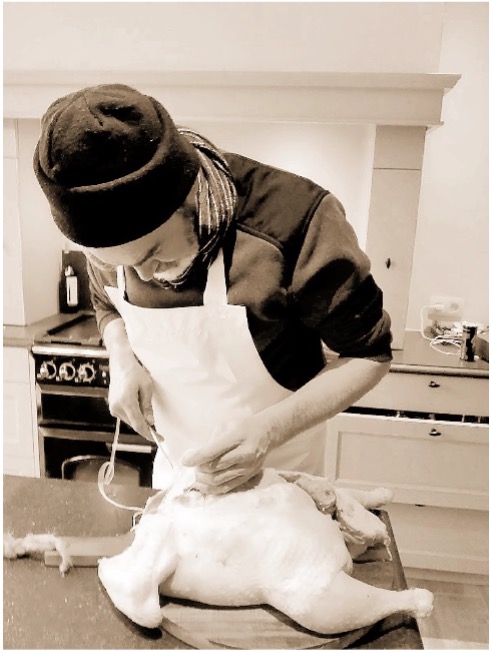
Once a year, Father underwent a transformation. During the week leading up to Christmas, he would blossom into a true head chef (mentally awarding himself a few Michelin stars, no doubt) and dining room manager. He took on the significant responsibility of curating the entire Christmas menu, from start to finish. It was the only week of the year when Mother’s face would reveal deep concern, despair, and panic—and rightly so. Father would map everything out and get to work; he couldn’t—and wouldn’t—leave anything to chance. Everything had to be perfect; he wouldn’t settle for anything less.
To be fair, he always managed to conjure up the finest dishes, carefully curating the cutlery, the plates, the tablecloth, and even the music to fit the Christmas theme. From appetizer to dessert, every course was a culinary triumph—delicious and expertly prepared. Everything was just right. The roast turkey, stuffed with a mixture of mashed potatoes, thyme, and finely chopped onion, was an absolute hit—tender, juicy, and possessing a flavor I can still taste today. I’ve never encountered this dish anywhere else; it was truly Father’s specialty—credit where credit is due.
Christmas dinner was a grand celebration with all the trimmings; even the worry lines on Mother’s face would vanish. She would laugh with such gusto that her little belly would jiggle, and, deep down, she was incredibly proud of her “kitchen prince.” Not even the mountain of dirty dishes or a kitchen that looked like a bomb had gone off could dampen her spirits. Her Jerry had done it again.
Then, at the end of the meal, came the moment we all dreaded: it was time for Father’s favorite dessert—Christmas pudding. I realize that for many households, this is a beloved classic, but—with all the goodwill in the world, and calling upon all the saints and angels in heaven—for us, it really wasn’t necessary. Yet, for Father, it was the ultimate dish—the one thing he had been waiting for all year long.
Once it reached the table, real panic set in: my father doused his festive creation with an overly generous amount of whiskey and set it alight. Usually, this produces a small, atmospheric flame—in his case, it was a massive flare-up. Many of the fireplaces and campfires burned with higher, more intense flames— the fire department nearly had to be called as a matter of speaking. Following this moment of our intense panic and tension—though for Dad, it was just a grand spectacle.
He was the only one who truly savored his classic meal with visible delight. With every bite, he voiced his satisfaction and enjoyment, remarking on how wonderful everything had been. The turkey “fell right off the bone”; the pudding was fantastic; in short, for him, it was a more than successful day. And for us, too—dinner served with a complimentary fire show; one could hardly ask for more.
The festivities usually concluded with a musical performance by one of the guests—Father himself, who couldn’t resist singing along to the festive music he had chosen. Staying on key or following the melody didn’t matter to him, as long as the lyrics were right. It was a genuine ordeal for our ears, but fortunately, after a few songs, he would grow quite exhausted and drift off to sleep, content and satisfied, in his comfortable armchair; another Christmas day passed away.
Next month’s Ancestor Memoir prompt is: What I Wish I Could Ask For. Reflect on an ancestor you never knew well, or never met but still carry with you. What would you want to know? What do you wish you could ask? What gift would you ask for, or what gift would you share with them? Write it down! Send your 1,000 words or less to stories@byancestry.com for your chance to win, while honoring your ancestors. Deadline is November 28, 2026. Last contest of the year, so give it a try!

