By SHELAGH BRALEY STARR
RELATED Staff
When an elder dies, they say a library burns.
For many Irish families, that library has never been written down—it lives in voices, gestures, and side comments over Sunday dinner. The journalist in me is always thinking of new ways to get our elders to open up about the past, which isn’t easy but always worthwhile. Oral history is our best archive, and it is fragile. If we don’t collect it with intention, it can vanish in a generation.
Here are some practical ways to begin gathering your elders’ stories now, without making it feel like an interrogation or a last-minute emergency.
Start with love, not a list of questions
Don’t open with, “I need to record you before you’re gone.” That can feel harsh and morbid. Instead, frame it around appreciation:
“I realize how much I don’t know about what you’ve been through.”
“I want our kids and grandkids to know these stories.”
Make it about honoring them, not about your fear of losing them.
Make the technology invisible
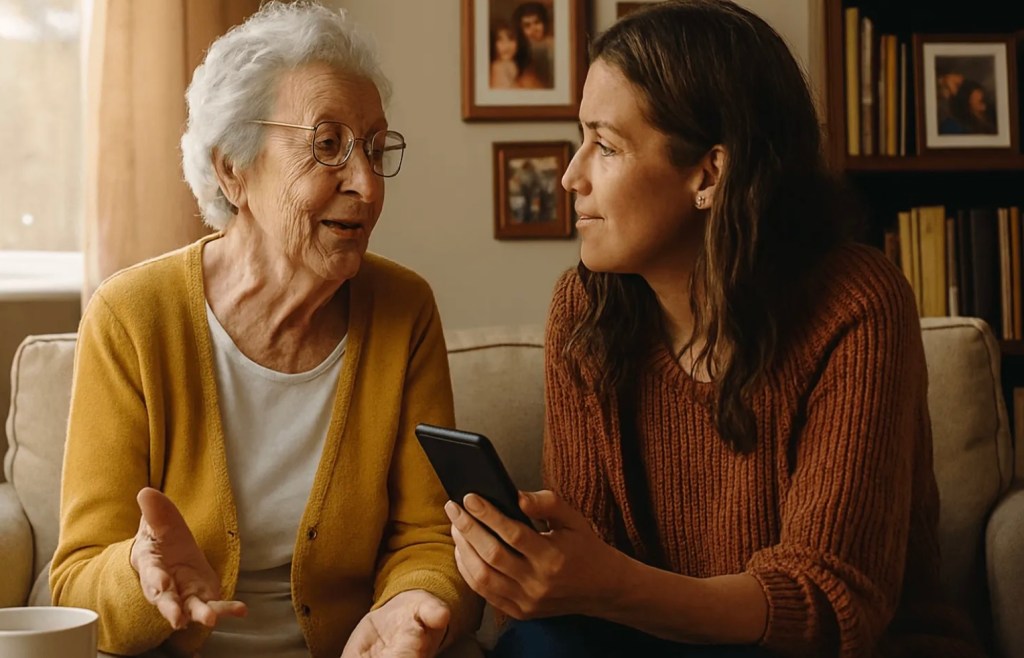
Many elders shut down as soon as a phone appears. Ease into it.
Begin as a regular conversation—no phone, no notebook.
After a few minutes: “This is so good. Do you mind if I record so I don’t forget anything you’re saying?”
Set your phone on the table and then stop fussing with it.
Simple audio is often less intimidating than video. Use your phone’s voice memo app, or a free recording app, and test it in advance so you’re not troubleshooting in front of them.
Ask story-opening questions, not fact-check questions
“Yes/no” questions close people off. “Story” questions open them up.
Try some of these:
“What was your neighborhood like when you were a kid?”
“Tell me about a time you felt really proud of yourself.”
“What was the first big decision you made as a young adult?”
“Who in our family had the loudest laugh? What were they like?”
“What’s a tradition we had that you miss?”
Follow their lead. If their eyes light up, linger there. Ask, “Then what happened?” or “How did that make you feel?” Simple follow‑ups deepen the story.
Embrace the tangents
This one is going to be tough if you have an end result in mind, but often elders don’t tell stories in straight lines. They circle, jump decades, mix three people into one memory. That’s part of the beauty.
Instead of correcting, let it flow. Note names, places, and dates to sort out later. A story that begins, “I was going to tell you about your Uncle Charles …” might meander into migration, favorite songs, or a lost love. All of that is gold.
Bring objects to unlock memory
Memory is triggered by the senses. Show up with:
Old family photos
A church program, wedding invitation, or obituary
A recipe card, quilt, or piece of jewelry
A song they used to play
Then ask: “What’s happening in this picture?” or “Where did you wear this?” Objects give something concrete to push against, and stories often pour out.
Respect what they won’t talk about
This is crucial. Some doors are closed for a reason. Trauma, loss, migration, adoption, incarceration—these may be tender or guarded.
If they shut down, back off. You can ask around the pain without forcing it:
“What helped you get through hard times?”
“Who supported you when life was rough?”
Sometimes, after trust builds, those deeper stories come on their own.
Turn everyday moments into recording sessions
You don’t need a big “interview day.” If you are lucky enough to have elders still part of your family, you have chances all the time. Talk to them:
In the car on the way to church
While peeling potatoes or washing dishes
During commercial breaks, waiting rooms, or porch sits
Keep your phone handy and ask one or two good questions instead of trying to capture their entire life in one sitting. Many short sessions add up.
Capture the sound of them
Don’t just write their words, record their voice. The way your grandmother laughs, the way your uncle says your name, the pauses, the sighs—those are part of the history. Do this. It’s incredibly special after they’re gone.
Later, you can transcribe and save both the written words and the audio clips. Label files clearly by name, date, and topic.
Share the stories back while they’re still here`
The most powerful part of collecting oral history is returning it.
Print a few transcribed pages and read them aloud to them.
Play a short clip at a family gathering.
Create a small “story booklet” for a birthday or holiday.
This tells your elders: “We hear you. You matter. You deserve to be remembered while you’re alive to see it.”
Pass on the practice, not just the stories
Teach younger relatives to ask questions, hold the phone, and listen. Let them choose a question to ask Grandpa, or pick a photo to show Auntie.
In the end, you’re preserving more than dates and names. You’re preserving cadence, courage, recipes, survival strategies, and inside jokes. You’re building a bridge between generations, so that when a library inevitably burns, at least some of its shelves have already been copied, piece by piece, into the future.

