Wickerman Gathering goes up at Emain Macha
By SHELAGH BRALEY STARR
RELATED ☘️ Staff
Each summer, as the first hint of harvest begins to mature across the Irish landscape, one of the island’s most evocative ancient sites comes alive in a blaze of fire, music, and ritual. At Navan Fort, or its ancient name Emain Macha (Evin Macka), just outside Armagh City, the Wickerman Gathering offers a powerful contemporary celebration of Lughnasa, the festival that marked the opening of the harvest season.
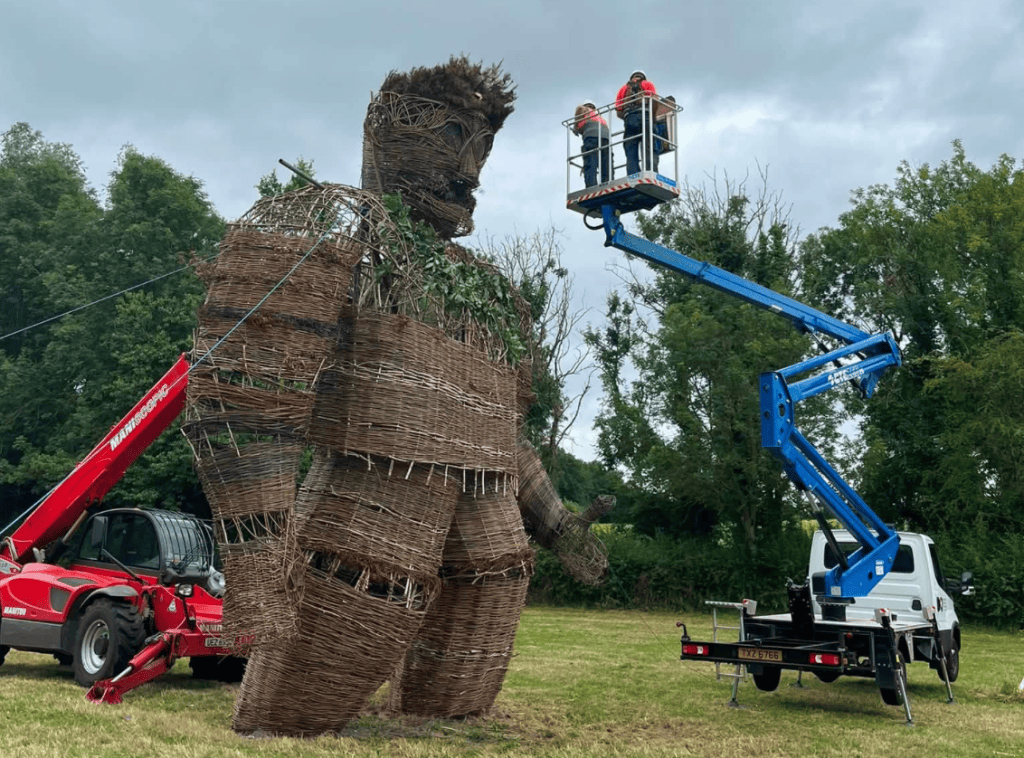
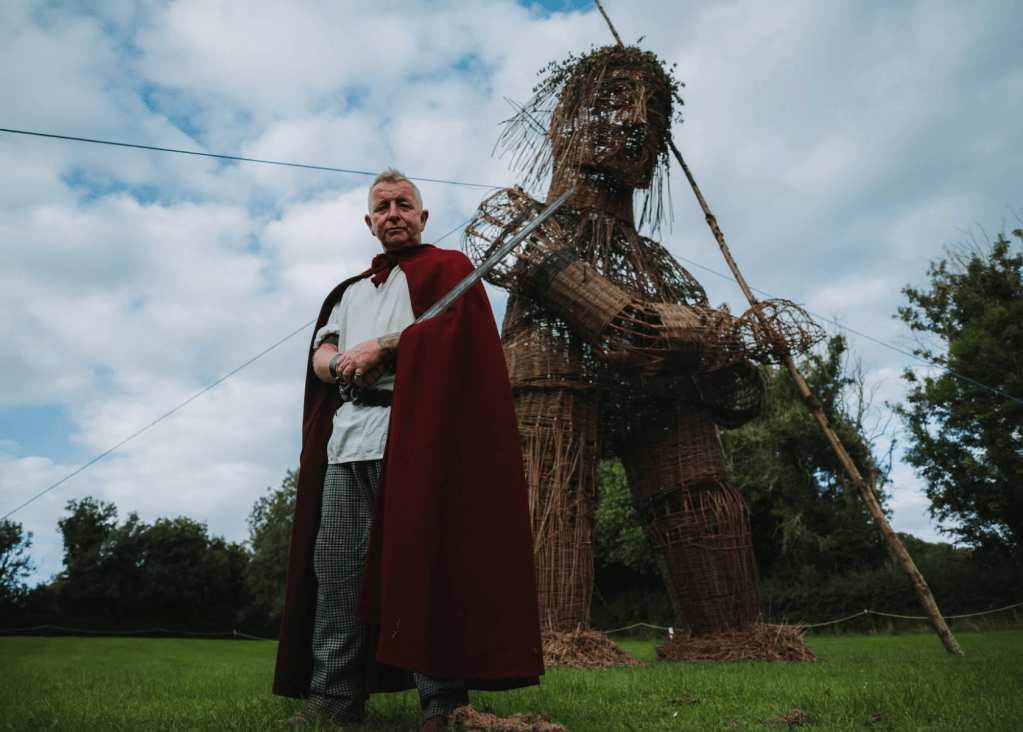
This is the kind of history not found in records or archives, where Ireland reminds us how old it really is. This history is something that can be felt underfoot, heard in story and song, and seen flickering against the night sky, just as it was eons ago. Held on Saturday, Aug. 1 from 6:30 p.m. to 10:30 p.m., the Wickerman Gathering has become one of the most distinctive seasonal events in Ireland. Its centerpiece is as dramatic as it is symbolic: a 30-foot Wickerman, crafted by artist/weaver Heather McDermott from timber and willow, set ablaze in a ceremonial fire honoring Lugh, the brilliant, many-skilled god associated with light, kingship, craftsmanship, and the harvest.
The evening event brings mythology back to life in the way Ireland did, through oral tradition and community, on one of Ireland’s most significant prehistoric ceremonial landscapes.
For visitors arriving in the long evening light, the setting itself does much of the work. Emain Macha is no ordinary heritage site. Known in English as Navan Fort, it is one of the great royal sites of ancient Ireland and occupies a central place in the mythological cycles, from gods to heroes. In legend, it was the seat of the kings of Ulster and the setting for many of the stories of the Ulster Cycle, including the heroic tales of Cú Chuláinn, King Conchobar mac Nessa, and the Red Branch warriors. Archaeology has shown that this hilltop was an important ceremonial center, long before written history, with evidence of ritual activity reaching back into the Iron Age and beyond. Places like Emain Macha hold the atmosphere of the world from which so much Irish tradition emerged.
That sense of continuity is what makes the Wickerman Gathering so resonant and exciting. The festival it celebrates, Lughnasa, was one of the four major quarter days in the old calendar, alongside Samhain, Imbolc, and Bealtaine. Traditionally observed at the beginning of August, Lughnasa marked the start of the harvest and was a time of assembly, matchmaking, trading, games, pilgrimage, and communal feasting. The festival takes its name from Lugh and is often linked in tradition to funeral games established in memory of his foster mother Tailtiu, who died after clearing the plains of Ireland for agriculture. In that story, as in the festival itself, harvest is understood as abundance to be grateful for, and also as the fruit of her labor, the purpose of her sacrifice, and the fulcrum of seasonal change.
Across Ireland, Lughnasa was once observed on hilltops and at ancient gathering places, where communities came together to mark the turning of the year. The Wickerman Gathering draws on that broad tradition. The dramatic burning of the effigy is not a claim to re-create a specific ceremony once held at Emain Macha; rather, it is a living interpretation of the role of fire, assembly, and seasonal ritual in the ancient world. What the event offers is imaginative reinterpretation, a culturally grounded way of modern people entering into the rhythms and beliefs that shaped early Irish life.
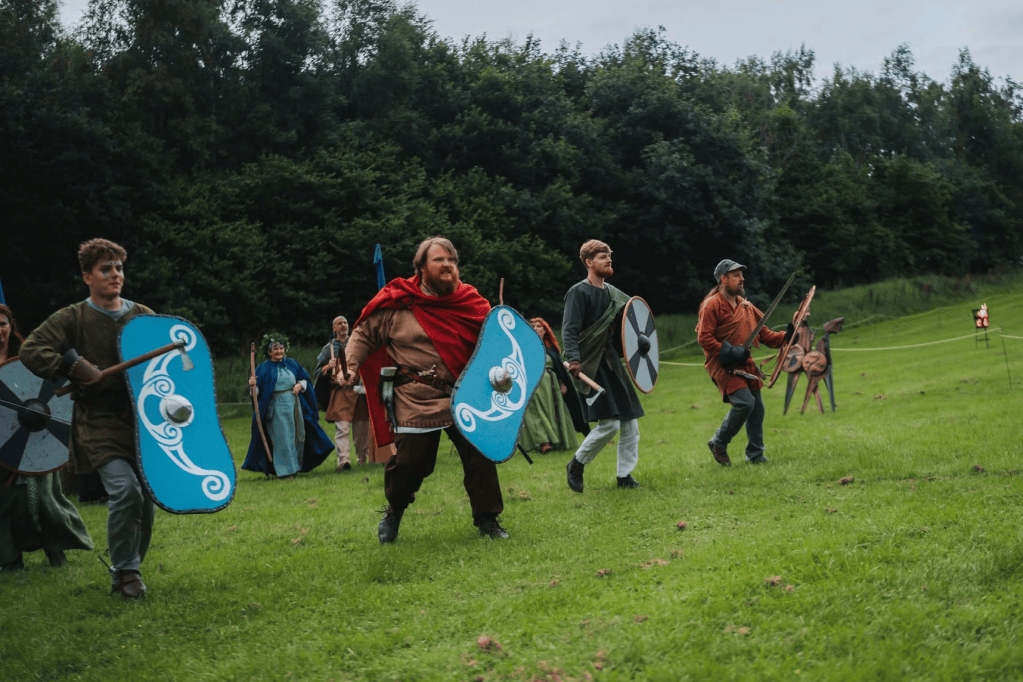
The evening unfolds with a strong sense of participatory theater. Costumed living-history performers bring the Iron Age vividly into view through storytelling, reconstructed scenes, and displays of arms and dress that evoke the world of early Ulster legend. Local musicians provide a stirring soundtrack throughout the night, while artisan craft stalls offer visitors the chance to browse handmade goods and engage with traditional creativity in a contemporary setting.
Families can enjoy a range of interactive happenings designed to make the event accessible to all ages, and guests are warmly encouraged to dress for the occasion in colorful tunics, ancient-style jewelry, summer headdresses, or warrior face paint. It is heritage presented as something shared, social, and alive.
A particularly meaningful element of the Wickerman Gathering is the way the public helps shape the event itself. The towering Wickerman is designed and led by artist McDermott, whose large-scale willow sculpture has become a defining image of Lughnasa at Navan. Members of the public are invited to take part in hands-on weaving sessions ahead of the festival, contributing directly to the creation of the effigy that will later be consumed by fire. That communal act of making drives the event deeper: People do not simply attend, they help build the ritual object at its heart.
McDermott spoke about the process, describing the collaboration involved in this sculpture, more than 30 feet tall, and the many hands behind its creation. From skilled machinery operators to guest weavers, assistants, and early-stage volunteers, the Wickerman is the result of shared labor and collective care, she said.
“I really admire the incredible skills with heavy machinery that can adjust a 30-plus-foot wicker sculpture within the fraction of an inch,” she said, days before the event. “Teamwork from start to finish is how the Wickerman happens. From all the new guest weavers who appeared this year to my two gorgeous assistants Alan and Max who put up with my tiredness-induced vagueness and just figured it out. Then the beautiful girls who were at the very beginning when it’s not very exciting or apparent what’s happening. They helped build the willow bath and get everything started, Nina and Nikki.”
She also said she feels connected to Emain Macha, as “a truly magical ancient place.” There is a special charge to the landscape there, a sense that myth and history remain close to the surface. “I just love the Navan Centre and all the staff there are wonderful friends who make me feel so at home and look after all us weavers,” McDermott said.
As one of Ireland’s great ceremonial centers, Navan Fort bridges prehistory, mythology, and modern distinctiveness in a way few sites can. For centuries, Emain Macha has lived in the Irish imagination as a royal stronghold and sacred landscape. To stand there during Lughnasa, surrounded by music, craft, storytelling, and flame, is to experience a heritage that is both ancient and renewing itself in the present.
As darkness falls and the great Wickerman figure is set alight, the scene becomes unforgettable: Fire rising into the night over one of the oldest ritual landscapes in Ireland, watched by a crowd gathered for entertainment and connection. The Wickerman Gathering succeeds because it understands something essential about Irish culture. Our oldest traditions endure because they are held as important, they are remembered. And then they are retold, reimagined, and shared.
Even now, on an August evening in Armagh, those old fires still burn.
Navan Centre & Fort is a wonderful place to visit any time, 81 Killylea Road, Co. Armagh, Northern Ireland.
Irish by Ancestry admin and RELATED☘️ editor Shelagh Braley Starr is a journalist with special interest in Irish history. She has written her first novel, a historical fantasy based on the Irish myth of Cú Chuláinn’s wife, Emer. Coming soon!
 RELATED ☘️