BY SHELAGH BRALEY STARR
RELATED ☘️ Staff
ARMAGH, Northern Ireland—On the dark edge of year’s end, when the last of the harvest is gathered, there are few places better to mark Samhain than Navan Centre & Fort in County Armagh. The site known in Irish as Emain Macha creates the kind of atmosphere that modern Halloween can only imitate. It is here, beneath earthworks shaped by thousands of years, the ancient myths creep through the mist into modern experience.
Billed as Samhain: The Beginning, the after-dark Halloween event brought fire, a lively Brehon trial, ancient tales, and encounters with Mummers, druids—and even the Morrigan, goddess of fate, prophesy, and sovereignty. For all the commercial candy that now coats Halloween, Samhain remains its primal source: the ancient festival that marked the end of summer, the close of the harvest and the opening of the darker half of the year. At Navan Fort, as in many sites in Ireland this year, the connection feels reawakened.
The location is central to the event’s draw, because Navan Fort is no ordinary heritage attraction. It is one of the great royal sites of pre-Christian Ireland, traditionally associated with the ancient kingdom of Ulster and long linked to mythology, ceremony, and high kingship. Archaeology tells us it was an important ritual land, folklore tells us it was a place where worlds overlapped. Between the two lies the essential charge of the site: the sense that history is lingering just beneath the soil, just beyond the mist.
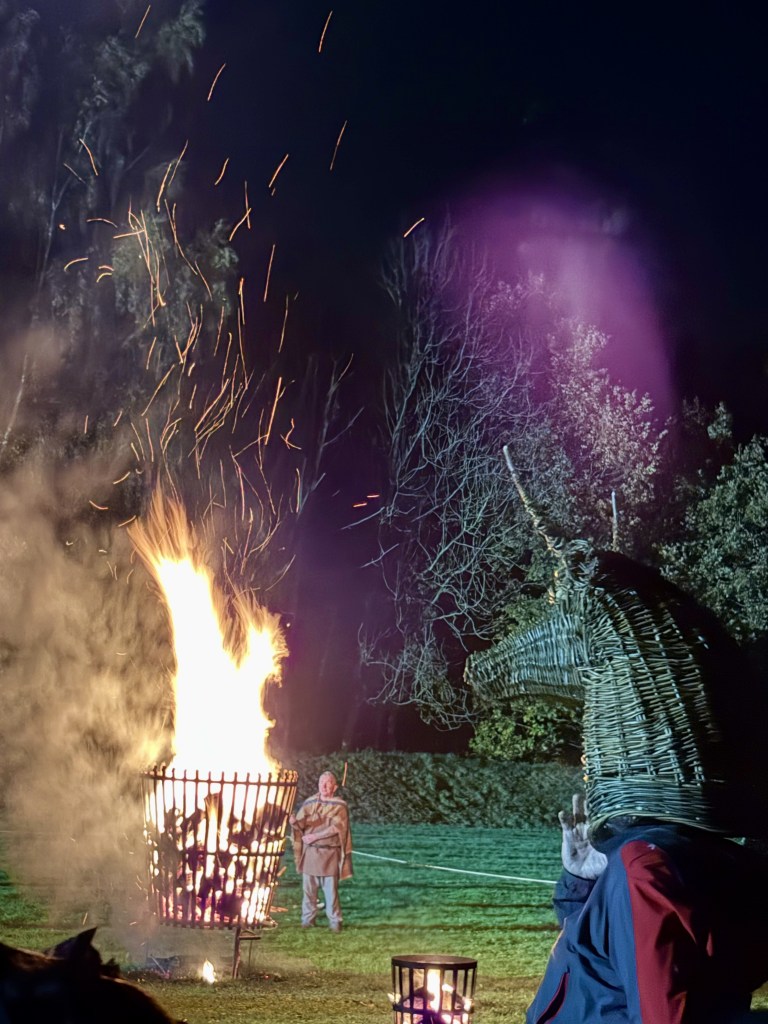
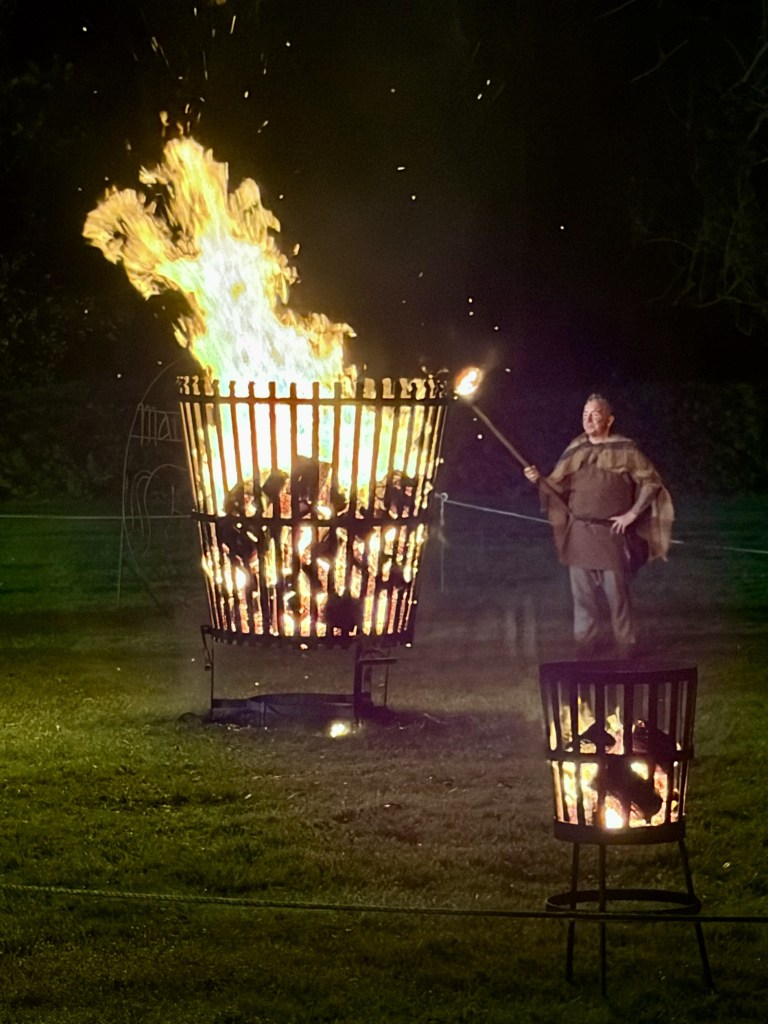
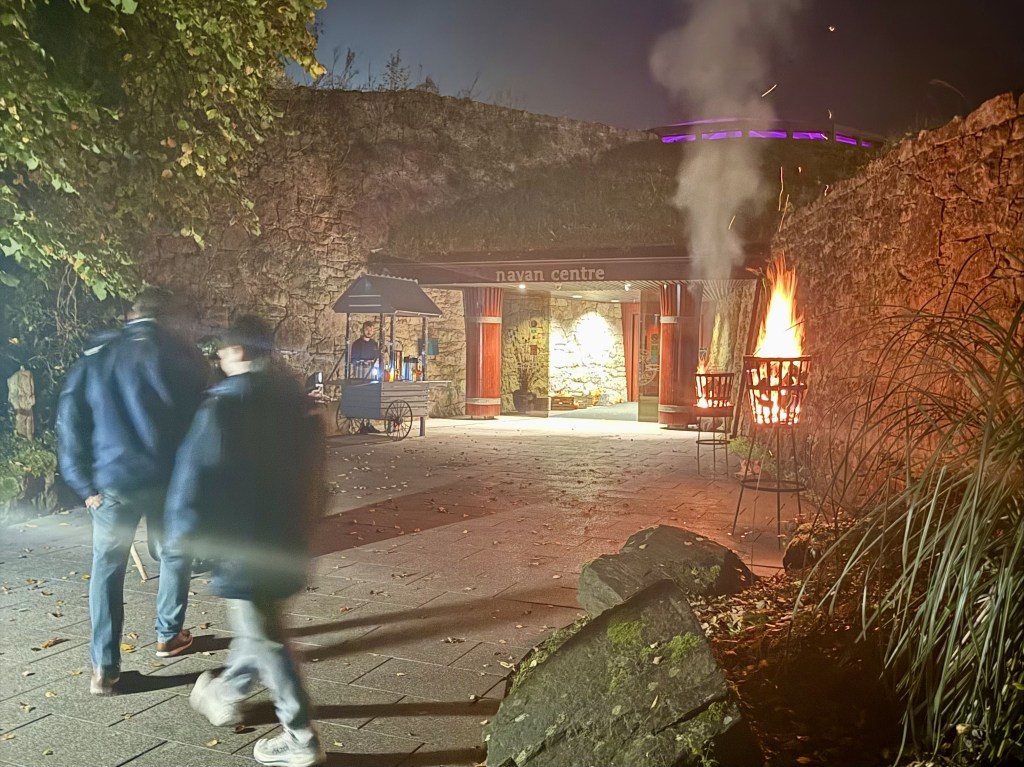
Navan’s event wasn’t a masquerade as much as a path to reconnecting the festival with the landscape that gave rise to it. Visitors, some in detailed pagan costumes, arrived by coach bus to a celebration of historic roots, fire, and the hero that Navan celebrates every day: Cú Chulainn, the hound of Ulster. Talented storytellers in Iron Age garb regaled the crowd with legendary cow raids, Brehon law, and a dramatic re-enactment of the sad, proud death of the demigod. It didn’t seem to matter if the crowd knew the story by heart from childhood or if they were hearing it for the first time. The Navan living history staff made it interactive and fun, garnering laughs for spitting each time they mentioned Connacht, enemy of Ulster.
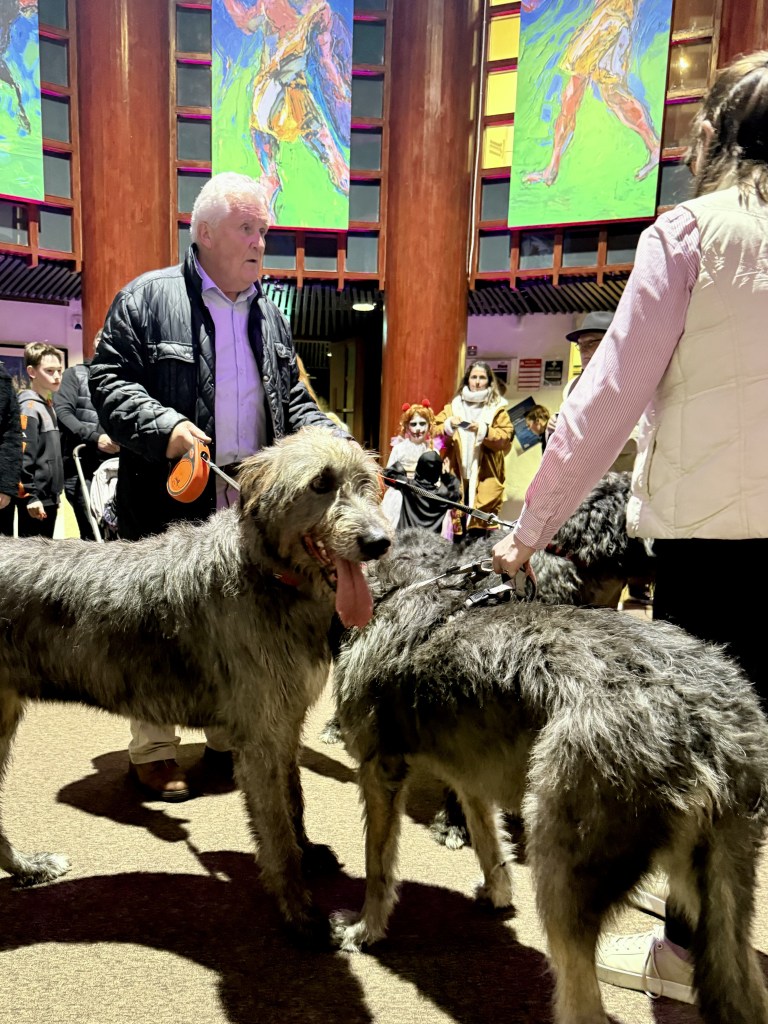
Face painters adorned faces young and old with Celtic spirals. Visitors decorated talisman bags with triskeles and filled them with little trinkets of feather, hazelnut, and flower for safeguards. Many unburdened themselves by writing their worries on little slips of paper to burn in the fire. Hot spiced cider and stew in big bowls kept everyone warm and satisfied on the cool but pleasant night. Irish wolfhounds, Oisín, Muireann, and Fiadh from the Irish Wolfhound Club of Ireland, paced around owners Lorraine McMahon and Kevin O’Byrne, the excitement of the night keeping them on duty.
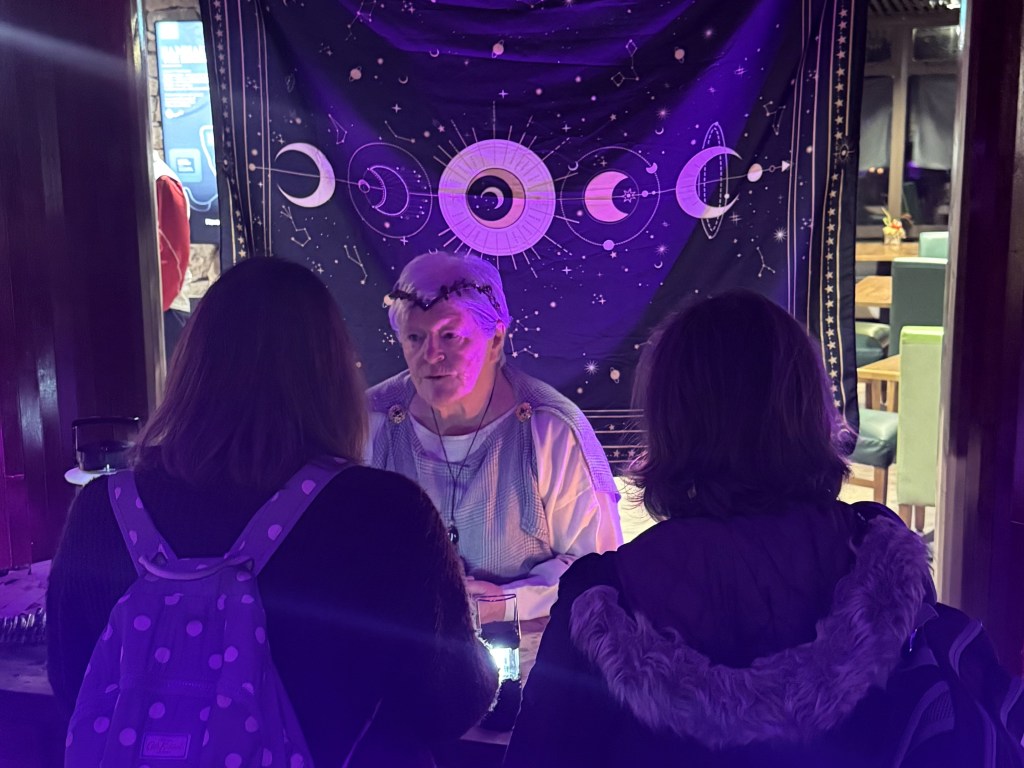
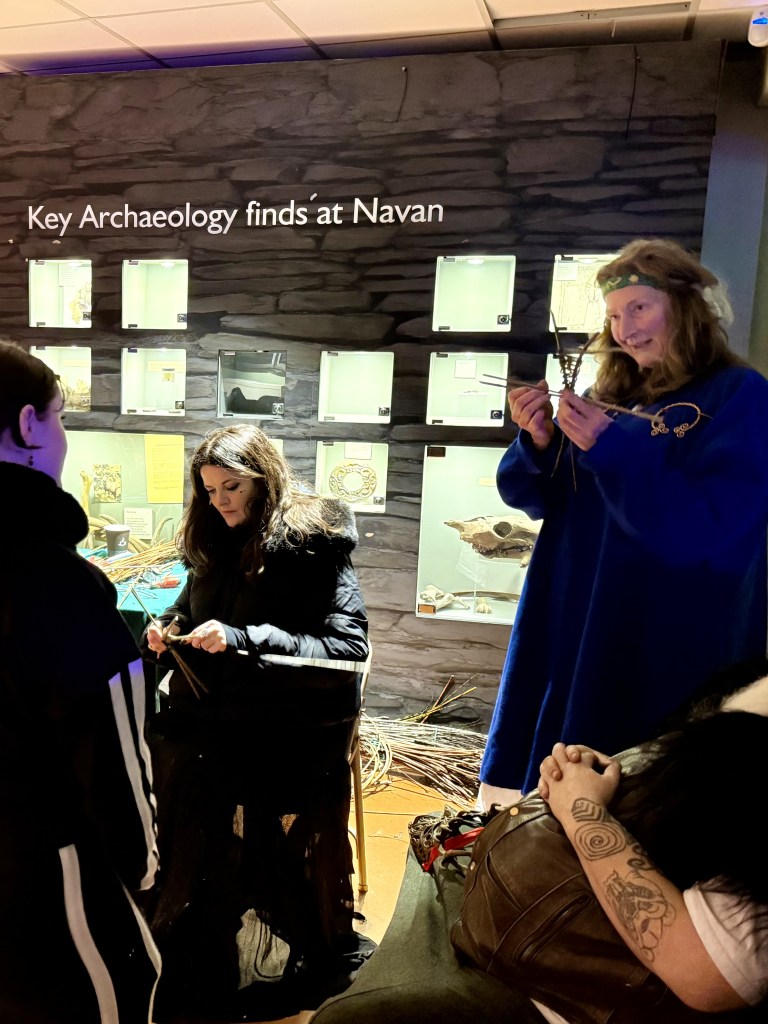
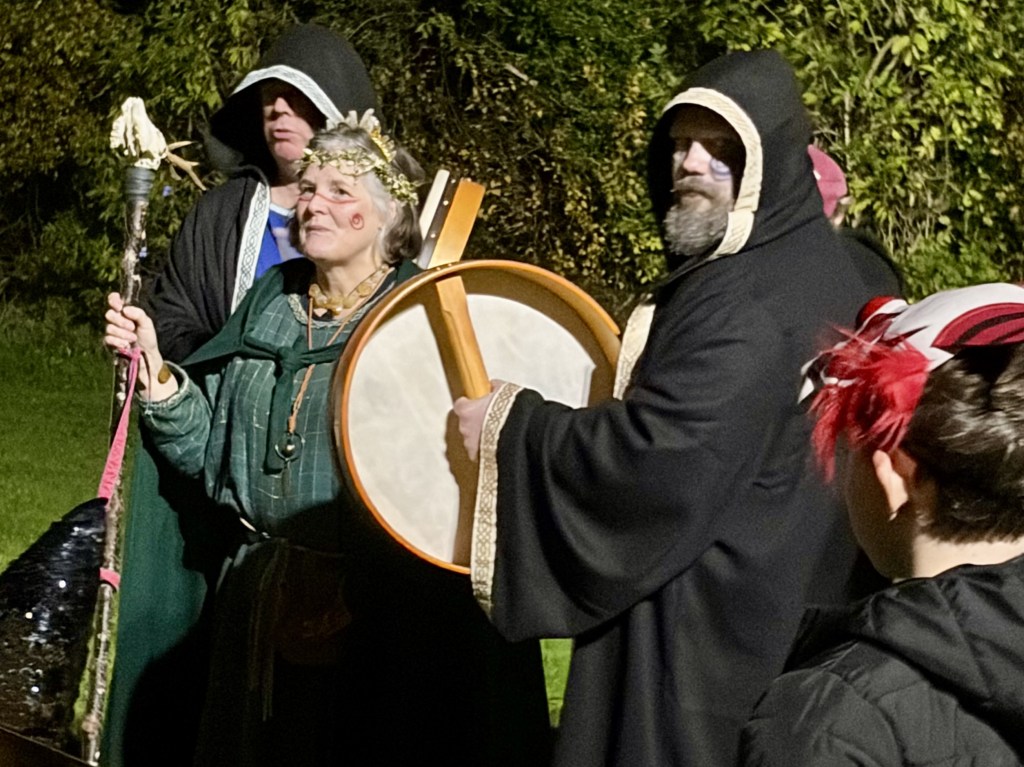
Mummers in large wicker headpieces, looking like bulls and deer, don disguises to confuse any spirits that might blow through. Druids and Brehon judges were no longer distant folklore, but part of the night itself. They appeared along the route with drums and torches, beating a path to the bonfire, calling for the Morrigan. The fearsome goddess of fate, war, and prophesy, draped in glossy black feathers and a plague-style crow mask, wielded her walking stick, offered a blessing, and asked the large crowd to step into the Irish new year honoring the ancestors.
Her presence was as described in Irish myth, both magnetic and unsettling. To invoke her is to lean into the elemental darkness of Samhain. There was no real danger, but a thrill of stepping into uncertainty, of surrendering to the shadows before the fire’s light blazes again.
That’s why Navan continues the tradition, to honor how communities marked the passage of this season together, not to conquer it, but to accept it as part of life and survive it.
At Navan Fort, where ceremonial life once shaped the year, layers of history are never far from the surface. Northern Ireland has no shortage of haunted places, but Navan Fort offers something deeper in continuity. By drawing on Samhain’s origins at one of Ireland’s most storied ancient sites, the event retained an important sense of history rather than contrivance.
For visitors, that may be the greatest appeal of all. To walk through Navan after dark, guided by sacred flame and storytellers, is to experience Halloween before it became what we know. In that sense, The Beginning was well named, not only to mark the beginning of Halloween, but to the beginning of winter, of a new year. At Navan Fort, Samhain has come full circle.
Only 2 miles from Armagh City, visit Navan Centre & Fort any time of year, Tuesday-Sunday, for a fully guided tour of the great temple at Emain Macha. Check out artifacts found in the archaeological complex, experience a living history of the Iron Age, and hear the stories of the mythological and Ulster cycles of Irish lore. Stop for a life-changing scone at the Ancient Grounds and browse an incredible selection of special books and more at the shop.

