BY SHELAGH BRALEY STARR
RELATED ☘️ Staff
In Ireland, where most restaurants aspire to more “modern” menus, one special experience seeks to go back. Corbett’s Traditional Irish Food Experience lays a table full of authentic Irish cuisine from the 1900s.
Founder Frank Corbett has made it his mission to revive and preserve the dishes, stories, and culinary customs that shaped generations of Irish life. Working in Dublin and his native County Tipperary, he offers a deeply researched dining experience with heaping sides of history lesson and cultural performance. For Corbett, this work is personal.
“There’s nothing like this in Ireland,” he said. The idea for his unusual venture began with a conversation with his late father, when he asked a deceptively simple question: “What did you eat when you were younger?” The answer opened a floodgate.
“If I were to answer that,” he said his father told him, “I’d need about six months of your time. I can’t just tell you what we ate. I’d have to tell you the environment in which we lived.”
For months, Corbett listened as his father shared not only his own memories, but those passed down from grandparents and earlier generations. “He downloaded his living memory into my head,” Corbett said. “Not just his, but my grandmother’s, my grandfather’s. Hundreds of years of history.”
What emerged was far more than a list of dishes. It was a practical portrait of Ireland through food: local and seasonal, shaped by community and survival. Corbett began to think traditional Irish cooking had been overshadowed by more marketable versions of Irishness.
Take corned beef, for example. Many assume it is an Irish-American invention. Corbett told a different story. Long before it crossed the Atlantic, salted meat was part of the Irish diet. Salt could be drawn from seaweed and used to preserve meat, though beef itself was once eaten sparingly because cattle were highly valued. Later, in the 1800s, Cork became a major producer of corned beef under the British Empire. When Corbett asked his father whether he had eaten it growing up, his response was: “Oh, thick slices of it,” Corbett said.
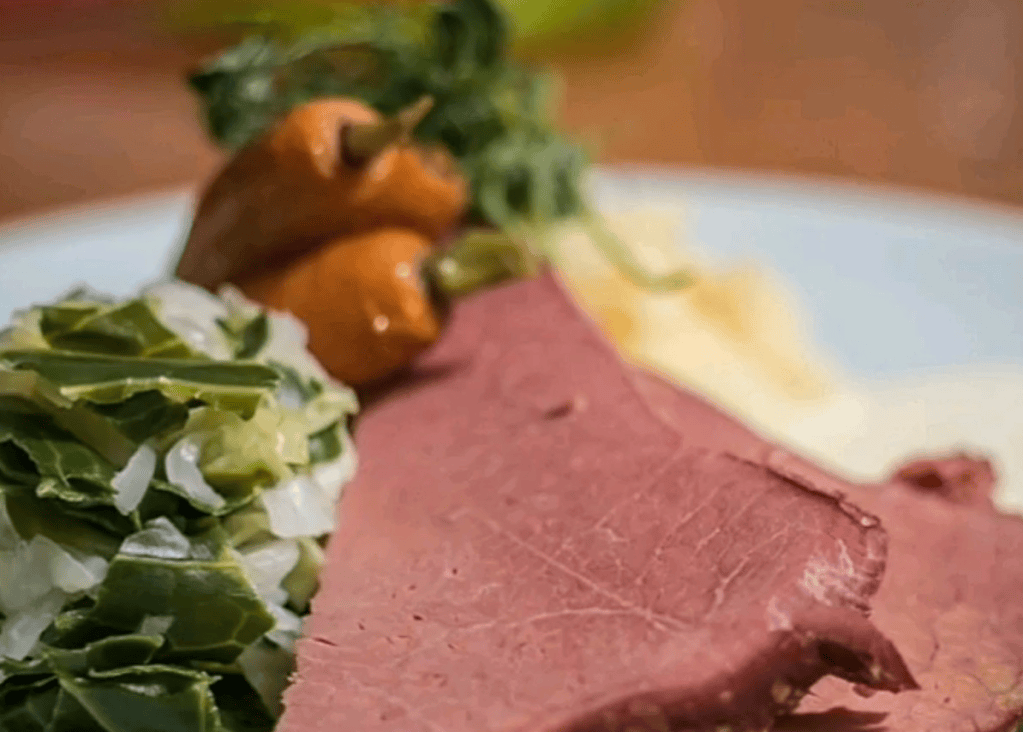
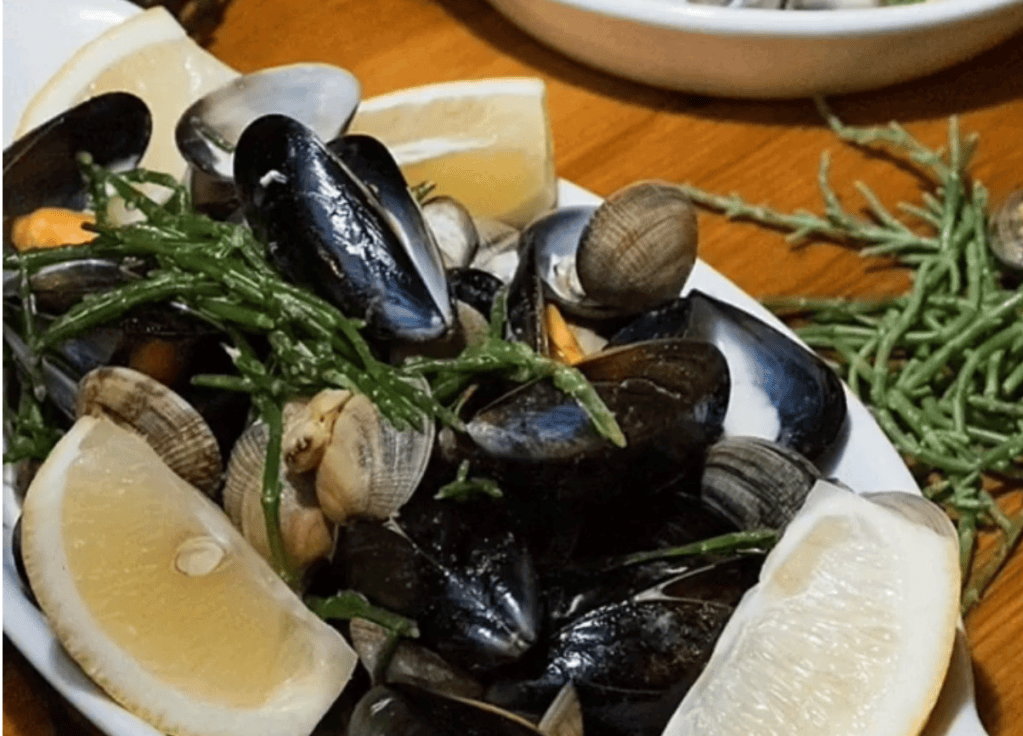
For Corbett, these stories matter because they challenge the idea that Irish food lacks depth or heritage. They also restore context to dishes that have too often been dismissed as plain or old-fashioned.
He recalls asking his father how bacon was traditionally smoked. His answer recalled a community that kept each other alive. Neighbors would gather to slaughter a pig, sharing both the labor and rewards. Meat would be salted in barrels, and if it were to be smoked, it would be hung from an S-hook high in the chimney, cured slowly over wood fires. “After a few fires, you’d take it down,” Corbett says, “and you’d have the best smoked bacon in the country.”
After months of conversations, Corbett had documented 22 dishes, though he typically serves 10 in his curated experiences. The deeper he went, the more urgent the project became. Music and dance, he felt, were safe; they would survive. Irish food, he feared, was “fading fast.”
“I looked at my father and I asked him, ‘Can I run with this?’” he remembers. “He said, ‘Run as far as you can.’”
Corbett eventually brought the idea to Dublin, where he connected with food historians and with Gallagher’s Boxty House, the Temple Bar institution that now hosts the Dublin events. His father traveled up three times to taste the food and make sure the flavors matched the stories. Since launching in 2018, Corbett says he has served around 800 guests and earned glowing reviews from diners who often describe the experience as the highlight of their time in Ireland.
Part of the appeal is the format itself. In Dublin, Corbett sits with guests throughout the entire two-and-a-half-hour meal, introducing each dish with its history and cultural background. He also weaves in other artifacts of Irish life, including a demonstration of Irish currency from 1916 onward, which guests can hold in their hands. At the end of the evening, after telling the story of Irish coffee, Corbett serves the drink and sings a cappella, often “Red Is the Rose,” and sometimes the national anthem in Irish.
He calls it a “faceless company,” an idea inspired by his father’s advice to leave ego out of the work. “This will do well if you get rid of your ego,” his father told him.
That humility is central to Corbett’s approach. He does not present himself as a celebrity chef, but as a steward of his father’s memories. In Tipperary, he works with Cahir House Hotel, near the Rock of Cashel and Cahir Castle, giving visitors another setting in which to experience Ireland through its food. He also offers an online cultural experience from his home in Cahir, introducing guests to the geography and history of Ireland before diving into traditional dishes and ending, again, with song.
Corbett pointed out how traditions evolve in Ireland. Not every beloved food in modern Ireland qualifies as old Irish fare. Fish and chips came via England, he said, and the now-ubiquitous spice bags were created by a Chinese chef in Ireland. “The word traditional is very interesting,” he said. “If I create something today, and we go off 200 years into the future, it’s traditional.”
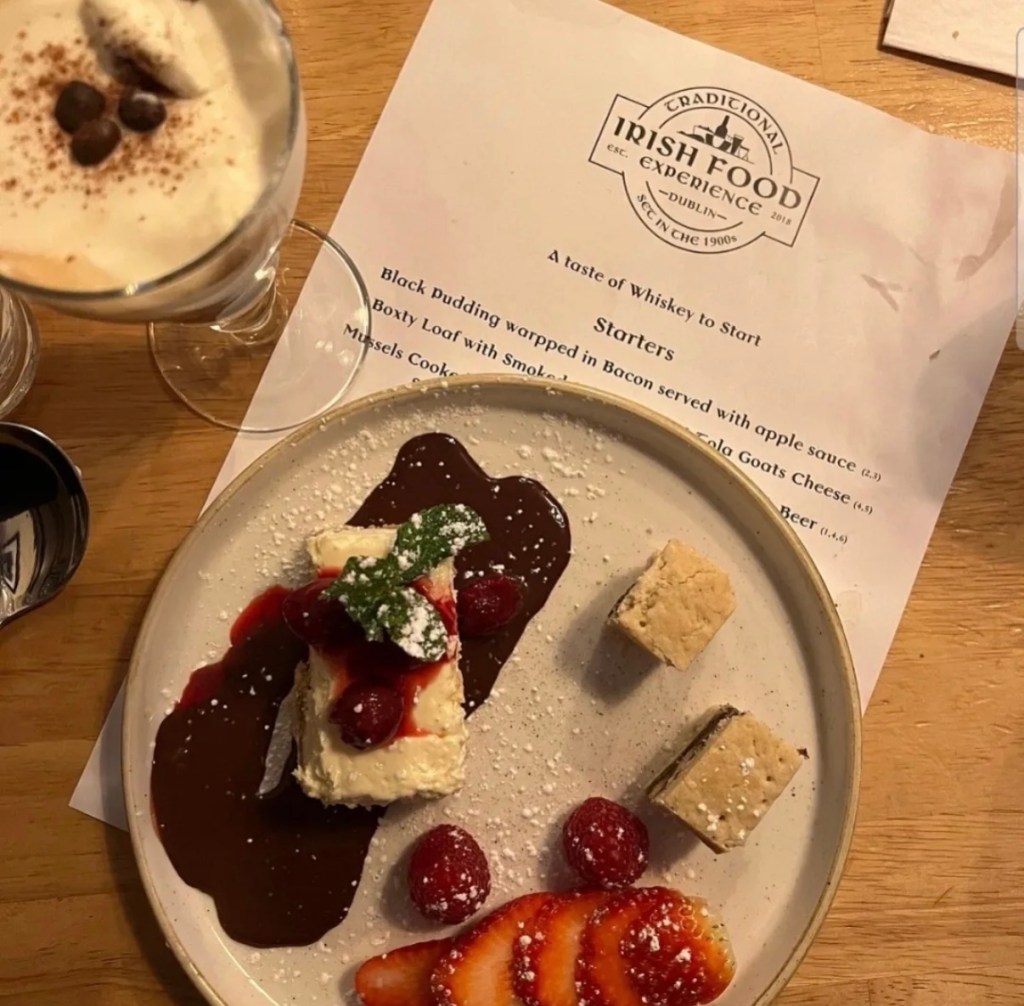
Still, his focus remains on dishes grounded in the Irish past: lamb stew with barley, boxty, bacon, cabbage, gur cake. Even when he bends the rules, like offering a Baileys cheesecake, he does so with a wink and a reason.
Above all, Corbett said his table is a place of welcome, especially for famine-era emigrants’ descendants, who return in search of connection. Their survival was never guaranteed, he said. “Your ancestors are our countrymen. When they come back and they sit down at my table, they are incredible. They are actually a miracle,” he said.
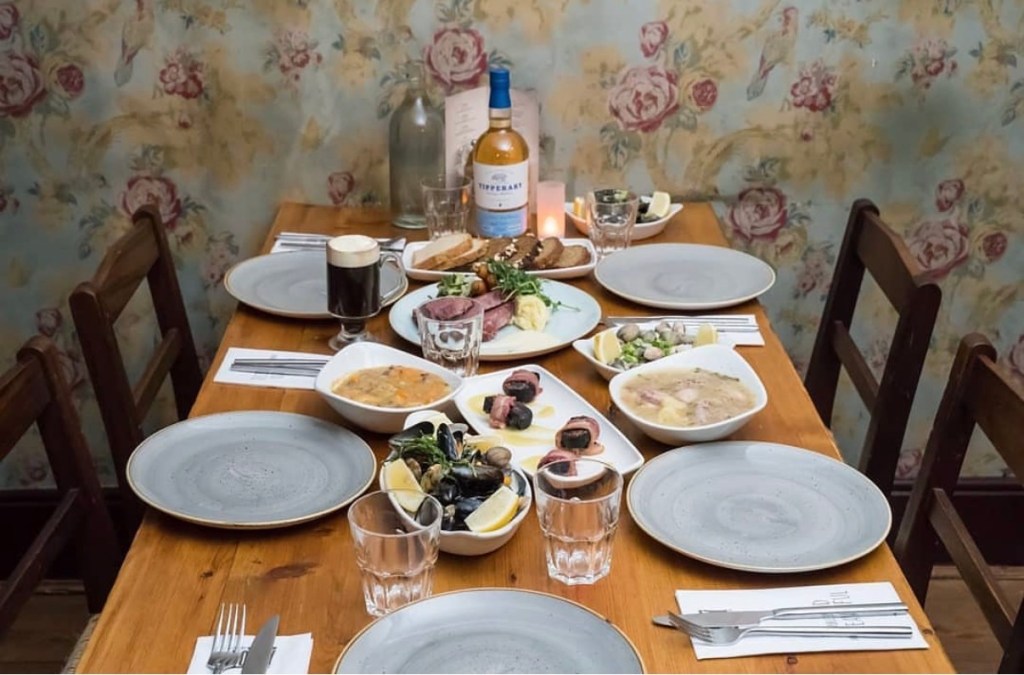
Add Corbett’s Traditional Irish Food Experience to your itinerary in Dublin or Tipperary. Find out how HERE.

