BY SHELAGH BRALEY STARR
RELATED ☘️ Staff
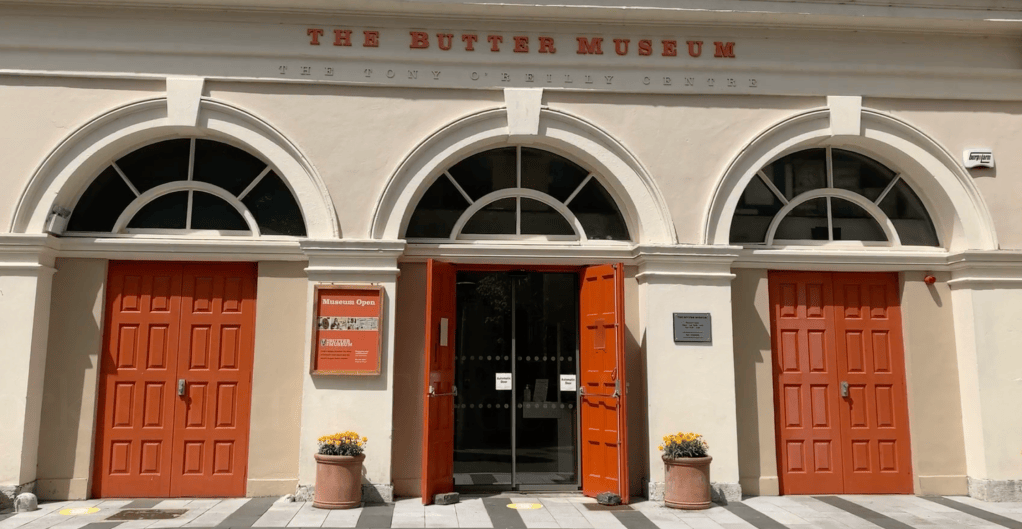
Where else would you find a “Butter Quarter” but Cork, where visitors to the Butter Museum arrive in a kind of cheerful devotion? They come—not for a saint’s relic or a holy well—for something rich, yellow, and deeply woven into Ireland’s story. At the Butter Museum, they come to pay homage to what Director Danielle O’Donovan calls one of Ireland’s great success stories.
“We do have a lot of people on pilgrimage to the Butter Museum,” O’Donovan said. Irish butter inspires a particular loyalty. “Butter from other places is just not the same,” O’Donovan said. “There must be something in the air or in the climate that gives the butter that special flavor.”
For generations, butter evokes memories of thick bread, fluffy potatoes, baking with Mammy. It is inextricably linked to Irish hospitality, and also to survival. Long before Irish butter became a premium export, butter sat at the center of the Irish diet. In early medieval Ireland, O’Donovan explained, people ate what Irish food historian Regina Sexton describes as a diet built around milk, cheese, butter, and porridge-like foods. Meat was far less common, because slaughtering an animal meant losing a valuable source of milk, labor, or breeding stock.
“It wasn’t a side dish,” O’Donovan said of butter. “And killing an animal was a sacrifice, you’re losing it, so you wouldn’t have eaten meat as often.” Dairy foods, she said, were known as the “white meats.” It had incredible value in Irish households.
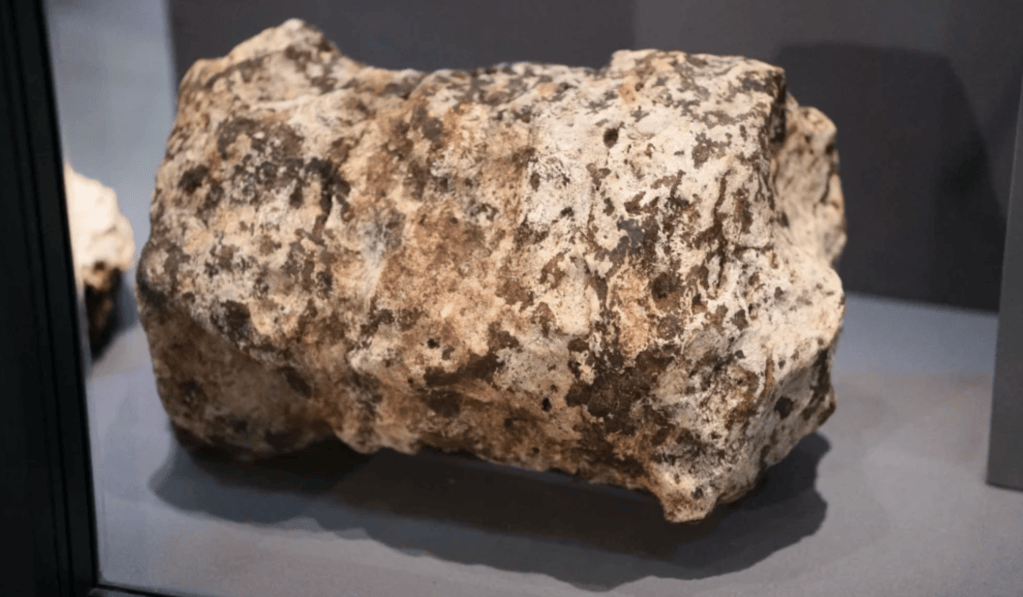
Which introduces the most curious discovery of treasure: bog butter. The Butter Museum has on loan a sample of this remarkable archaeological find, part of a wider history that includes more than 450 known samples discovered in Ireland. Bog butter is exactly what it sounds like, ancient butter preserved for centuries in peat bogs, where the acidic, damp, oxygen-free conditions can hold organic material in astonishing suspension. “We loved it so much, we put it in the bog,” O’Donovan said, likening it to the preservation of bog bodies and precious objects in the Derrynaflan Hoard collection.
One piece in the museum is around a thousand years old. Elsewhere, the oldest carbon-dated sample of bog butter has been dated to roughly 2,500 BCE, making it around 4,500 years old. Why would they bury butter in the bog? Whether for storage, safekeeping, or ritual, bog butter points to the essential nature of Irish butter, too valuable to waste and too important to be taken for granted.
That importance did not disappear as Ireland changed, it changed with Ireland, O’Donovan said.
The arrival of the Anglo-Normans altered foodways, bringing bread more firmly into the Irish diet. Then, in the 16th and 17th centuries, another transformation began as colonization, land dispossession, and new commercial priorities reshaped the countryside. Settlers and merchants looked at Ireland’s long grass-growing season, mild climate, and pasture-rich land and saw profit.
“That’s where the commercial side kicked in,” O’Donovan said. “Butter does not take a huge amount of resources to make. In a small cabin, with a single cow, you had butter. But once butter becomes commercial, they are not eating the butter, it’s for market.”
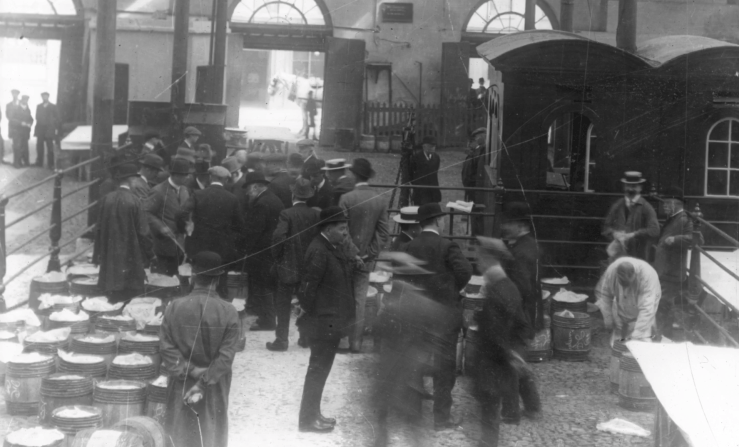
Butter became big business. Dutch influence helped shape the trade, including the use of the furkin, a quarter-barrel container used to pack and transport butter. These furkins traveled from small farms along the famed Butter Roads into Cork City, where they were bought, graded, and exported on a massive scale.
By the mid-19th century, Cork’s Butter Exchange was the largest butter market in the world. “Thousands of these little furkins are passing through the market every summer. Cork City is really built on butter and beef,” O’Donovan said.
Butter and beef transformed Cork into a global provisioning center. Cattle also ran through the city, where, in the late 18th century, some 90,000 a year were slaughtered, salted, and packed into barrels.
“That beef is going in big barrels, salted and sent abroad, to the British navy, the West Indies, to America too,” O’Donovan said. “Irish people on St. Patrick’s Day having corned beef—it is an Irish dish, it could have come from Cork. The beef was leaving, apart from wealthy people, the good beef was gone.”
With its stores of beef and butter heading off shore, Irish people developed a taste for necessity. Offal, tripe, and drisheen became part of local food culture. Drisheen, Cork’s distinctive pale pudding, was made not from whole blood but from plasma, the “white part” left after separation.
“This food culture is very rarely about preference,” O’Donovan said. Families sold what they could, butter, eggs, anything that might bring cash. “You didn’t eat your butter, you sold it,” O’Donovan said. To keep it back for yourself was to give up income you might need.
The Irish genius was not simply in producing good butter. It was in building a culture around making use of everything: milk into butter, blood into pudding, scraps into sustenance, summer abundance into winter security.
O’Donovan believes that is one reason the Butter Museum resonates so widely now. In an age of overflowing supermarket shelves, it reconnects people to a past in which food was precious. “We try to link people to how scarce food was,” she said, adding that there may be something to learn from that old frugality today.
Even within living memory, waste was far less acceptable. In older slaughterhouses, blood would be caught and used; now it is often discarded. A century ago, people ate nose to tail because waste was unthinkable. If a neighbor killed a pig, there was every chance someone nearby hoped for the blood to make pudding.
And for travelers, the Butter Museum offers a way into Irish history through the senses. You do not leave hungry, exactly. You leave wanting good brown bread, a pot of tea, and a thick slab of the real thing.
“Irish people do eat more butter, possibly the French rival us. We use it in different ways, more ways, though, bread and butter, potatoes and butter,” O’Donovan said. “I couldn’t eat potato without butter.”
Visit the Butter Museum in O’Connell Square, Shandon, Co. Cork. If you go Wednesdays or Saturdays at noon, you’ll be treated to a butter-making demonstration. Find out more on their website HERE.

