By JONATHAN BEAUMONT
RELATED ☘️ Staff
The Northwest of Ireland: For travelers, this whole area can comfortably occupy a week in itself.
It is off the main tourist trail, though the coastal route—Ballyshannon to Donegal to Killybegs and west, up to Ardara, Dunfanaghy, Malin Head, and Inishowen—is becoming more popular due to the successful (and well justified) marketing of it as the northern part of the Wild Atlantic Way. There is much to be seen along this route, even too much to include in this short piece.
First, who lives here?
The area immediately to the south is Co. Sligo, the ancient kingdom of Breffni (or part of it). Now we’re in the ancient land of Tyrconnell.
By far the most common surname up here is Gallagher! In rough order, these are the most common names within this area: *Gallagher, Doherty (or Ó Dochartaigh), O’Donnell (or Ó Domhnaill), Boyle (or Ó Baoill), *McLaughlin / McLoughlin (or Mac Lochlainn), Kelly (or Ó Ceallaigh), McDevitt (or Mac Daibhéid), *Sweeney (or Mac Suibhne), McFadden (or Mac Pháidín), Ward, McDaid, McMenamin
*These names are also very common in western Co. Mayo. This is as a result of the invasion of Oliver Cromwell in the 1600s, when thousands of people were forcibly displaced from this region and re-settled in Co. Mayo, where agricultural land was poorer.
To this day, these surnames still dominate.
Co. Donegal is our most northern county with a rich culture, dialect of the Irish language, and vibrancy all of its own. It includes Malin Head, the most northerly point in Ireland.
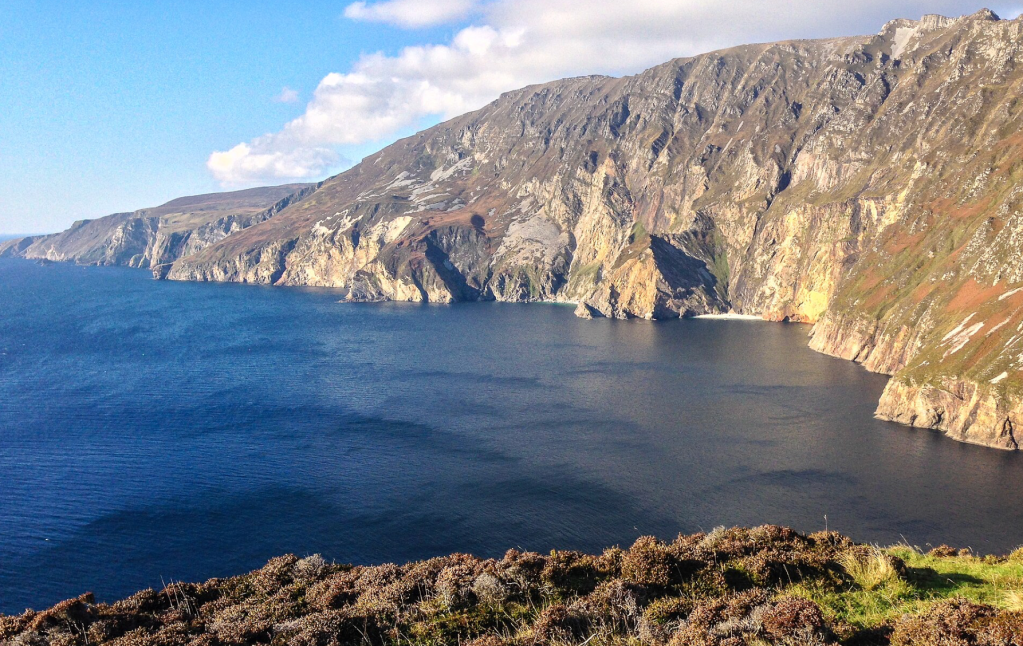
Out beyond Killybegs, in the southwest of the county, are the cliffs at Slieve League, the highest in Ireland. (The better-known Cliffs of Moher are only our fourth or fifth highest). Killybegs is also our largest fishing port.
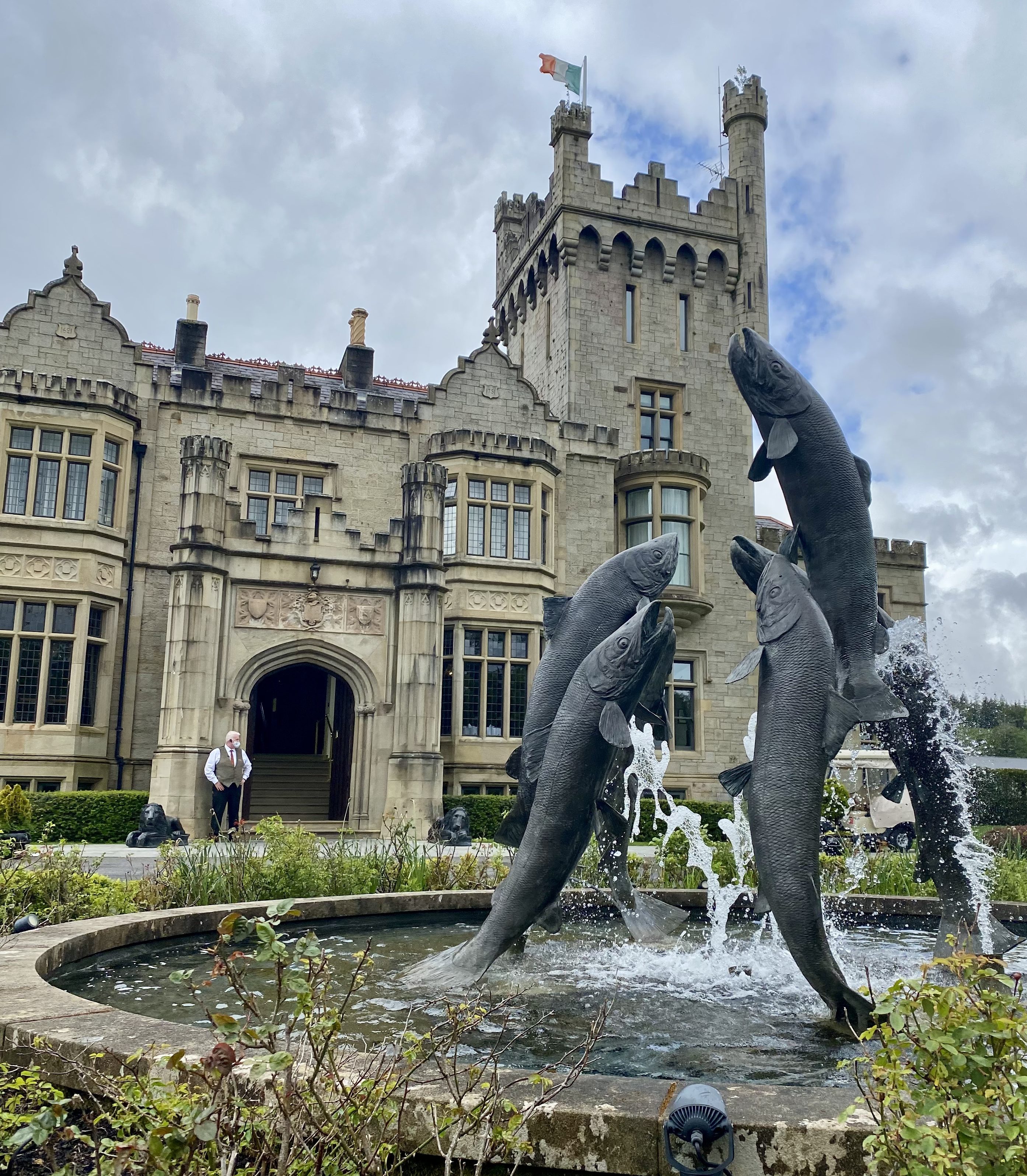
Whatever you do, when it comes to accommodations, don’t try to wing it! Most hotels here are smaller ones, so book your accommodation well in advance, especially in high season. Even in the three biggest towns, Letterkenny, Buncrana, and Donegal town itself, all accommodation—LITERALLY all—can be sold out completely, especially on summer weekends. If you want luxury, look up Donegal’s only castle hotel, 6km outside Donegal town at Lough Eske (Read our review of Lough Eske here).
Visit the Glenveagh National Park and take several hours there to hike among the beautiful castle gardens and the trails and walks in the valley. Look out for native red deer!
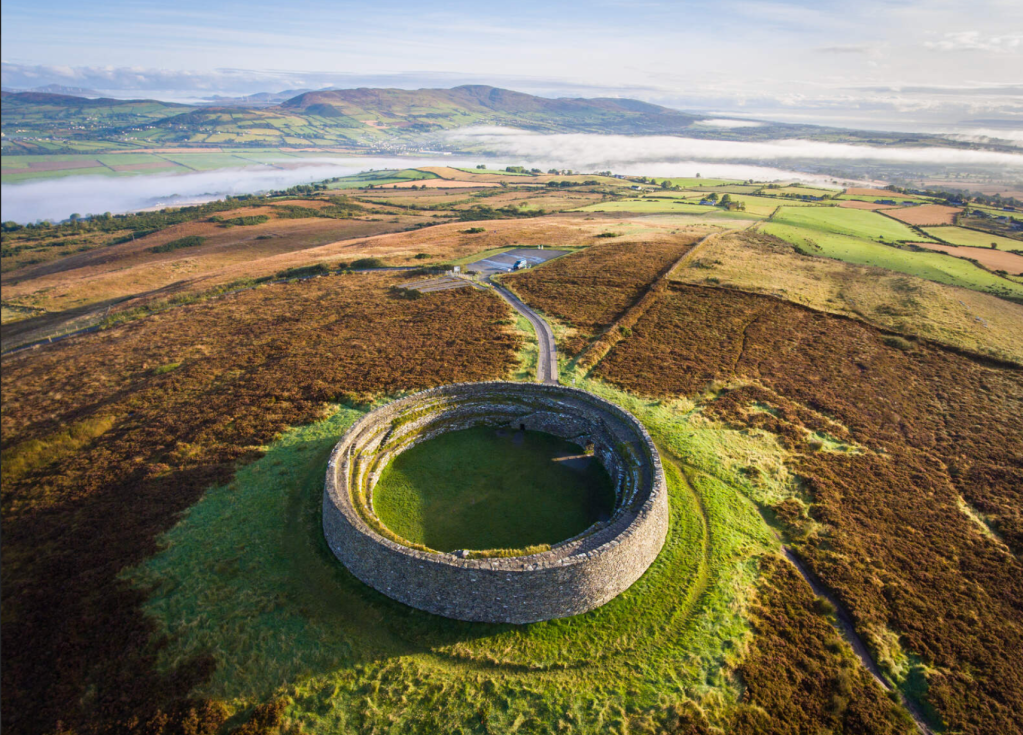
In Donegal town, the old town castle is well worth a look, and take a trip on the Donegal Bay cruises. Between Letterkenny and Derry city, make sure you go to the ancient Celtic fort, which guarded the entrance to the Inishowen Peninsula. This is the almost 4000-year-old Grianán of Aileach. The views command the whole area. Bring a map so you can identify what mountains you’re looking at in the distance, and how far away they are. Nearby is Derry city, the most complete walled city remaining in Ireland. It is also Ireland’s most northerly city. Make sure you have sterling pounds to spend there rather than euros, as it’s “in the north,” as we say, i.e. across the Irish border.
Between Letterkenny and Lifford / Strabane, make sure you call to see the beautiful Oakfield Park gardens, stately home and grounds. Nice cafe, and fun for the kids!
Way down in the south of the county, on the border with Co. Fermanagh, Belleek Pottery (pounds again!) is a very old and well-known Irish pottery, famous all over the world. Browse, yes, but also book the highly interesting tour, which tells you the history of the place.
Off the main roads, the areas are mountainous and bogland, and what looks on the map like a half-hour journey, your sat-nav will tell you it will take an hour. Pay no heed to that, though, the satnav is wrong, too! Allow an hour and good bit … you cannot rush through this region. First, it isn’t possible with narrow and twisty roads, and second, even if it were possible, you’d be mad to. Here, you take things easy, go with the flow. Donegal and the northwest is emphatically not for charging through.
Whichever area you are staying in—and Donegal town is most central for the south of the county, while Letterkenny is best for the northern area—ask about local attractions and what’s on locally.
Finally …
There’s a little gem right in the middle, but it only operates on certain days. This is a 4km section of the former Stranorlar-to-Glenties railway line, which saw its last public passenger train almost eighty years ago in 1947. An original bus-like diesel railcar, itself built in 1940, operates trips over the line which is run by a small local community group. This is An Mhuc Dhubh, or the “Black Pig,” a local nickname for the railway at one time.
Why would a train be called a “black pig?”
Because when it was first opened, for a time in the early 1900s, both the steam engine (which breathed black smoke anyway), and the carriages it pulled were all painted black …
Jonathan Beaumont is Irish by Ancestry’s destination expert, historian, and tour guide. He has published seven books on Irish social and economic history, and transport history, with three more in preparation. In the tourism industry, he has been leading tours for some twenty years. He collaborates with television producers where historical context is needed in preparation for TV programmes, and is heavily involved in several groups that assist tourists coming to Ireland, in particular those tracing their Irish roots. Naturally, he still finds time for the occasional pint of Guinness, and playtime with his grandson.
Don’t miss Jonathan’s new weekly feature in the Irish by Ancestry Facebook group, “The Tuesday Detour: Jonathan’s Hidden Gems” off-the-beaten-track (writing about that railway put the idea in his head).
 RELATED ☘️