By SHELAGH BRALEY STARR
RELATED☘️ Staff
In the Irish countryside, a pot of stew (stobhach) once made a meal built from what the land and the household could spare: a few onions, a good heap of potatoes, and the stronger, older flavor of mutton simmered low and slow until the broth turned rich and comforting. Long before recipes were polished for cookbooks, Irish stew lived in kitchens where instinct guided the hand, and where a tightly covered pot over a steady fire promised warmth at the end of a damp day.
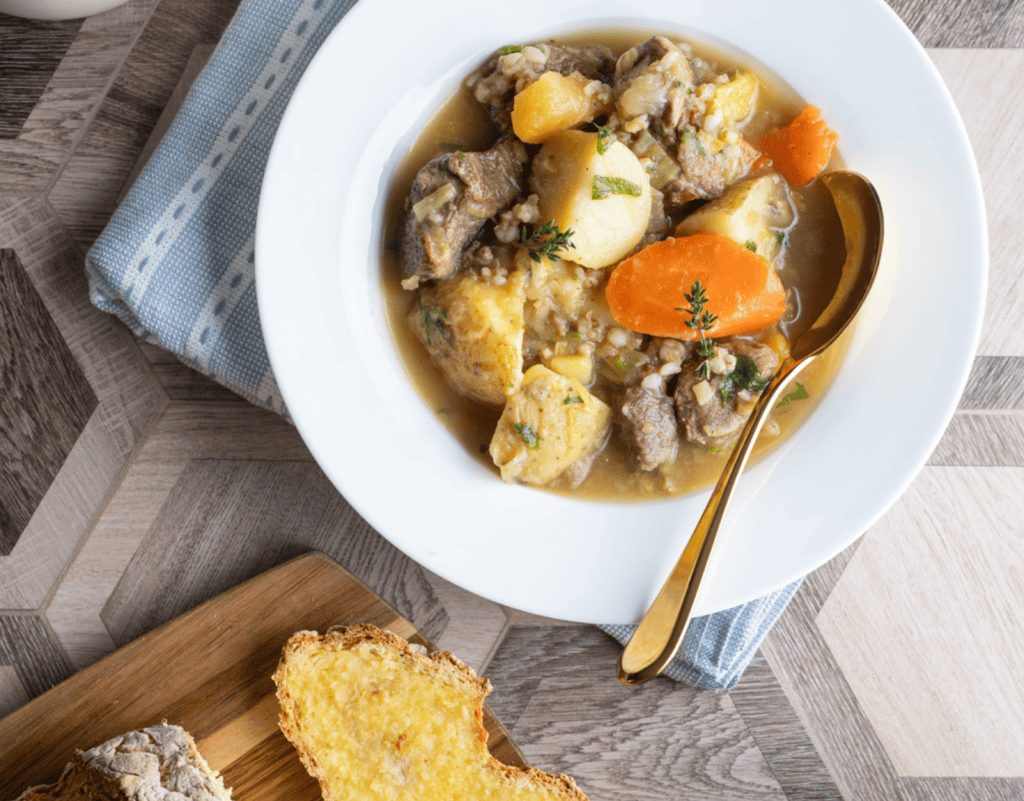
This 19th-century-style version returns to that older tradition, before restaurant embellishments made it fussy or fancy. There is no wine, no complicated technique, only the quiet magic of layered ingredients cooking gently together for hours. The potatoes soften and thicken the broth, the onions melt into sweetness, and the meat yields until it can nearly be broken with a spoon. What emerges is not delicate or decorative, but sustaining. This is a dish shaped by necessity. In every spoonful, there’s something humble and hearty. Here’s a traditional Irish lamb stew recipe to try—
Ingredients:
• 2 lb lamb shoulder or neck, cut into chunks
• 2 tbsp flour
• Salt and black pepper
• 2 tbsp butter or dripping
• 1 large onion, sliced
• 4 large potatoes, peeled and cut into chunks
• 3 carrots, sliced thick
• 4 cups lamb or beef stock or water
• 1 sprig thyme or 1 tsp dried thyme
• 1 bay leaf
• 2 tbsp chopped parsley
Directions:
1. Season the lamb with salt and pepper, then toss lightly in flour.
2. Heat the butter in a heavy pot (don’t burn it though) and brown the lamb in batches.
3. Remove the lamb and add the onion. Cook for a few minutes until softened.
4. Return the lamb to the pot.
5. Add the carrots, then layer the potatoes on top.
6. Pour in the stock to nearly cover the ingredients. Add thyme and bay leaf.
7. Bring gently to a simmer.
8. Cover and cook on low heat for about 1.5 to 2 hours, until the lamb is tender.
9. Remove the bay leaf, adjust seasoning, and sprinkle with parsley.
Some traditional details:
• Some Irish stews were kept very simple and did not brown the meat at all, relying on slow simmering for flavor.
• Older Irish stews were often very plain: only lamb, potatoes, onions, and water. Carrots were sometimes included, but not always.
• Mutton was more common than young lamb in poorer or older households.
• The dish was valued because it used few ingredients and could feed a family.
• Bread might be served alongside if available.
Serve with brown bread or soda bread and cabbage, or some buttered peas if you like.
Adapted from Clodagh’s Irish Kitchen; serves 4.

