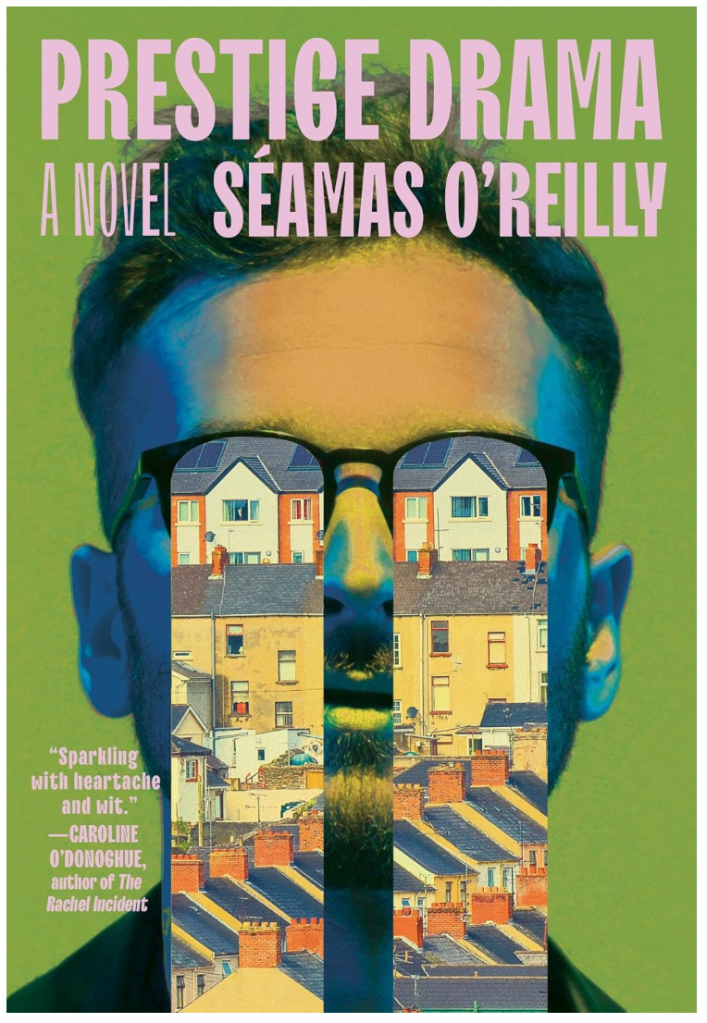
PRESTIGE DRAMA, by Séamas O’Reilly, Cardinal/Hachette Book Group, 2026
SEPTEMBER BOOK REVIEW for Brigid’s Library Book Club, the book club exclusively for Irish by Ancestry members and friends
By SHELAGH BRALEY STARR
RELATED☘️ Staff
Prestige Drama by Séamas O’Reilly is a wry, witty, deeply reflective Irish mystery that explores grief and history intertwined, the stories people tell about themselves, and the confessions that give them away.
Known for his sharp humor and political insight, O’Reilly blends experience growing up during the Troubles in Derry, Northern Ireland, with culturally strong characters that defy stereotype, creating a story that feels intimate and insightful.
The drama in Prestige Drama centers on a community where (nearly failed) writer Diarmuid Walsh returns home with a TV contract for a script about a Troubles-era local massacre. The other 12 points of view provide the background of poor Jamie Devenney’s death as well as varying perspectives on how, when, and whether such a thing should be memorialized—by an American starlet, no less.
One of the book’s greatest strengths is its voice, with characters in lively and revealing conversation, from the victim’s loss-hardened mother to skeptical news editor to rumor-mongering taxi driver. Each character has a distinct view, shared through first-person monologue that simultaneously makes you laugh and cringe. They are at turns cynical, hopeful, practical—that even if the show flops, perhaps they’ll “stand to make a quid or two,” which would be for the greater good, of course.
When the American starlet disappears, everyone is on watch for where she might have ghosted off. “Maybe she got a look at Waterloo Street on a Friday night and realized she’d landed in Sodom and Gomorrah and f*cked off back to the Hollywood Hills in pure shock,” surmises florist Dympna.
“Then Monica Logue f*cked off, wherever she went to,” says aspiring actor Turlough. “Audition indefinitely suspended, which made me think she’d been found in a ditch somewhere. But then the big open casting for the small roles went ahead so I reckoned she was just drying out on the show’s dime.”
“Jamie’s ma dislikes me still, and I know it, but his da died hating me,” says the victim’s best friend, now grown, historian Jonny, who survived but was present when Jamie died. “Mammy said all this was awful, just the one time. Daddy never said a word. About his child being victimized in grief. Of adults heaping their pain on my own.”
At times, the story may feel fragmented for readers who prefer a more straightforward narrative structure. But the many voices do connect, and give a wider view than just one narrator ever could. Each character has a touchpoint with Jamie, the poor dead kid, and readers get to walk through how his death impacted them personally—from Jamie’s mother rejecting all his friends from then on, to the local writing coach’s smugly disingenuous “support” for Diarmiud, to the local paper’s inexperienced social media coordinator trying to track down all the dimes dropped on Monica sightings. The multi-POV style is an homage to Donal Ryan’s SPINNING HEART/ HEART BE AT PEACE award-winners.
The different perspectives bring clarity to the Troubles, a period of violent political conflict in Northern Ireland, lasting from the late 1960s until the 1998 Good Friday Agreement. The violence brought bombings, shootings, riots, ultimately causing more than 3,500 deaths.
A few characters hold another opinion: that post-Troubles people are a bit too soft. Bogle, an ex-IRA man who unapologetically offers his expertise as a consultant to the production, worries that the starlet’s disappearance is politically motivated.
“If some mad eejit has Monica Logue, that’d be bad because the rest of us would never hear the end of it … sure Americans think they’re coming to Baghdad to begin with so making out like there’s lads in balaclavas tearing around kidnapping movie stars isn’t a big help,” Bogle says.
He is much more interested in his kind of stories being told, where they had more fun pulling good-natured hijinks in jail than others would believe. He laments the stories that “spread awareness.”
“… now we’re all supposed to be filled with trauma. Trauma and anxiety and depression and every other f*cking word invented by weak men who want trophies for their whingeing. Every other day some lad, a singer or a footballer or whatever the f*ck, gets on the radio talking about how sad he is and how terrible it is … Don’t mind us, pal, the rest of the country who actually get up in the morning, here’s a wee medal for you to pin to your pyjamas. Most Sad Boy, fair play to ye.”
Each character’s perspective builds layers of complexity, from unique word choices to the use of (or lack of) punctuation, giving a stream-of-consciousness effect that is immersive and realistic. Their turns of phrase show not only an allegiance to their country and cause but also a sarcasm about it that is uniquely Irish. Bogle even shows some Irish literacy, cleverly quoting Seamus Heaney’s 1990 poem The Cure at Troy. “So aye, if the opportunity arose, I’d be up there on stage telling war stories for the plebs. I’d sing kumbaya. I’d be making hope and history rhyme like nobody’s business.”
PRESTIGE DRAMA is an insightful historical retrospective of a difficult time, with modern characters that draw readers in with their remembering, in family photos, grief, denial, and absurdity. In the end, it all comes clear, with O’Reilly’s humor and wit weaponized to make the point: “How do you talk about the past as a person still living it, in a place that barely survived it?”
Order your copy of PRESTIGE DRAMA here
If this book interested you, and you’re craving more thoughtful conversation about books, consider yourself invited to Brigid’s Library Book Club.
We are a warm, welcoming global group of readers who dive deeper into what we read, share honest reactions, and participate in relaxed conversations with each other and the Irish authors who share their talents with us.
Whether you are a voracious reader or just getting back into books, you’ll find a friendly space to connect, reflect, and discover your next great Irish read. Pour a cuppa and join the conversation at Brigid’s Library.
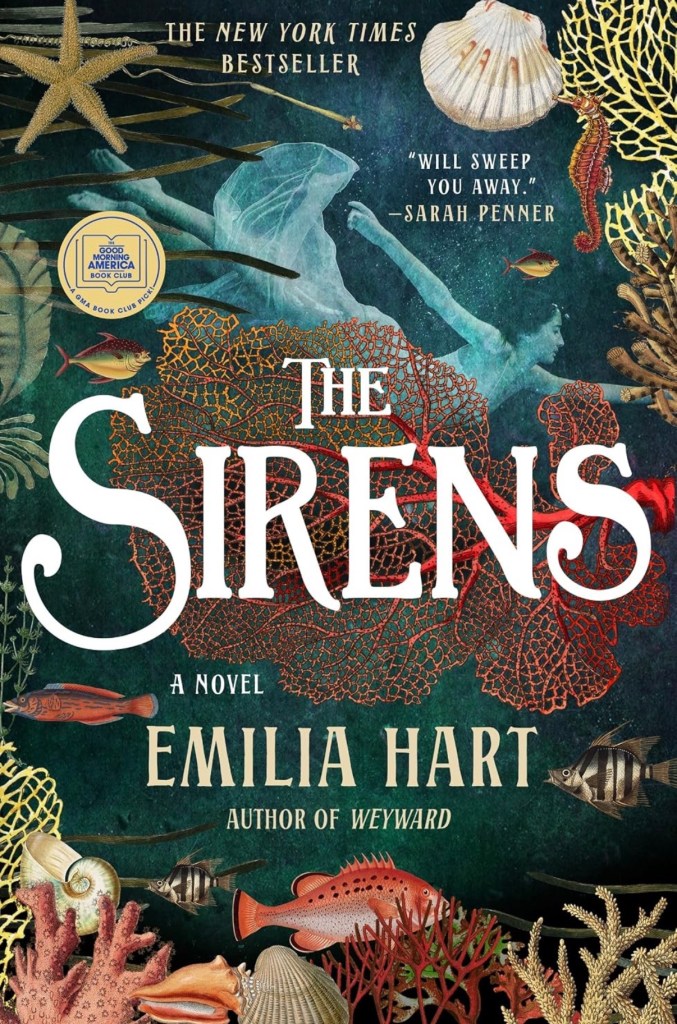
Our September book club pick is THE SIRENS by bestselling author Ariel Lawhon. Our meeting will take place Monday, September 28 at 7pm EST.

Join the group through the website to receive our monthly notes on books and events to discuss them, then share your thoughts, reviews, and recommendations on our Facebook group. Your new favorite cozy corner of the Irish literary world is waiting. See you there!
Shelagh Braley Starr is head librarian at Brigid’s Library, admin of Irish by Ancestry, and editor of RELATED☘️ magazine. A journalist with special interest in Irish history and literature, she has written her first novel, based on the Irish myth of Cú Chuláinn’s wife, Emer. You can reach her at shelagh@byancestry.com


1 thought on “TV ‘Drama’ brings more Trouble”