By SHELAGH BRALEY STARR
RELATED☘️ Staff
Autumn is prime cemetery weather, an especially rewarding time to visit ancestral resting places. As Ireland slides into winter, graveyards come to life in their own quiet way, where stones stand stark against the rich, changing landscape. For genealogists, this season offers practical advantages as well as atmosphere, the centerpiece of a well‑planned “cemetery day” on your next research trip.
Why does fall suit cemetery sleuths? From a research perspective, October often beats the height of summer.
First, there’s less overgrowth. Brambles, nettles, and long grass can render inscriptions almost impossible to read by July and August in many rural graveyards. In later fall, maintenance crews may have already been through once, revealing older stones. This is especially true in older, less‑frequented burial grounds where 18th‑ and 19th‑century slabs hug the ground.
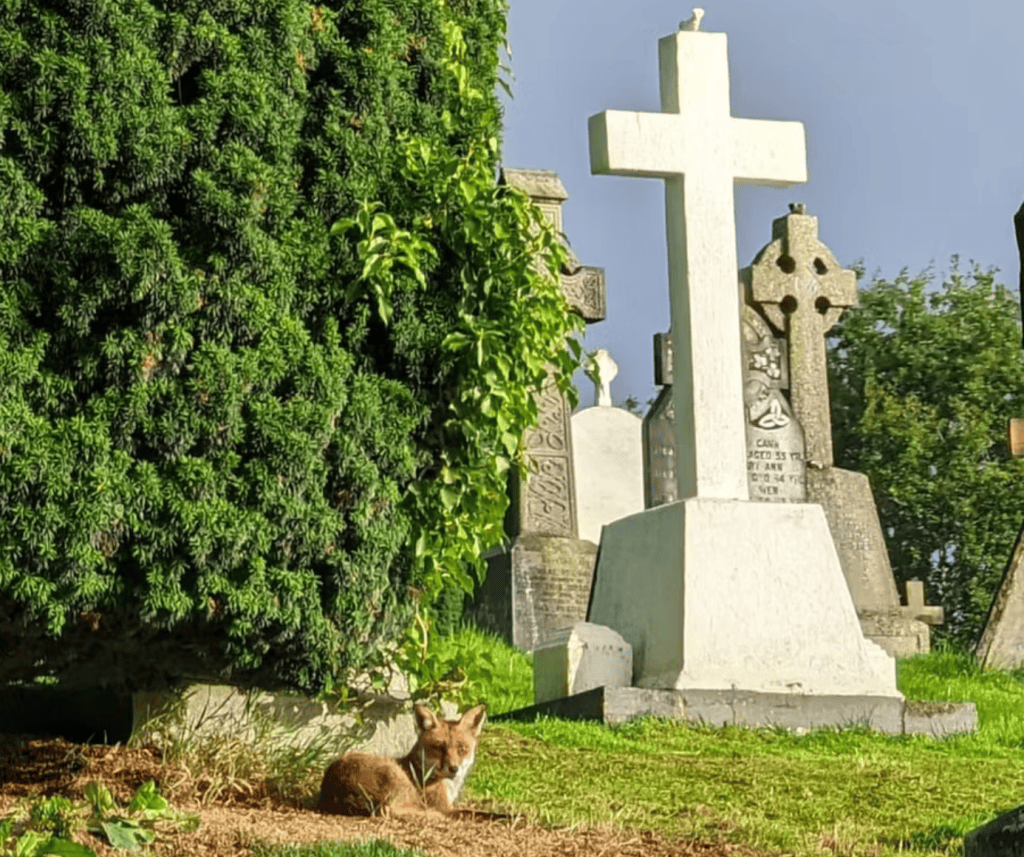
“One of my personal favorites is to visit cemeteries in autumn,” said genealogical historian Scott Phillips. “They are often at their most beautiful, and the changing and colorful leaves can add a unique view to those photos we all like to take of our ancestors’ final resting places.”
Second, the light is better. The sun sits lower in the sky during autumn, casting long, dramatic shadows and a soft, golden glow. Weathered stone, marble, bronze, and iron catch the low-angle light differently than flat, modern structures. Oblique autumn sun can pick out shallow or weathered lettering in a way that flat midday summer light cannot.
“Fall is a great time, one of the reasons I love visiting cemeteries in the fall is because you get really good light for taking pictures. Unlike summertime when sometimes the light’s too harsh and you can’t read what’s on the tombstones when you take the photo,” said Crista Cowan, corporate genealogist from Ancestry. “Fall light tends to be a little bit softer, depending on the time of day you go, it works out really well.”
Visit in the early morning or late afternoon if you can, when the cooler morning air often creates mist or fog. This diffuses the sunlight, adding a serene, ethereal quality. Raking light sends tiny shadows into the carved grooves, too, making inscriptions suddenly legible when viewed from the proper angle. A small mirror or even a sheet of white card can help bounce light across a stone, further enhancing the effect.
Third, the weather is kinder to the researcher. Crisp air makes walking the grounds and tending to plots much more pleasant than in the heat of summer. It’s generally cool enough that you can comfortably spend several hours walking, photographing, and sketching without the fatigue that often comes with full summer heat (or crowds). Layer up, bring a waterproof jacket, and you’re well equipped.
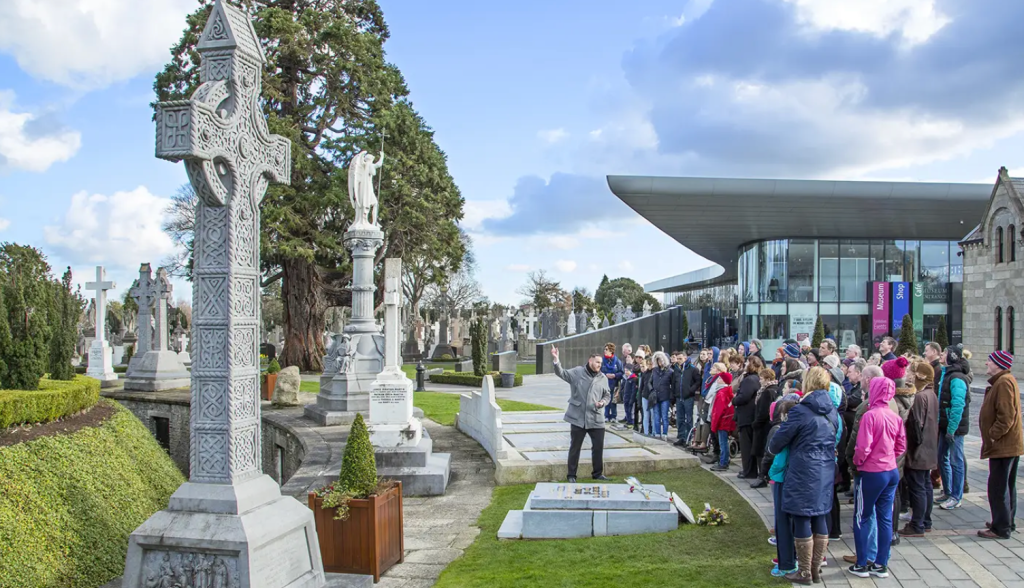
Cemeteries with a Story: Notable Irish Sites
Even if your own ancestors’ burials are unknown in Ireland, a fall visit to a cemetery can help you understand burial customs, grave symbolism, and the impact of famine, epidemics, and revolution that shaped so many families’ stories. Every parish has its burial ground, and in many cases, small rural cemeteries are where the richest genealogical surprises lie.
Family history hunter Kay Schroeder might never have found an unknown great-aunt, if not for her visit to her great great-grandparents’ grave in Athlone, Co. Westmeath. “I found her buried next to her parents with a last name I was totally unfamiliar with. No searches on any genealogy site had revealed this third marriage.”
Several larger cemeteries also reward visitors with record‑keeping and what they reveal about Irish history and migration. Here are a few to consider visiting:
Glasnevin Cemetery, Dublin
Founded in 1832, Glasnevin is Ireland’s best‑known cemetery and a treasure trove for family historians. The cemetery’s office maintains detailed burial registers, and many records are searchable online. On site, you’ll find monumental inscriptions spanning nearly two centuries, family plots that follow a surname through several generations, and sections associated with particular historical events and religious communities.
Deansgrange Cemetery, Co. Dublin
On Dublin’s south side, Deansgrange is one of the city’s principal burial grounds from the late 19th century onward. It is particularly useful if your Dublin family appears in civil death records from the 1860s onwards but you lack a precise burial place. Sections are often arranged by denomination, offering clues to religious affiliation where records are ambiguous. Side quest: Sinead O’Connor found her final rest here.
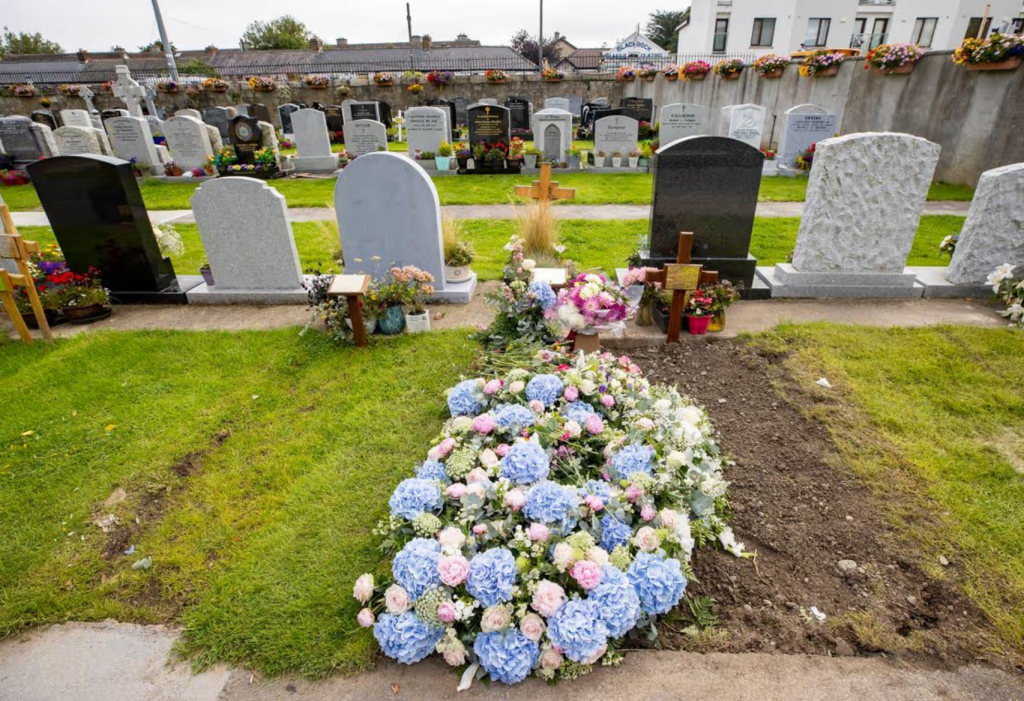
St. Joseph’s Cemetery, Ballyphehane, Co. Cork
St. Joseph’s historic cemetery is rich in both local and national history, referred to by the locals as “the Botanics.” You’ll find graves of political figures, merchants, and emigrant families who returned from abroad—or whose memorials were erected by relatives overseas. Its records, like those of Glasnevin and Deansgrange, can bridge gaps in parish registers and civil records, particularly around the turn of the 20th century when emigration was at its peak. Only mass burial sites on Carr’s Hill hold more famine victims’ graves than St. Joseph’s.
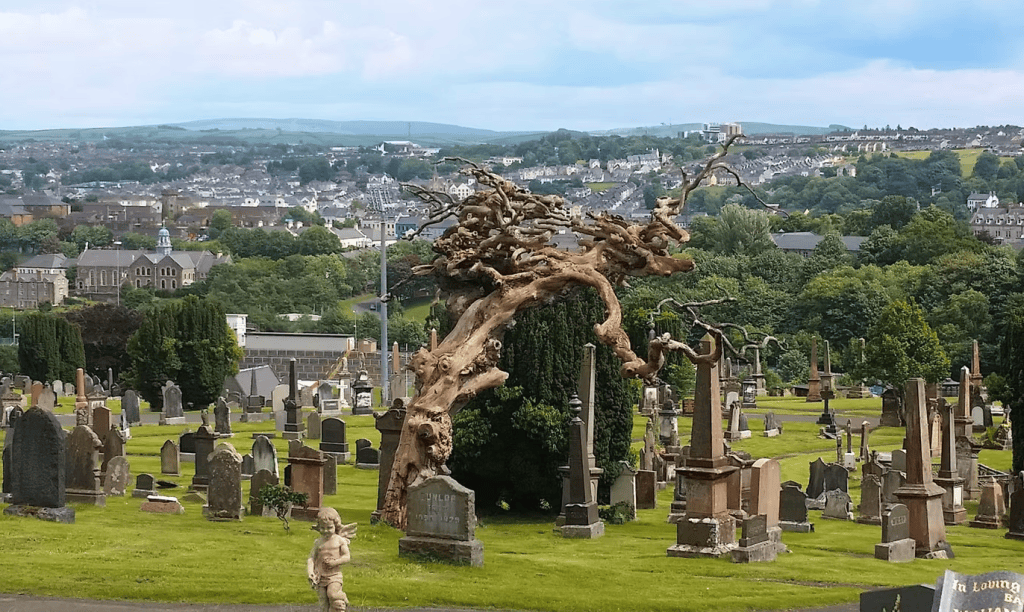
Derry City Cemetery, Northern Ireland
In the Creggan district on the western outskirts of the city, Derry City Cemetery is known just as “City Cemetery” to the locals. Tours are available, led by volunteers. Set in a hillside location offering panoramic views over the River Foyle and surrounding counties. *If you go, ask for Irish by Ancestry friend and fellow member Seamus Breslin. “The more visitors the better,” he said.
Famine Graveyards and Pauper Burials
Across Ireland, you’ll encounter famine graveyards, often simple enclosures near former workhouses or on the edge of towns and villages. Marked by plain crosses or communal monuments rather than individual stones, these sites rarely yield direct genealogical data. Yet they are vital for context. If your ancestors were in a particular district during the 1840s, visiting the local famine burial ground can give emotional and historical depth to the bare fact that they “vanish” from the records around that time.
Small Rural Burial Grounds
The unsung heroes of Irish genealogical research are the small, sometimes semi‑abandoned graveyards scattered across the countryside—medieval church sites, hilltop enclosures, ruins ringed with old yews. Here, you are more likely to find early 18th–19th century stones naming several generations, variant spellings of surnames and townlands, occupations, cause of death, or emigration notes carved into the stone
Be aware, these sites often have no on‑site staff. The only “catalogue” may be a locally produced inscription survey in a nearby library or heritage center.
Planning a “Cemetery Day” from Major Cities
Whether you’re based in Dublin, Cork, Galway, or elsewhere, you can build a focused and satisfying day around graveyard research.
Before you set off, start with the records. Use civil death registers and parish burial records to narrow focus on most likely cemeteries. Check online resources (such as cemetery websites, local authority pages, or community projects) for plot maps or partial inscription surveys. Contact the cemetery office or local authority in advance where possible, especially for large urban cemeteries.
Build in time to stop at the local library or heritage center en route for any inscription booklets or maps.
Travel to nearby towns, where older churchyards and famine graves reflect the area’s emigration history. Ask locally about smaller burial grounds; shopkeepers and clergy often know of older, less obvious sites.
Expect to find older stones in church ruins overlooking the sea or nestled beside small roads—these can be particularly atmospheric in autumn light.
Don’t forget to pack like a fieldworker. For a productive cemetery day, bring:
A notebook and pencil (ink can run in damp weather)
A camera or smartphone with plenty of storage
A small mirror or white card to reflect light on difficult inscriptions
Waterproof boots and layers of clothing
Please avoid using chalk, flour, or any substance on stones, as they can permanently damage fragile surfaces. These grounds are often old and their data irreplaceable.
In Ireland, graveyards are not just endpoints; they are often where a family’s story lies in wait to begin again. Plan your cemetery day well, and you may leave not only with more precise dates and names, but with a deeper, more grounded sense of where—and who—you come from.

