By SHELAGH BRALEY STARR
RELATED☘️ Staff
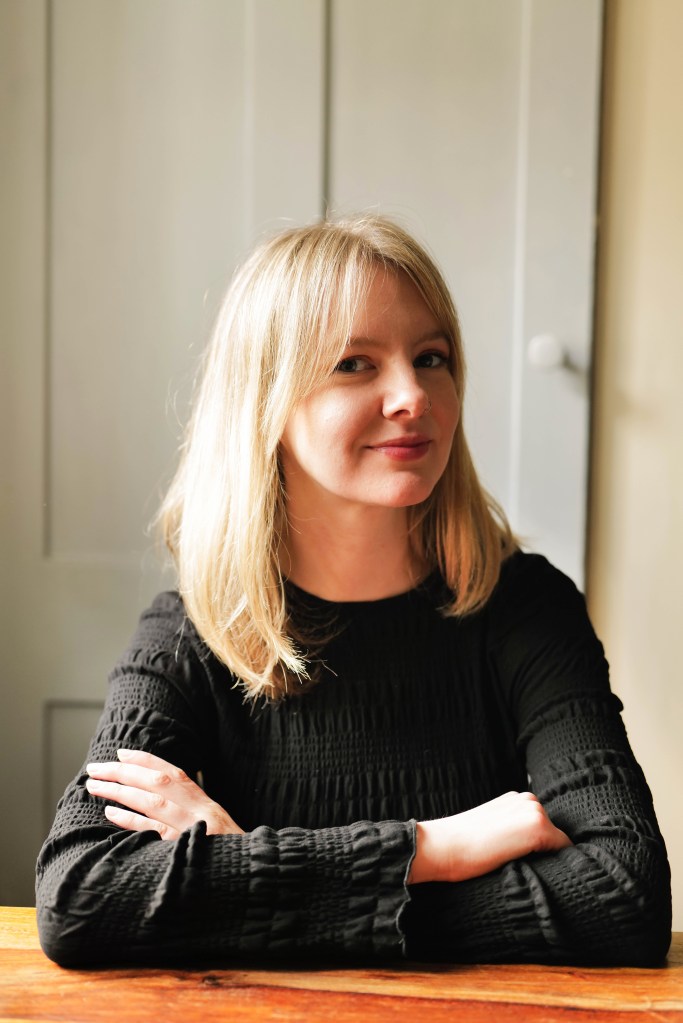
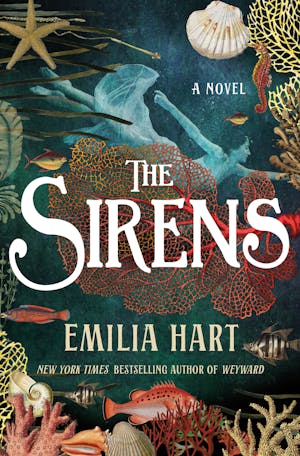
Bestselling author Emilia Hart sails in with THE SIRENS, a haunting and richly imagined new novel that blends history, myth, and the enduring pull of sisters and the sea. Known for her atmospheric storytelling and finely drawn characters, Hart has quickly become one of contemporary fiction’s most compelling voices, and this latest book offers the same spellbinding mix of mystery, emotion, and folklore that captivated readers in her earlier work.
In this conversation, we talk about the inspirations behind THE SIRENS, as well as her fascination with the folklore of her Irish ancestry. The Australian also reflects on her writing process, the challenge of balancing the eerie with the confronting human aspects of her work.
SHELAGH BRALEY STARR: Emilia, this is some fish tale! But the Irish convicts transported to Colonial Australia are a harsh historical reality. What drew you to this topic, and how did you keep it from being too dark to be enjoyable?
AUTHOR EMILIA HART: I’ve always been fascinated by convict transportation – it’s such a key part of Australia’s myth making. As a nation, I think we’ve held onto the idea that convict transportation led to greater social mobility, because everyone was ‘starting from the bottom,’ so to speak. Of course, this ignores the terrible impact of colonisation on Australia’s Indigenous people. But I also felt that this probably only told one side of the story – the male side of the story. I wanted to explore the realities of the female convict experience.
Actually, the very first version of the novel was extremely dark – I was conscious of the weight of history, and I really wanted to convey the horror of what female convicts endured in the early years of transportation. But I realised that I needed to light the reader’s way through the story – magical realism was the perfect way to do this.
STARR: I know you’ve said your ancestor was a captain of one of these convict ships. Do you have any family records or genealogy done that gave you insight into his work and how he might have felt about it?
HART: Through my research, I learned that my ancestor was a very incompetent captain – due to overcrowding on his ship, the Atlas, about 70 of the (male and female) convicts on board died en route. I haven’t found any sources that record his personal feelings about the voyage or about convicts generally, but I did read other primary sources to get an insight into the attitudes of sailors at the time. For example, I read the transcript of the journal of a lieutenant named Ralph Clark, who sailed on board a prison ship called The Friendship. This was a fascinating – albeit disturbing – insight into the conditions on board convict ships, and also into the derogatory attitude many sailors held towards female convicts. Clark refers to these women as ‘damn whores’ who are ‘ten thousand times worse than the men convicts,’ and also records instances of sailors breaking into the women’s quarters and offering extra rations in exchange for intercourse. A sobering read.
STARR: You are Australian-born, and also, I read, descended from Irish immigrants to Ireland. Have you found anything specific about them that would warrant a story in the future? Do you consider yourself “Irish”?
AUTHOR EMILIA HART: That’s right – several of my ancestors on my mother’s side emigrated from Ireland to Australia during the nineteenth century. My great-great-great grandmother Bridget Wilson left during the Great Famine as part of a programme called the Earl Grey Scheme, which involved sending female orphans to Australia to balance the population, which at that point consisted mainly of men. Once they arrived, these young women took up roles as domestic workers. Bridget hailed from Enniskillen originally, and I’ve actually been to see the workhouse she lived in before she left Ireland. Another great-great-great grandmother named Margaret Wade also emigrated as part of this scheme, though I know less about her. As far as I can tell from genealogical research, I have at least three other Irish ancestors on my mother’s side, from Galway, Meath, and Offaly respectively.
I don’t know whether I’d consider myself to be Irish, but I’m very proud of my Irish heritage. I can’t say too much about this yet, but I plan to return to my Irish roots for a future novel – specifically looking at emigration during the Great Famine.
STARR: Irish folklore is full of sea creatures and magic. Did you do any research on specifically Irish creatures like merrows (múruchs), or the more Celtic selkies to bring your descriptions to life? Do you have a favorite Irish folk tale?
HART: Yes, I did a lot of research into Irish folklore when writing The Sirens, focusing on the merrow. I came across a particular fairy tale called The Lady of Gollerus by Thomas Crofton Croker, about a merrow who falls in love with a fisherman but continues to long for the sea. It’s a beautiful story and to me it felt quite symbolic of how modern women feel torn between social expectation – i.e., to settle down and marry – and freedom. I also loved discovering stories about the each-uisce, a type of shapeshifting Irish water spirit.
STARR: The twins, Mary and Eliza, hail from Ireland and depart from Cork. Have you been to Ireland? Is there anything that stands out to you, that you love about the country or the culture? Do you have a favorite place?
HART: I’m lucky enough to have visited Ireland several times, though there’s so much of it I’m yet to see! So far, I’ve been to Dublin, Enniskillen, and Castlebar in County Mayo. I think Irish culture is really special – I love the tradition of story-telling. So many of my favourite contemporary authors are Irish, for example Emma Donoghue and Claire Keegan. I also love Irish food and drink. My best friend is from Ireland, and when we went to Dublin together, she introduced me to bacon and cabbage, which is absolutely delicious. I’m also a big fan of Taytos – best crisps ever!
STARR: The historical research in the book is evident. Did you have to dig a lot to find the details you were seeking? I’m thinking in terms of the experiences of the women and children (like little Annie in the story, she was a soft innocent in such a brutal environment, I loved what you did with her).
HART: Yes, this novel required a huge amount of research. I started with a wonderful book called The Fatal Shore by Robert Hughes, which tells the history of convict transportation in painstaking detail and rich, vivid prose. It was harder to uncover the particular experience of female convicts, but I read some brilliant books, including Deborah Oxley’s Convict Maids: The Forced Migration of Women to Australia, Babette Smith’s A Cargo of Women and Deborah J Swiss’s The Tin Ticket.
Some of what I learned was shocking, especially in the early days of convict transportation before conditions improved. On the journey itself, women were forced to engage in prostitution to obtain better rations – or in exchange for rum, to escape the horrors and monotony of the long voyage. Many women were allowed to take their children with them, or gave birth to children on board, however once they arrived in New South Wales, they were sent to places called ‘female factories’ and children over the age of three were separated from their mothers and sent to orphanages. At the female factories, women were forced to undertake physical labour before they were selected as domestic servants or even wives. They faced significant prejudice: In the early 1800s, a senior clergyman in NSW called Reverend Samuel Marsden created an infamous ‘register’ of women in the colony, where he listed all unmarried convict women as ‘concubines.’
STARR: The experience of the girls’ water allergy was so specific in the story, I actually had to look it up when I was done reading The Sirens. How did you come up with something so rare to attribute to these women?
HART: It’s difficult to say too much without getting into spoilers, but the water allergy needs to fulfil a very specific function in the story. I spent a lot of time looking for a condition that could fit the bill! I don’t suffer from this allergy personally, but I have suffered with hives, dermatitis, and mild psoriasis, which is partly what sparked the idea.
STARR: The story has multiple surprise twists that I want to ask about with spoiling them! (I actually shouted out oh no! at one point and had to yell down to my worried family that it was just my book.) How did you settle on the connections and the right timing to make the book’s big revelations work? Did you have those planned from the beginning or did they happen along the way?
HART: A lot of trial and error! I had some of the twists in mind from the outset, but others came to me in the process of writing. I don’t tend to make a detailed plan before I write – normally I write a very exploratory first draft, which is when I get to know the characters and the story. Then the planning comes in and I have to try to make everything fit together!
STARR: I have been describing the book as “a tribute to complicated sisterhood and generational trauma to transformation.” Do you have sisters yourself? Do you think sisterhood is as easy a relationship as conventional wisdom depicts it?
HART: Yes, I have a younger sister – she’s such an important part of my life, and I wanted the novel to be a tribute to her and our relationship. She’s provided me with huge support over the years, especially during challenging times in my life. I don’t know who I would be without her. I’m pretty fascinated by sibling relationships in general, and it’s a dynamic I’ve returned to for my next book as well. What really interests me is that you can grow up in the same environment as your sibling and be shaped by it in totally different ways. I think there’s a really interesting contradiction at the heart of sibling relationships – the same environment can result in different personalities and even different memories, and yet no-one understands you like the brother or sister you grew up with.
STARR: Did you lead with Mary’s voice as a skeptic, rejecting her memory of their mother, to make Eliza’s secret acceptance and knowledge land harder when the truth became clear? (All of a sudden, it became obvious Eliza had the wisdom all along, though she had been cast as the character who seemed to need more support all along, due to her blindness.) Was that power swap part of your original plotting or did it come to you as you wrote?
HART: With Eliza, it was really important to me to challenge assumptions about disability and strength. This is quite personal for me, though I must stress that I am not actually blind, I am partially sighted as the result of having a stroke in my mid-twenties. So I’ve spent a lot of time thinking about how we struggle to perceive people with disabilities as having strength.
STARR: Gender double-standards and misogyny are not news to women. You show these experiences many times in the story. The twins have complicated feelings about their father taking them from the sea; the women on the ship have to deal with the threat of the sailors aboard the Naiad; they treat Bridie badly despite her willingness to share what she got by consorting with the captain. Jess was a victim; Lucy was too. (Pretty standard numbers, unfortunately.) What did you want to come out of all this, a sense of empowerment? Protection? What do you want readers to go away feeling about the dynamic shifts in The Sirens?
HART: I wanted to explore and interrogate the roots of misogyny in Australian culture specifically – looking at how conceptions about female convicts have shaped attitudes to women today. But I also wanted to showcase how women can empower each other across time; how we can draw strength from the stories of our female ancestors. With the female convicts specifically, their story and perspective are hidden from history, so writing this is an attempt to give them back some agency and power.
STARR: Are you working on another book yet, and is it based in magical realism? That seems to be your sweet spot. Did you intend to own that subgenre after the success of Weyward?
HART: My third novel, The Enigmas, releases on 6 April 2027 in the US. It’s set mainly in WWII and follows a woman called Beatrice Bone who must turn back time to save her sister’s life. So once again, it focuses on female resilience and strength, through the prism of women’s contribution to the war effort. It does have magical realism, in the sense that it has time travel, though I can’t say too much more about that to avoid spoilers! I will say though that it’s my favourite novel I’ve ever written and I’m incredibly excited for readers to discover it next year.
Three books in, I can confidently say that this is a genre that I love working in – I love the sense that there are hidden depths to the world as we know it, that there are things we can’t explain.
STARR: Emilia, thank you for taking the time to share your thoughts with our RELATED ☘️ audience and especially with our Brigid’s Library Book Club readers. The group learned a lot historically and enjoyed the wild voyage you took us on.
THE SIRENS is available now, wherever you procure your books. You can READ THE FULL REVIEW, where we take a closer look at Hart’s evocative storytelling, the novel’s central themes, and why this haunting new release is sure to spark conversation among readers worldwide.


1 thought on “Beneath the Surface: Hart Talks Sirens, Irish History ”